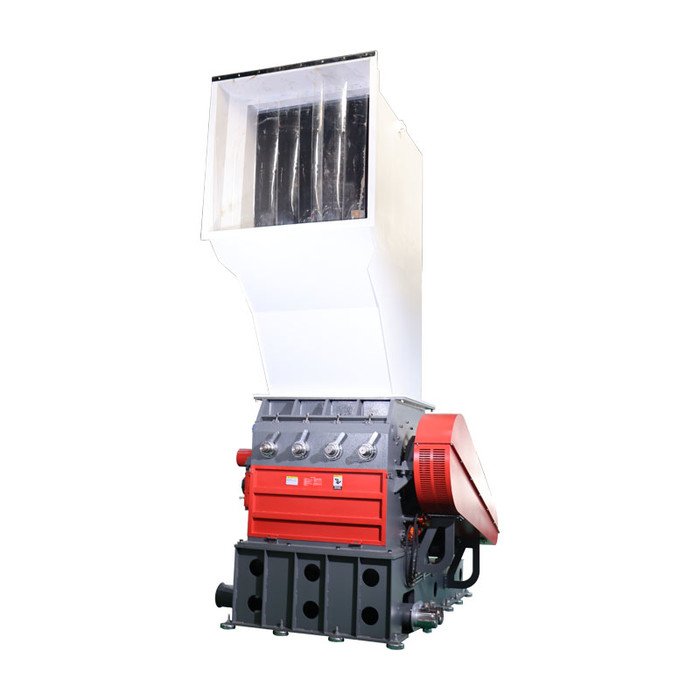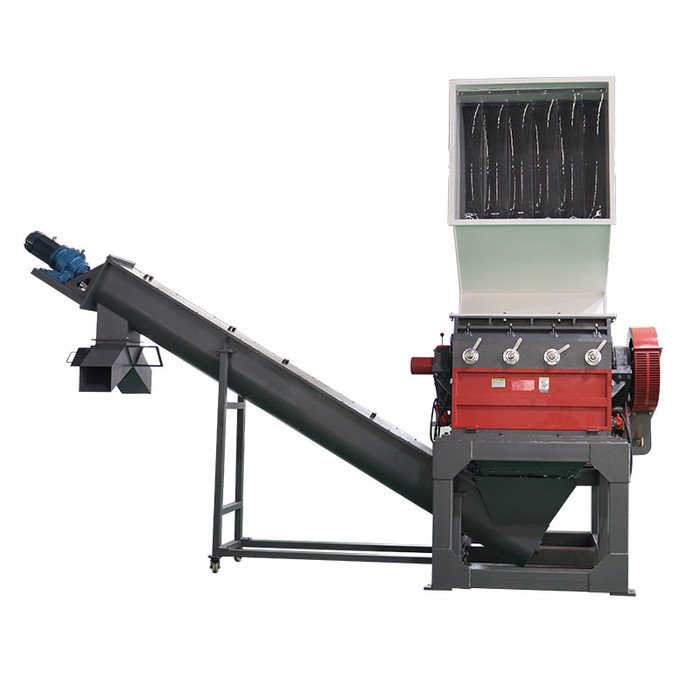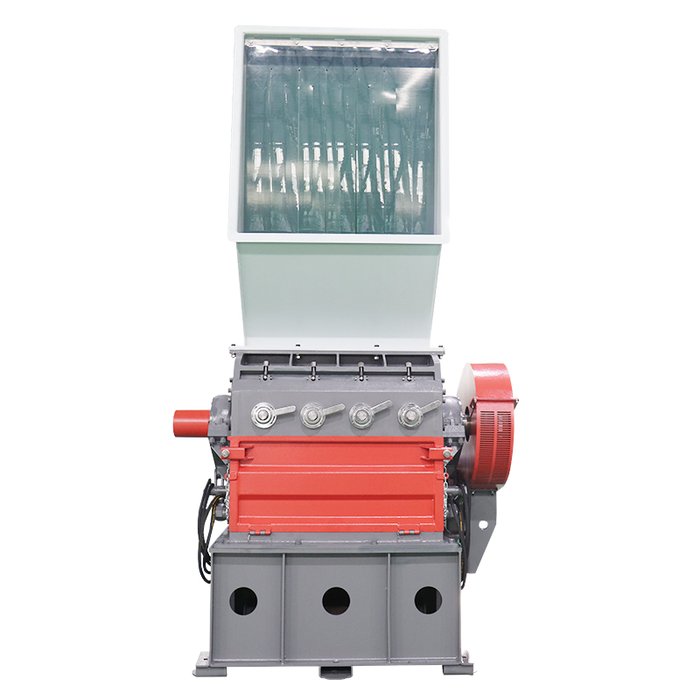
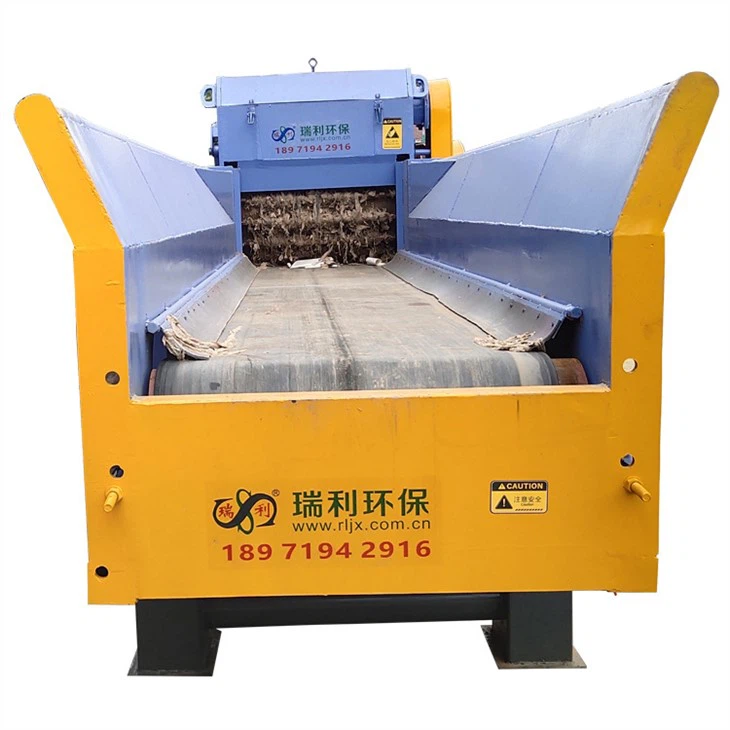
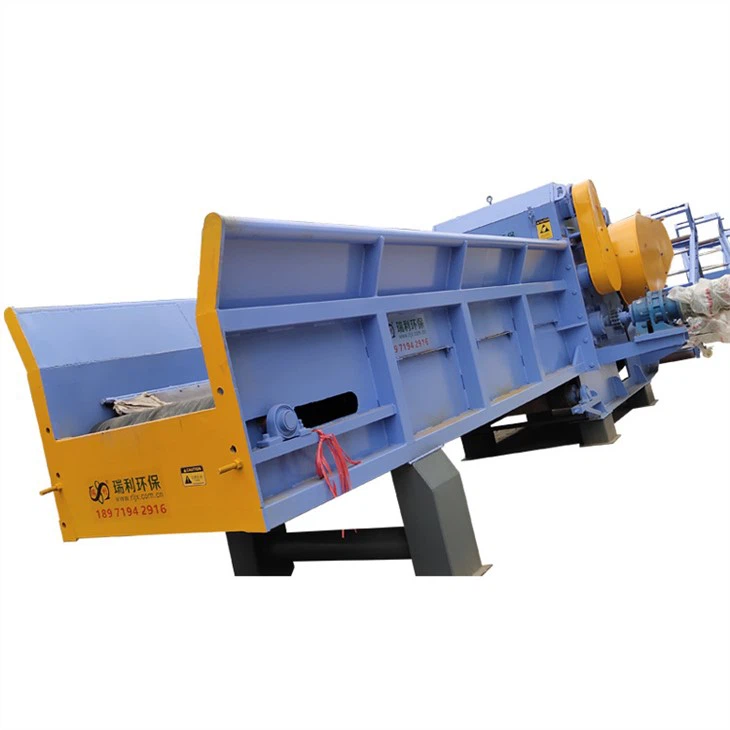
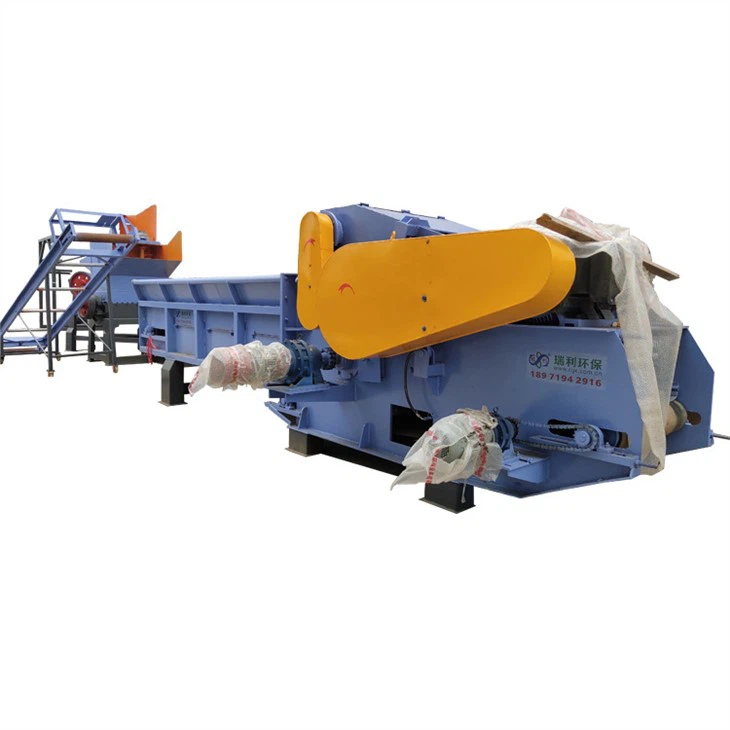
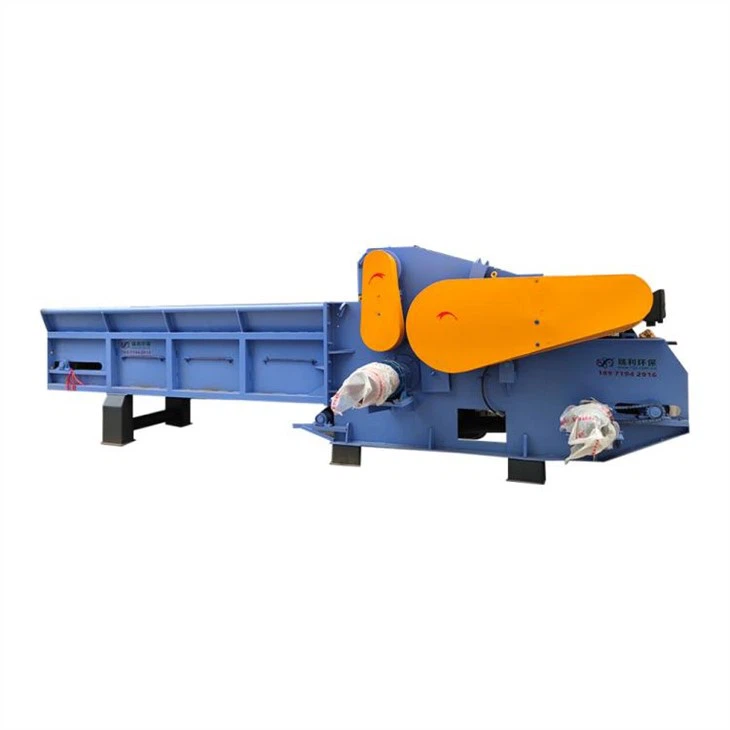
The hydraulic force-feed plastic crusher uses a pressure plate to push bulky or low-density material toward the high-speed cutting rotor. It is intended for difficult flexible feed such as cable sheathing, cloth, yarn, chemical fibre, mulch film and greenhouse film where uncontrolled gravity feeding may be inconsistent.
When Force Feeding Is Useful
- Light film or fibre that bridges above a conventional rotor
- Cable-sheath and textile scrap requiring controlled engagement
- Bundled flexible waste with inconsistent bulk density
- Projects requiring conveyor feeding and controlled discharge
This machine is not automatically suitable for metal cable, reinforced composites or unknown mixed waste. Conductors, hard inclusions and hazardous contamination must be removed or separately assessed.
Reference Type Comparison
| Item | Type 1000 | Type 1300 |
|---|---|---|
| Main motor | 110 kW | 160 kW |
| Blade length | 1000 mm | 1300 mm |
| Recorded rotor diameter | 400 mm | 600 mm |
| Shaft speed | 650 rpm | 650 rpm |
| Hydraulic cylinders | 1 | 2 |
| Recorded discharge range | 10–80 mm | 10–80 mm |
| Machine size | 11 × 1.5 × 1.7 m | 12 × 2 × 1.78 m |
| Reference weight | about 11.5 t | about 12.8 t |
The current record lists capacity entries without a confirmed time basis, so they are not presented as hourly output. Final throughput must be established from the feed form, cutting test, screen, pressure-plate cycle and conveyor rate.
Project Information Required
- Material composition and whether metal is present
- Loose, rolled, bundled or compacted feed form
- Maximum dimensions and bundle weight
- Required output size and downstream process
- Target hourly throughput and operating schedule
- Conveyor layout, dust control, voltage and available space
For lighter film and woven bags, compare the RPR Series soft plastic crusher. More machines are listed in the industrial plastic crusher category.
Request a Force-Feed Crushing Assessment
Use the AMIGE inquiry page to send feed photos, composition, dimensions, target size, required capacity and site power. We will confirm whether force feeding or a low-speed shredder is the appropriate first stage.