
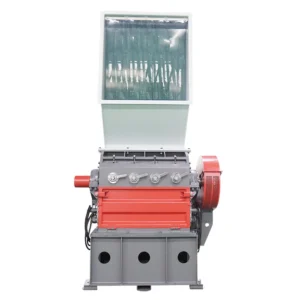
Immediate regrind recycling means collecting clean production scrap, reducing it to a controlled size and returning it to a qualified process without unnecessary mixed storage. It can shorten material handling, but it does not remove the need for traceability and quality control.
The system must protect material identity. Runners, sprues, edge trim and rejected parts should only return to a process when polymer, colour, contamination, heat history and the buyer’s product requirements allow it.
Which Scrap Is Suitable?
- Known production scrap from a controlled polymer and colour.
- Clean runners, sprues, moulded rejects or selected extrusion trim.
- Material that can be collected without metal, oil, paper or mixed resin.
- Scrap for which the processor has approved a regrind handling procedure.
Post-consumer material and mixed factory waste normally require additional sorting, washing or testing and should not be treated as simple immediate regrind.
Configure the Regrind Loop
| Process point | Decision to confirm |
|---|---|
| Scrap collection | Keep polymer, colour and batch identity separate |
| Size reduction | Match feed opening, rotor, knives and screen to the scrap |
| Fines and dust control | Protect handling, blending and final quality |
| Conveying and storage | Avoid cross-contamination and uncontrolled residence time |
| Blending | Use a ratio approved through the buyer’s production trials |
| Quality check | Monitor the properties relevant to the finished product |
Select the Crusher Around the Production Cell
The FS800B rigid plastic crusher can be reviewed for moulded production scrap that fits its confirmed feed opening. The WHC1000/600 PET and rigid plastic crusher is a larger alternative for selected containers and rigid parts.
Beside-machine installations also require review of feeding height, robot or conveyor interface, sound, dust, heat, regrind transfer, cleaning access and electrical interlocks.
Frequently Asked Questions
Can all production scrap return directly to the machine?
No. Material identity, contamination, heat history and finished-product requirements must be checked first.
What regrind percentage should be used?
There is no universal percentage. The processor should set it through material and product trials under its own quality procedure.
Does a smaller screen always improve regrind quality?
No. A smaller screen can increase fines, heat and load. Particle size must match conveying, blending and processing needs.
How can cross-contamination be reduced?
Use dedicated collection, clear batch identification, controlled cleaning and equipment layouts that avoid mixing polymers or colours.
What data is needed for equipment selection?
Provide polymer, scrap type, maximum size, temperature, target particle size, hourly scrap volume, feeding method and production layout.
Request an Immediate-Regrind Layout
Send representative scrap photos, the production process, hourly scrap volume, target regrind, available space and voltage through the AMIGE inquiry page. We will review the crusher and transfer interfaces without assuming an unverified savings percentage.