
Carbon pressure is no longer theoretical.
Clients ask for Scope 1, Scope 2, even Scope 3 data.
Banks request ESG disclosures.
Auditors want energy intensity numbers per ton processed.
Yet many recycling plants still run high-speed, high-consumption crushers designed a decade ago.
Electricity bills rise.
Carbon intensity increases.
Certification scores drop.
The problem is not recycling.
The problem is inefficient recycling.
Low-energy crushers gain measurable advantages in carbon footprint certification because electricity consumption directly affects emission calculations. By reducing kWh per ton processed, optimizing torque efficiency, and minimizing idle load loss, we significantly lower operational carbon intensity. In certification systems such as ISO-aligned carbon accounting frameworks, energy efficiency translates into higher environmental performance scores and stronger ESG positioning.
Carbon accounting is arithmetic.
Machines either help the numbers.
Or hurt them.
As CEO of Amige, I build equipment that respects physics.
And increasingly, carbon math.
Electricity is the hidden carbon carrier.
Globally, power generation still relies heavily on fossil fuels.
According to the Global Electricity Emissions Report, average grid emission intensity remains above 400 gCO₂/kWh in many industrial regions.
If a crusher consumes 120 kWh per ton, that equals nearly 48 kg CO₂ per ton processed.
Reduce consumption to 85 kWh per ton.
Emissions drop proportionally.
Energy efficiency is not cosmetic.
It is measurable carbon reduction.
How Does Carbon Footprint Certification Evaluate Equipment?
Carbon certification frameworks follow structured methodologies.
They measure:
- Direct emissions (Scope 1)
- Purchased electricity emissions (Scope 2)
- Supply chain emissions (Scope 3)
In recycling facilities, crushing and shredding lines are major electricity consumers.
According to the Industrial Energy Consumption Benchmark Study, size reduction systems account for up to 35% of total plant electricity usage.
Certification auditors calculate emissions per functional unit.
Often per ton of processed material.
Lower kWh per ton equals lower carbon intensity.
The formula is simple.
Efficiency wins.
Why Are Traditional Crushers Energy-Hungry?
Older systems were designed for brute force.
High RPM.
Oversized motors.
Limited torque control.
They rely on speed rather than cutting geometry optimization.
Friction increases.
Heat builds up.
Energy converts to waste.
The Mechanical Size Reduction Efficiency Review shows that improper rotor design can increase energy consumption by 20–30%.
More speed does not equal more efficiency.
It equals more electricity.
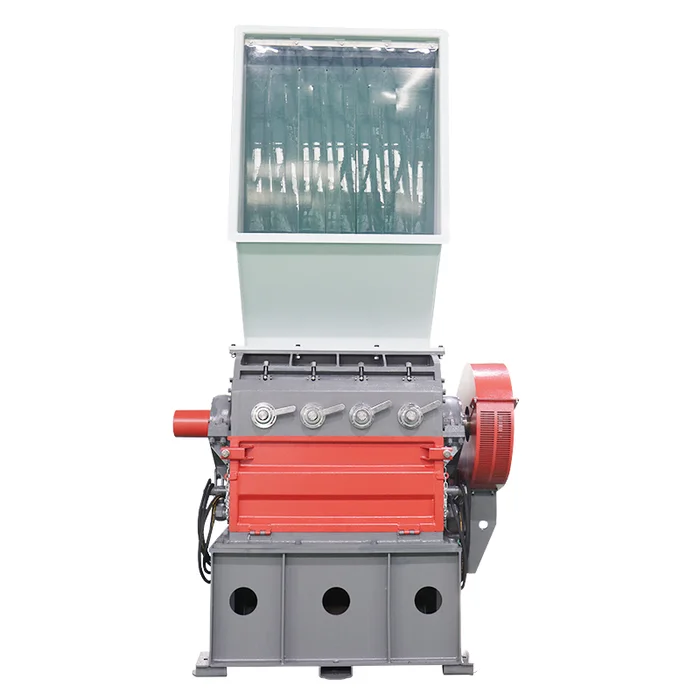
I prefer torque-driven stability over speed-driven noise. Customized Plastic Crusher Machine WHC1000/600
What Makes a Crusher “Low-Energy”?
Energy efficiency begins with design discipline.
In our machines at Amige, we focus on:
- Optimized rotor inertia
- Precision blade alignment
- Intelligent load sensing
- Variable frequency drive (VFD) control
- Reduced idle consumption
Load-adaptive systems adjust power draw according to material resistance.
Data from the Adaptive Drive Systems Performance Report shows energy savings up to 18% with intelligent load control.
Idle load matters too.
Many machines waste power while running empty.
Smart standby functions reduce unnecessary draw.
Every kilowatt saved improves certification scoring.
How Does Energy Reduction Translate into Certification Advantage?
Certification bodies convert electricity use into carbon equivalents.
Lower emissions improve:
- Carbon intensity per ton
- ESG performance indicators
- Green financing eligibility
- Supplier sustainability ratings
The Corporate Carbon Disclosure Framework Guide emphasizes operational efficiency as a core decarbonization strategy.
A recycling plant using low-energy crushers can demonstrate quantifiable reduction.
That strengthens audit outcomes.
In competitive tenders, sustainability scoring increasingly influences contracts.
Energy efficiency becomes commercial leverage.
Does Lower Energy Mean Lower Performance?
This is the common misunderstanding.
Energy efficiency is not about reducing output.
It is about improving energy per unit output.
If a crusher processes 1 ton in 8 minutes using 90 kWh, and another processes the same ton using 120 kWh, productivity is identical.
But carbon intensity differs by 25%.
The Recycling Plant Productivity Index confirms that optimized cutting geometry reduces resistance while maintaining throughput.
Efficiency is engineering.
Not compromise.
How Does Rotor Cooling Contribute to Carbon Reduction?
Heat equals wasted energy.
When friction generates excessive heat:
- Motor load increases
- Blade wear accelerates
- Downtime rises
Cooling stabilizes temperature.
Stable temperature reduces resistance.
The Thermal Loss in Mechanical Systems Study indicates that managing operational heat can improve mechanical efficiency by up to 10%.
Lower mechanical loss means lower energy input.
Carbon accounting captures that.
Cooling is not only about preventing melting.
It is about preserving efficiency.
What Is the Financial Impact of Higher Carbon Scores?
Carbon performance influences financing.
Green bonds.
Sustainability-linked loans.
Preferential interest rates.
According to the Sustainable Finance Market Analysis, companies with verified emission reductions access capital at lower average cost.
Equipment choice affects plant-level emissions.
Plant emissions affect corporate reporting.
Corporate reporting affects capital access.
A crusher is not just a machine.
It is part of financial strategy.
Are Regulations Driving Mandatory Efficiency?
In many regions, yes.
Energy efficiency standards for industrial equipment are tightening.
Carbon border adjustment mechanisms are emerging.
The International Industrial Decarbonization Policy Tracker highlights increasing integration of equipment efficiency in regulatory frameworks.
Soon, inefficient systems will not only score poorly.
They may become non-compliant.
Forward-looking plants upgrade early.
Reactive plants upgrade under pressure.
I prefer preparation over panic.
How Do We Design for Future Carbon Accounting?
I assume carbon reporting will become stricter.
Therefore, we:
- Track kWh per ton during factory testing
- Provide energy performance documentation
- Design modular systems for upgrade flexibility
- Optimize motor sizing to avoid overspecification
Precision matters.
If a 110 kW motor can be replaced by a 90 kW optimized system, long-term emissions decrease substantially.
Multiply that across thousands of operating hours.
Carbon savings compound.
Engineering discipline today becomes certification advantage tomorrow.
Conclusion
Global decarbonization is reshaping industrial priorities. Low-energy crushers reduce kWh per ton, directly lowering operational carbon intensity. In carbon footprint certification, efficiency converts into measurable scoring advantage. Smart engineering is no longer optional. It is strategic necessity.