Large HDPE or PVC pipes, thick-wall housings and bulky moulded parts cannot be selected by motor power alone. The correct route depends on the largest feed dimensions, wall thickness, polymer, metal inserts, target flake size and the way material can be presented to the cutting chamber.
As a machinery manufacturer, we first decide whether the project needs direct crushing, primary shredding followed by crushing, or controlled pre-cutting. A “one-pass” claim is only appropriate after the largest representative part has been reviewed or tested.
Start With the Largest Representative Part
| Buyer input | Why it changes the machine route |
|---|---|
| Outside diameter and maximum length | Determines the feed opening, loading method and need for pre-cutting |
| Wall thickness and polymer | Affects cutting load, rotor and knife selection |
| Metal inserts or contamination | Defines sorting, metal protection and testing requirements |
| Target output size | Influences screen, secondary crushing and downstream handling |
| Required throughput | Must be balanced with feeding, discharge and operating hours |
Crusher, Shredder or Two-Stage System?
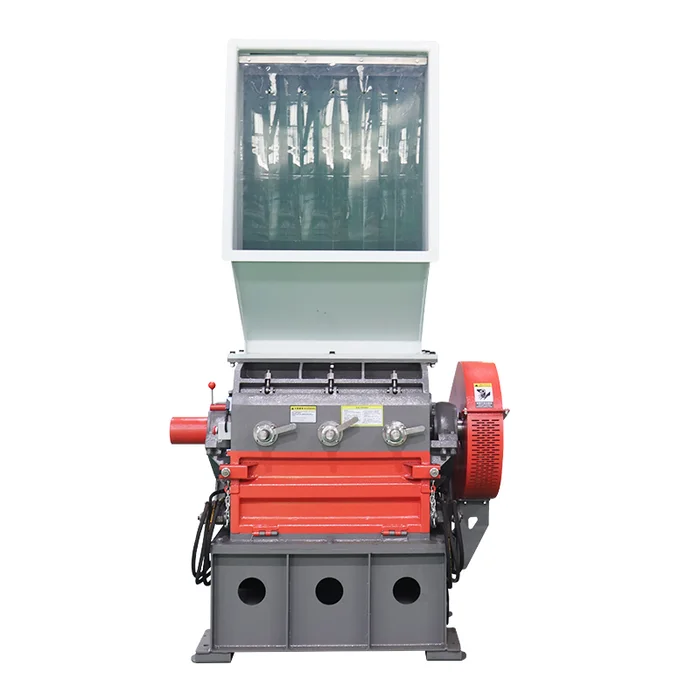
A heavy-duty plastic crusher may be suitable when the material fits the chamber and can be fed without dangerous bouncing or bridging. Review the WHC800/450 rigid plastic lump crusher for dense rigid scrap that has already been sized for controlled feeding.
Long pipe, very thick parts or irregular housings may need a low-speed shredder before final granulation. A two-stage system can be more stable than forcing every feed shape into one high-speed crusher. The final choice should be based on material geometry and a realistic output target.
Configuration and Safety Checks
- Feed opening versus the largest pipe section or housing.
- Conveyor, hydraulic assistance or other controlled loading method.
- Rotor, knife and screen arrangement for the required flake.
- Metal detection, guarding, emergency stops and service access.
- Discharge conveyor, dust control and downstream separation.
- Workshop height, power supply and operating schedule.
The WHC1200/800 industrial plastic crusher can be compared when the feed opening and throughput requirement exceed smaller configurations. Specifications must still be confirmed against the actual material.
Frequently Asked Questions
Can a large pipe enter the crusher without pre-cutting?
Only when its diameter, length and wall thickness match the confirmed feed opening and loading method. Send the largest part dimensions before assuming direct feeding.
Is a bigger motor enough for thick-wall plastic?
No. Rotor geometry, knives, chamber structure, screen, feeding and discharge all affect performance.
When is a shredder-crusher combination better?
It is often evaluated for long, bulky or irregular parts that need low-speed primary size reduction before controlled granulation.
Can HDPE and PVC pipes use the same setup?
They may use the same machine family, but polymer, wall thickness, contamination and target flake require separate configuration checks.
What should I send for a quotation?
Send material photos, polymer, outside diameter, length, wall thickness, metal content, target flake size, hourly requirement and electrical standard.
Request a Material and Layout Review
Use the AMIGE inquiry page to send representative material details and workshop dimensions. We will compare direct crushing with a shredder-crusher route before recommending equipment.