Plastic crusher screen size should be selected around the next production step, not around the smallest hole a supplier can offer. The same aperture can behave differently with film, rigid mouldings, thick purgings or brittle parts because feed shape, rotor action and material temperature also affect the discharged flake.
I recommend defining acceptable output, unwanted fines and required hourly flow before comparing screens. A representative material test is more useful than choosing an aperture from a catalogue alone.
Define the Downstream Requirement First
| Downstream step | Buyer question | What to verify |
|---|---|---|
| Washing and separation | What particle range can move through the washer consistently? | Transfer, floating, sinking and dewatering behavior |
| Extrusion or pelletizing | What flake range can the feeder accept? | Bridging, bulk density, fines and feed stability |
| Direct regrind return | What size is approved by production and quality? | Blending, contamination and conveying performance |
| Manual or optical sorting | Does the flake remain large enough to identify and separate? | Visibility, liberation and reject rate |
| Sale as processed flake | What specification does the buyer actually accept? | Sampling method and agreed size distribution |
Understand Why a Finer Screen Is Not Always Better
A smaller aperture keeps material in the cutting chamber until it can pass. Depending on the material and rotor configuration, that may increase recirculation, heat, dust and blade exposure. It can also reduce usable throughput if the open area is too limited for the required flow.
A larger aperture may release material sooner, but the result still depends on cutting clearance, blade condition, feed presentation and screen geometry. The purchasing decision should therefore compare the complete size distribution rather than one nominal hole dimension.
- Record oversize, target fraction and fines separately.
- Use the same feed preparation and test duration for each screen.
- Measure usable output after removing off-spec material.
- Observe chamber heat, dust, noise and motor-load trend.
- Confirm that the screen can be removed and cleaned safely.
Review Screen Area, Construction and Changeover
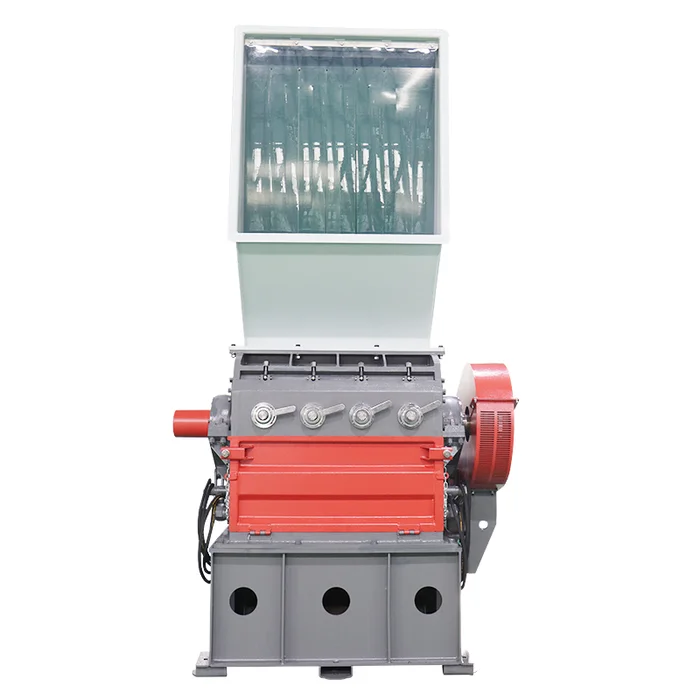
Screen open area, hole pattern, thickness, support and the distance from the rotor all influence discharge. Ask the supplier to explain the proposed screen together with the rotor, knives and expected material flow. The WHC1000/600 customized plastic crusher can be reviewed when a larger chamber and application-specific configuration are required.
For plants processing several materials, include access time, lifting method, screen identification and cleaning between batches. Spare screens should be marked so operators can connect the installed part to the production recipe and quality record.
Frequently Asked Questions
Can screen aperture alone determine the final flake size?
No. Rotor speed, knife clearance, blade condition, material behavior and recirculation also affect the output distribution.
Why does a fine screen sometimes reduce crusher throughput?
Material may remain in the chamber longer and pass through less open area. The impact depends on the feed and machine configuration.
How should two screen options be compared?
Use the same representative feed, run conditions and sampling method, then compare usable output, oversize, fines, heat and power trend.
When should a plant keep more than one screen?
Multiple screens can be useful when downstream specifications differ, provided changeover, cleaning and screen identification are controlled.
What information should be included in a screen RFQ?
Send polymer, feed shape, maximum dimensions, hourly volume, downstream process, target distribution, unacceptable fines and current machine details.
Request a Screen Selection Review
Use the AMIGE inquiry page to send material photos, target flake and downstream requirements. We can define a comparable test plan before recommending a plastic granulator screen.