Canton Fair Success Story: Why Did a Middle Eastern Customer Order 10 Heavy-Duty Hard Plastic Crusher Units On-Site?

Taizhou Amige Machinery Co.,Ltd

The global plastic recycling industry is expanding rapidly. Yet many recycling plants still face the same challenge. Their existing crushing systems cannot keep up with increasing volumes of hard plastics. Downtime rises. Energy consumption grows. Maintenance costs eat into profits. During the latest Canton Fair, I met numerous buyers facing these exact issues. One Middle Eastern customer arrived with concerns. He left with a signed order for 10 heavy-duty hard plastic crusher units. That conversation perfectly reflects where the market is heading.

The reason behind this large order was simple. The customer needed stable production, lower operating costs, higher throughput, and long-term reliability. After comparing multiple suppliers at the Canton Fair, they concluded that our heavy-duty crusher solution offered the best balance of performance, durability, and lifecycle value. The purchase was not driven by price alone. It was driven by operational efficiency and confidence in future expansion plans.

Large orders rarely happen by accident.

Behind every purchase decision lies a business problem waiting to be solved.

Why Is Demand for Hard Plastic Recycling Growing So Quickly?

Over the past few years, hard plastic waste has become one of the fastest-growing recyclable materials worldwide.

Industries continue generating large quantities of:

  • HDPE drums
  • Plastic pallets
  • Injection molding rejects
  • Automotive plastic components
  • Industrial containers
  • Plastic crates

According to the latest Global Plastics Recycling Outlook, industrial hard plastic recycling capacity continues to expand across emerging and developed markets.

The Middle East is no exception.

Many countries are investing heavily in circular economy initiatives.

New recycling facilities are appearing every year.

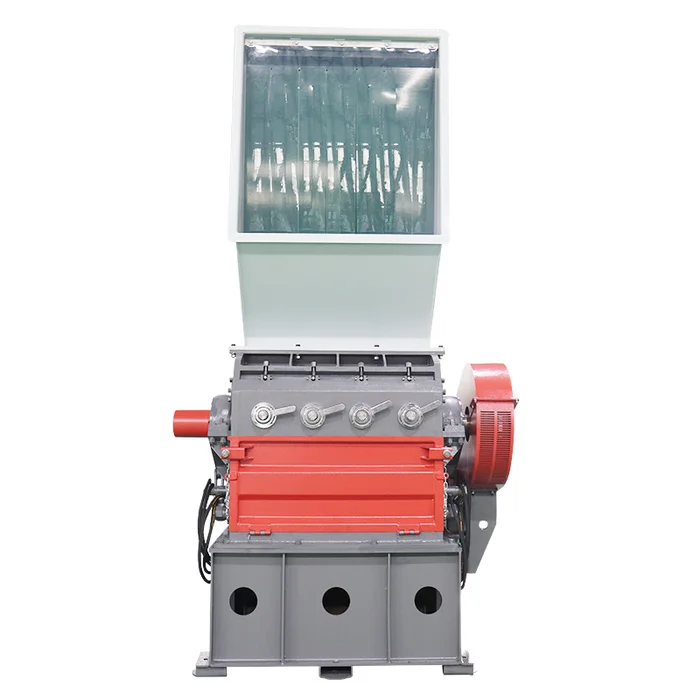
As waste volumes increase, so does demand for reliable crushing equipment. Industrial Plastic Waste Crusher WHC800/450

Why Did This Customer Visit the Canton Fair?

Like many professional buyers, this customer was not looking for brochures.

He was looking for answers.

Before arriving at our booth, his team had already evaluated suppliers from several countries.

They had clear objectives:

  • Increase processing capacity
  • Reduce machine downtime
  • Lower labor requirements
  • Improve particle size consistency

Most importantly, they wanted equipment capable of operating continuously under harsh conditions.

Temperatures in many Middle Eastern regions can be unforgiving.

Dust is everywhere.

Machines must perform despite challenging environments.

That requirement immediately eliminated many equipment options.

A machine that works in a showroom does not always work in the desert.

What Materials Will These Crusher Units Process?

One of the first questions I asked was simple:

“What materials are you crushing today?”

The answer covered a wide range of industrial plastics.

HDPE Drums

Large industrial drums require significant crushing force.

Their thick walls create high rotor loads.

Plastic Pallets

Pallet recycling volumes continue growing rapidly.

These products demand strong cutting performance.

Injection Molding Scrap

Factories generate substantial production rejects.

Efficient recycling helps recover material value.

Plastic Crates

Widely used in logistics and agriculture.

Often produced from durable HDPE or PP materials.

According to research published by the Industrial Polymer Recovery Center, hard plastic recovery rates continue improving as crushing technologies evolve.

This trend creates new opportunities for recyclers.

And opportunities require capacity.

Why Did They Choose Heavy-Duty Crushers Instead of Standard Models?

Many buyers underestimate the difference.

Until they see production data.

Heavy-duty crushers offer:

  • Larger rotor diameters
  • Stronger bearings
  • Increased flywheel effect
  • Higher throughput
  • Longer service life

The customer’s planned facility would process several thousand tons annually.

Standard machines could handle the workload initially.

But future expansion would quickly expose their limitations.

We discussed long-term operating costs.

Not just initial investment.

That conversation changed everything.

A larger machine often costs more upfront.

But it may cost less over its entire lifespan.

Experienced buyers understand this.

How Important Was Energy Efficiency During Negotiations?

Very important.

In fact, it became one of the key decision factors.

Electricity remains a major operating expense for recycling facilities.

Studies from the Industrial Energy Performance Database show that equipment efficiency significantly influences total production costs.

The customer carefully evaluated:

  • Motor efficiency
  • Rotor design
  • Cutting geometry
  • Energy consumption per ton

Modern crushing technology focuses on maximizing output while minimizing power consumption.

That balance matters.

Every kilowatt saved contributes directly to profitability.

What Technical Features Attracted the Most Attention?

The customer’s engineering team spent considerable time examining details.

Not marketing claims.

Details.

Several features stood out.

Heavy-Duty Rotor Construction

A robust rotor improves stability under heavy loads.

It also extends component lifespan.

Wear-Resistant Knife Design

Knife durability directly impacts maintenance costs.

Longer life means fewer shutdowns.

High-Capacity Bearing Systems

Reliable bearings reduce operational risk.

Especially during continuous production.

Intelligent PLC Controls

Automation improves consistency.

It also simplifies daily operation.

Easy Maintenance Access

Maintenance teams appreciate equipment designed by people who understand maintenance.

That sounds obvious.

Yet surprisingly few manufacturers achieve it.

What Questions Did the Customer Ask Before Signing?

Professional buyers ask professional questions.

This customer was no exception.

The discussion included:

  • Expected throughput rates
  • Spare parts availability
  • Blade replacement intervals
  • Service response times
  • Future capacity expansion options
  • Energy consumption benchmarks

According to the Global Recycling Equipment Buyer Survey, lifecycle support and service capability have become major purchasing criteria worldwide.

Buyers increasingly evaluate partnerships.

Not just equipment.

That shift benefits manufacturers willing to invest in long-term customer success.

Why Are Middle Eastern Recycling Projects Expanding So Rapidly?

Several factors are driving growth.

Government Sustainability Programs

Many countries have introduced recycling initiatives and environmental targets.

Growing Industrial Activity

Industrial growth generates more recyclable materials.

Circular Economy Investments

Investors increasingly support resource recovery projects.

Export Market Opportunities

Recycled plastics continue attracting demand globally.

Research from the Middle East Circular Economy Research Institute suggests that recycling infrastructure investment will remain strong throughout the coming years.

This trend creates substantial demand for processing equipment.

Especially durable equipment.

What Does This Order Mean for the Future of the Industry?

For me, this order represents more than a sales success.

It reflects changing buyer priorities.

Today’s customers are becoming increasingly sophisticated.

They evaluate:

  • Productivity
  • Reliability
  • Energy efficiency
  • Maintenance costs
  • Supplier capability
  • Long-term value

Price still matters.

Of course it does.

But it is no longer the only consideration.

The most successful recycling businesses understand that equipment performance directly impacts profitability.

That understanding is reshaping purchasing decisions worldwide.

What Lessons Can Other Recycling Businesses Learn?

Several valuable lessons emerge from this project.

First, think beyond purchase price.

Second, evaluate total operating costs.

Third, plan for future growth.

Fourth, prioritize reliability.

Finally, choose suppliers capable of supporting long-term operations.

The customer who ordered 10 crusher units was not buying machines.

He was investing in production capacity.

There is a difference.

A very important difference.

Conclusion

This Canton Fair order demonstrates how professional recyclers evaluate equipment today. Reliability, throughput, efficiency, and lifecycle value drive purchasing decisions. As recycling markets continue expanding across the Middle East, demand for heavy-duty hard plastic crusher solutions will only continue to grow.

#PlasticCrusher #HeavyDutyCrusher #PlasticRecycling #RecyclingEquipment #IndustrialCrusher #HDPERecycling
#PlasticWasteRecycling #CantonFair #PlasticRecyclingMachine
#RecyclingPlant