Cloud Factory Audit: How Did German Experts Inspect AMIGE’s Crusher Manufacturing Process Through Live Video?

Taizhou Amige Machinery Co.,Ltd

For decades, international customers believed one thing: if you wanted to verify a factory, you had to board a plane. Then the world changed. Travel became more expensive, schedules became tighter, and purchasing decisions needed to move faster. The challenge was obvious. How could overseas customers truly understand a manufacturer’s production capability without standing inside the workshop? Recently, a team of German recycling experts solved that problem by conducting a complete cloud factory audit of AMIGE through live video streaming.

The answer is surprisingly simple. Modern cloud factory audits combine high-definition video, real-time interaction, and transparent production demonstrations. German experts remotely inspected our manufacturing process, observed our machining centers, checked our quality control procedures, and even watched our crushers operating under load. The result was not only a successful technical verification but also a new model for global equipment sourcing.

I still enjoy shaking hands with customers in our workshop.

But I must admit.

Video streaming has become one of the most efficient passports in the machinery business.

Why Are Cloud Factory Audits Becoming Popular?

International equipment procurement is changing rapidly.

Customers need speed.

They also need trust.

According to the Global Industrial Procurement Survey, more than 68% of industrial buyers now perform remote supplier evaluations before arranging physical visits.

That number did not surprise me.

Modern buyers want answers immediately.

A cloud factory audit offers several advantages:

  • Lower travel costs.
  • Faster supplier verification.
  • Easier participation from multiple departments.
  • Better documentation.
  • More frequent technical communication.

The truth is simple.

A plane ticket does not automatically create trust.

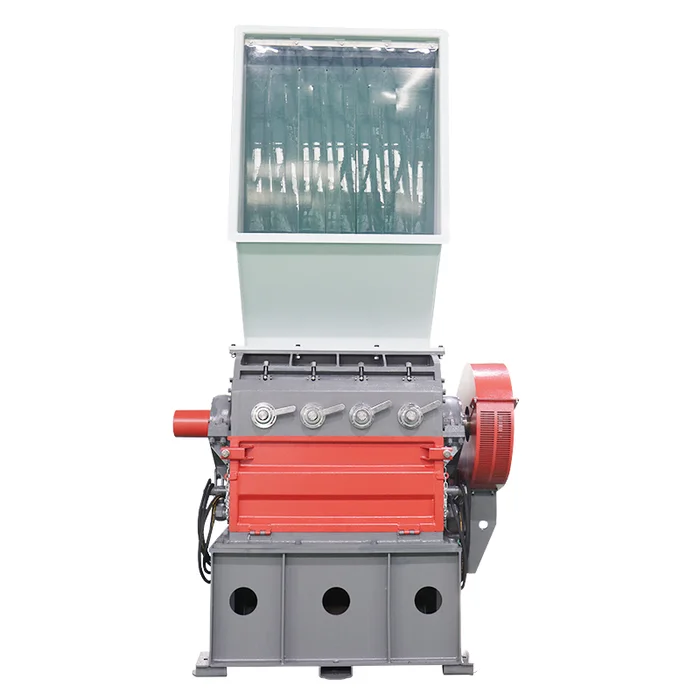
Transparency does. Customized Plastic Crusher Machine WHC1000/600

What Did the German Experts Want to See?

German engineers are famous for one thing.

They love details.

Actually, they love details so much that sometimes they ask questions my own engineers have never considered.

During the live inspection, they requested to examine:

  • Raw material processing.
  • Rotor manufacturing.
  • Blade installation procedures.
  • Welding standards.
  • Dynamic balancing tests.
  • Electrical assembly processes.
  • Finished machine testing.

They were particularly interested in our machining tolerances.

According to the European Manufacturing Quality Research Center, dimensional accuracy remains one of the most important indicators of equipment reliability.

I completely agree.

A crusher may look impressive.

But precision determines how long it survives.

How Did We Prepare for the Live Factory Inspection?

Preparation matters.

You cannot simply turn on a camera and hope for the best.

Several days before the audit, we prepared:

  • Multiple camera positions.
  • Stable high-speed internet connections.
  • Factory route planning.
  • Technical documents.
  • Machine testing schedules.
  • Bilingual engineering support.

I often compare cloud factory audits to open-book examinations.

If your factory is genuinely capable, there is nothing to fear.

If your factory only looks good in brochures, live video becomes dangerous.

Fortunately, our workshop is far more impressive than our brochures.

Which Production Processes Received the Most Attention?

The answer was easy.

Rotor manufacturing.

Every experienced buyer understands that the rotor is the heart of a crusher.

The German experts spent considerable time examining:

  • Rotor material selection.
  • Machining precision.
  • Dynamic balancing.
  • Welding quality.
  • Surface finishing.

Research from the Industrial Rotor Engineering Association indicates that poor rotor balance significantly increases vibration and bearing failures.

That is why we take rotor manufacturing seriously.

Very seriously.

I sometimes tell my engineers:

“If the rotor is wrong, everything else becomes decoration.”

How Did We Demonstrate Quality Control?

Quality control is not a department.

It is a habit.

During the cloud audit, we showed every stage of our inspection process.

The experts watched:

  • Incoming material inspection.
  • Component measurement.
  • Welding verification.
  • Assembly inspections.
  • Test running procedures.
  • Final machine acceptance.

We even demonstrated our measuring instruments live.

According to the Global Machinery Quality Report, manufacturers with transparent quality systems enjoy significantly higher customer retention rates.

That also did not surprise me.

Customers remember honesty.

Especially in the machinery business.

Why Did Live Machine Testing Matter So Much?

Because machines tell the truth.

Marketing slides can exaggerate.

Brochures can be edited.

PowerPoint presentations never break down.

Machines do.

During the live broadcast, we operated several crusher models.

The German experts monitored:

  • Motor performance.
  • Noise levels.
  • Material output.
  • Vibration behavior.
  • Discharge consistency.

One expert requested additional camera angles.

Another wanted close-up views of the rotor chamber.

No problem.

Transparency means confidence.

I believe customers should see everything.

Even the grease on the bearings.

Can Cloud Audits Replace Traditional Factory Visits?

Not entirely.

Nothing replaces standing next to a running crusher.

Nothing replaces touching the machine.

Nothing replaces hearing steel process plastic.

But cloud audits achieve something equally valuable.

They dramatically reduce uncertainty.

According to the Digital Manufacturing Transformation Institute, remote factory verification can shorten purchasing cycles by nearly 35%.

That is substantial.

In modern manufacturing, speed matters.

Trust matters even more.

What Did the German Experts Think of AMIGE’s Production Process?

At the end of the inspection, we held a technical discussion.

The feedback was encouraging.

They praised:

  • Workshop organization.
  • Production transparency.
  • Precision machining capability.
  • Testing procedures.
  • Engineering responsiveness.

One expert made a comment that I particularly appreciated.

He said:

“You made us feel like we were physically inside the factory.”

That sentence meant a lot to me.

Because our objective was never simply to show machines.

It was to build confidence.

What Does the Future of Factory Auditing Look Like?

I believe cloud factory audits are only the beginning.

The future may include:

  • Virtual reality factory tours.
  • Digital twin technology.
  • AI-assisted equipment inspections.
  • Interactive production simulations.
  • Real-time production data sharing.

According to the Smart Manufacturing Research Alliance, digital customer experiences will become a key competitive advantage for equipment manufacturers.

I agree completely.

Our industry builds heavy steel machines.

But the future of selling those machines is becoming remarkably digital.

And honestly, I think that is exciting.

Because excellent engineering deserves to be seen by customers everywhere.

Conclusion

Cloud factory audits are transforming international equipment sourcing. Through live video, transparency, and real-time interaction, overseas customers can inspect manufacturing capabilities with confidence. Our recent experience with German experts proved one thing clearly: trust can travel thousands of miles through a camera lens.

#CloudFactoryAudit #VirtualFactoryInspection #PlasticCrusher #RecyclingMachinery #AMIGE #IndustrialManufacturing #SmartFactory #PlasticRecycling #MachineryProduction #DigitalInspection