Technical Seminar: How Can Injection Molding Workshops Reduce Secondary Contamination During Runner Scrap Crushing?

Taizhou Amige Machinery Co.,Ltd

Every injection molding factory wants to recycle runner scrap efficiently. The material is valuable. The recycling opportunity is obvious. Yet many manufacturers encounter an unexpected problem. Secondary contamination. Dust enters the material stream. Foreign particles mix with regrind. Excessive heat affects material properties. Before long, product quality becomes inconsistent, customer complaints increase, and production efficiency declines. I have seen factories invest in excellent injection molding equipment while overlooking the crushing process sitting quietly beside the machine. Unfortunately, that small oversight can create expensive consequences.

The key to reducing secondary contamination during runner scrap crushing lies in a combination of closed-loop material handling, low-dust crushing technology, intelligent material separation, proper equipment maintenance, and optimized workshop management. During our recent technical seminar, AMIGE and industry experts agreed that controlling contamination at the source is far more effective than trying to remove it later.

The best recycled material is not the material you clean afterward.

It is the material that never becomes contaminated in the first place.

That simple idea guided much of our discussion.

Why Is Secondary Contamination a Growing Concern?

Many injection molding manufacturers are increasing their use of regrind material.

The reasons are obvious:

  • Lower raw material costs
  • Reduced waste generation
  • Improved sustainability
  • Better resource utilization

However, higher regrind usage also increases quality requirements.

According to the Global Injection Molding Quality Institute, contamination remains one of the leading causes of inconsistent product quality in recycled material applications.

Contamination can originate from:

  • Dust
  • Metal particles
  • Mixed polymers
  • Oil residues
  • Workshop debris
  • Improper material handling

Small contaminants often create large problems.

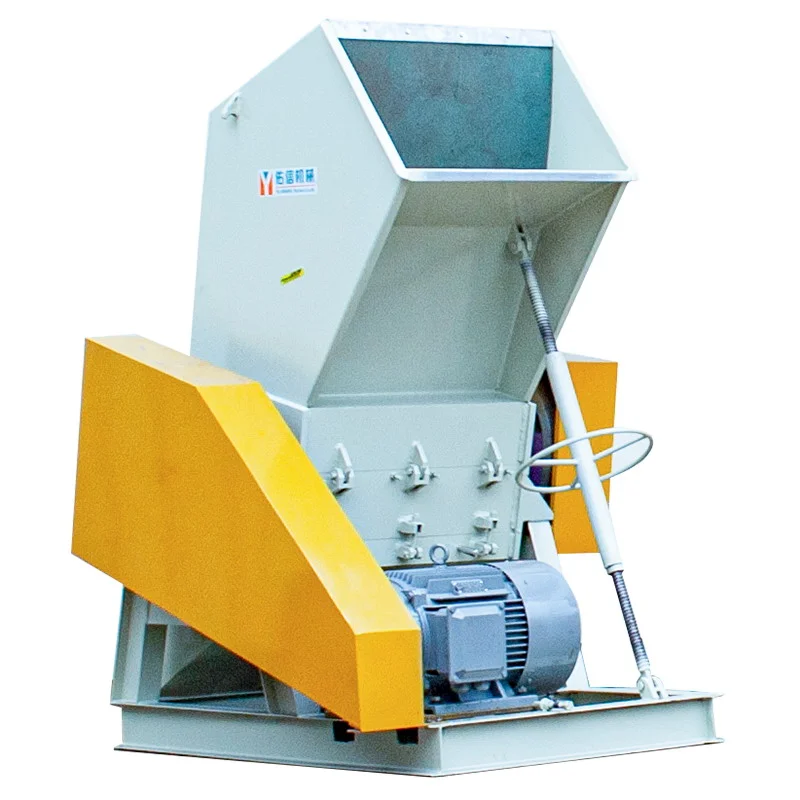
Especially when customers expect perfect parts. FS800 Plastic Crusher

What Types of Contamination Are Most Common?

During the seminar, experts identified several contamination sources frequently found in injection molding workshops.

These include:

Airborne Dust

Generated during crushing and material transfer.

Metal Fragments

Originating from worn machine components or external objects.

Mixed Material Contamination

Different polymers accidentally entering the same stream.

Oil and Grease

Produced during equipment maintenance.

Human Handling Errors

Sometimes the most unpredictable contamination source.

The Industrial Polymer Processing Laboratory reports that airborne dust and material mixing remain among the most common quality risks in plastics processing facilities.

Why Does Traditional Crushing Create Contamination Risks?

Traditional crushing systems were often designed with one primary goal.

Reduce size.

That is important.

But modern manufacturing requires more.

Open crushing systems frequently generate:

  • Dust emissions
  • Material leakage
  • Cross-contamination
  • Noise pollution

Once contaminants enter the material stream, removing them becomes difficult and expensive.

Many operators focus on crushing capacity.

I prefer to focus on material cleanliness.

Because clean material creates profitable products.

How Can Closed Crushing Systems Help?

One topic generated significant interest during the seminar.

Fully enclosed crushing systems.

These systems help minimize contamination by reducing material exposure to the surrounding environment.

Benefits include:

  • Reduced airborne dust
  • Improved material containment
  • Cleaner workshop conditions
  • Better operator safety

The Advanced Manufacturing Environment Center highlights enclosed material processing as an effective method for reducing contamination risks.

The principle is simple.

If contaminants cannot enter, they cannot cause trouble.

Why Is Dust Control So Important?

Dust is everywhere.

And it loves plastic.

Fine particles can cling to regrind materials and eventually enter the production process.

This can result in:

  • Surface defects
  • Color inconsistencies
  • Mechanical property variations
  • Product rejection

Several experts emphasized the importance of integrated dust collection systems.

Common solutions include:

  • Cyclone separators
  • Dust extraction units
  • Negative pressure systems
  • Centralized collection systems

According to the Global Dust Management Research Institute, effective dust control significantly improves material quality and workplace cleanliness.

Dust seems harmless.

Until it starts affecting product quality.

Then everyone notices.

Can Low-Speed Crushers Reduce Secondary Contamination?

Absolutely.

This topic generated considerable discussion.

Traditional high-speed crushers often generate:

  • Excessive dust
  • Heat buildup
  • Material degradation

Low-speed granulators offer several advantages:

  • Lower dust generation
  • Reduced noise levels
  • Less heat production
  • Better material preservation

The Polymer Processing Technology Forum notes that low-speed crushing technology can improve material quality retention during recycling operations.

Sometimes slower really is smarter.

That statement applies to machinery more often than many people expect.

How Does Material Separation Prevent Quality Problems?

Material mixing is another major concern.

A small amount of incorrect polymer can create significant processing issues.

For example:

  • PP mixed into ABS
  • PC mixed into PMMA
  • Colored materials mixed into natural resin

These mistakes often lead to:

  • Product defects
  • Customer complaints
  • Material waste

Experts discussed several preventive measures:

Dedicated Material Streams

Separate materials from the beginning.

Color Coding Systems

Simple but highly effective.

Automated Sorting Solutions

Increasingly popular in larger facilities.

The Industrial Materials Management Association identifies segregation practices as a critical component of quality control.

Organization is cheaper than troubleshooting.

Every time.

Why Is Equipment Maintenance Part of Contamination Control?

Poorly maintained equipment often becomes a contamination source.

Examples include:

  • Worn screens
  • Damaged blades
  • Loose fasteners
  • Lubricant leakage

Preventive maintenance reduces these risks.

Recommended practices include:

  • Routine inspections
  • Scheduled blade replacement
  • Seal verification
  • Lubrication management

The Global Equipment Reliability Institute reports strong correlations between maintenance quality and product consistency.

A machine in poor condition rarely produces excellent material.

Machines have standards too.

What Role Does Automation Play?

Automation is increasingly helping manufacturers reduce contamination risks.

Several technologies discussed included:

  • Automatic conveying systems
  • Closed-loop material transport
  • Smart monitoring sensors
  • Centralized feeding systems

These solutions reduce manual handling.

Less handling means fewer contamination opportunities.

The Smart Manufacturing Development Council highlights automation as an effective tool for improving both efficiency and quality consistency.

Humans are talented.

But they occasionally drop things.

Machines usually do not.

What Practical Recommendations Emerged from the Seminar?

At the conclusion of the seminar, participants agreed on several best practices:

  1. Use enclosed crushing systems whenever possible.
  2. Implement effective dust collection.
  3. Consider low-speed crushing technologies.
  4. Maintain strict material segregation.
  5. Establish preventive maintenance schedules.
  6. Minimize manual material handling.
  7. Train operators regularly.
  8. Monitor contamination sources continuously.

None of these recommendations are revolutionary.

Together, however, they can dramatically improve material quality.

Why Will Contamination Control Become More Important in the Future?

The industry is moving toward:

  • Higher recycled content requirements
  • Stricter quality standards
  • Greater process automation
  • Increased customer expectations

As recycled materials become more important in manufacturing, contamination control will become a competitive advantage.

Companies capable of producing cleaner regrind will enjoy stronger market positions.

Quality is no longer optional.

It is a business strategy.

Conclusion

Reducing secondary contamination during runner scrap crushing requires a combination of enclosed systems, dust control, low-speed crushing, material segregation, and preventive maintenance. Our technical seminar confirmed that contamination prevention is far more effective than contamination correction. In modern injection molding operations, cleaner regrind means higher quality, lower costs, and stronger competitiveness.

#InjectionMolding #PlasticCrusher #PlasticGranulator #RegrindMaterial #PlasticRecycling
#IndustrialRecycling #PlasticMachinery #DustFreeProduction #InjectionMoldingMachine #AMIGE