An automotive plastic recycling line must begin with dismantling and material identification. Bumpers, dashboards, interior trim and underbody parts can contain different polymers, coatings, foam, textiles, fasteners, metal and electronic components. Crushing mixed parts does not automatically create a marketable plastic fraction.
I recommend defining the incoming stream and the required downstream specification before selecting shredding, granulation, washing or separation equipment.
Classify Automotive Plastic Before Size Reduction
| Scrap stream | Common processing question | Preprocessing focus |
|---|---|---|
| Bumper covers | Are paint, brackets, sensors or reinforcement attached? | Dismantling, metal removal and polymer identification |
| Dashboard assemblies | Are rigid plastic, foam, film and electronics combined? | Component separation before shredding |
| Interior trim | Are textiles, clips or coatings present? | Sorting by construction and target route |
| Wheel-arch or underbody parts | How much dirt, oil or road residue is present? | Contamination control and wash-load definition |
| Production offcuts | Are polymer and source already traceable? | Keep clean factory scrap separate from post-use parts |
| Mixed dismantling scrap | Can incompatible materials be removed economically? | Sampling and recovery test before line sizing |
Configure Size Reduction and Washing Around Contamination
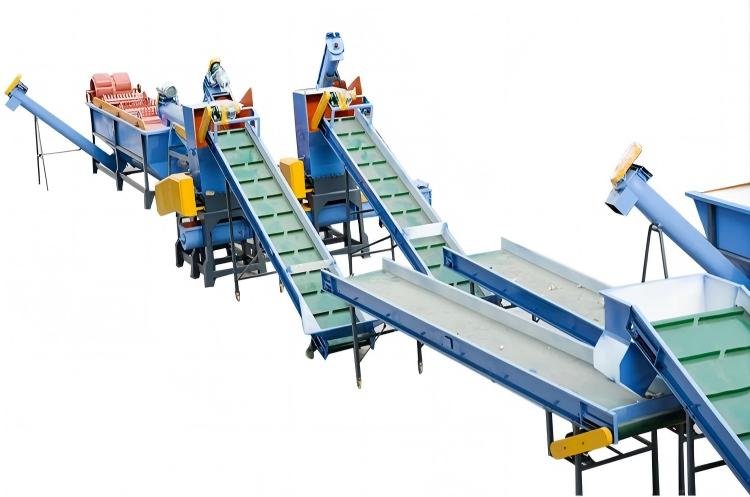
Large bumper sections may require primary shredding before granulation. The crusher, screen and conveying system should be selected around the largest prepared part and target liberation. Washing stages depend on paint, labels, soil, oil, adhesive and the required product quality.
A heavy-duty plastic crusher with controlled discharge can be reviewed for rigid prepared parts. The linked plastic washing line illustrates common washing and drying operations, but an automotive application requires its own material test and configuration.
Define Separation and Output Acceptance
- Set limits for metal, rubber, foam, textile and other polymers.
- Define target flake size and acceptable fines.
- Specify moisture, surface contamination and batch traceability.
- Sample the line at agreed points rather than only final storage.
- Measure usable output after rejects and recirculation.
- Confirm the next buyer or process accepts the resulting material.
Automation should coordinate feed, overload response, conveyors and separation, but it does not replace correct dismantling and sorting. The line acceptance test should use representative prepared automotive scrap.
Frequently Asked Questions
Can bumpers and dashboards be processed in one line?
Possibly, but their construction and contamination differ. Separate trials and changeover rules may be required.
Is washing always required?
No. It depends on contamination and the next process or buyer’s specification. Clean production scrap may follow a different route.
When is a shredder needed before the crusher?
It is considered when prepared parts remain too large, thick or irregular for safe and consistent crusher feeding.
How is metal controlled in automotive plastic scrap?
Use dismantling, inspection and appropriate separation steps based on the metal type, size and location.
What information is needed for line design?
Send part types, polymers, photos, maximum dimensions, contaminants, hourly volume, target output, utilities and factory layout.
Request an Automotive Scrap Review
Use the AMIGE inquiry page to provide representative automotive parts and the required output specification. We can map dismantling, size reduction, washing and separation before proposing a line.