Many traditional crushing workshops were built during a different era. Back then, if the machine could run and output material, most factory owners were satisfied. Dust floating in the air? Normal. Workers shouting over machine noise? Also normal. But environmental inspections today are no longer satisfied with “normal.” Regulators now examine dust emissions, workshop noise levels, ventilation efficiency, wastewater treatment, and even operator working conditions. I have seen factories lose orders, receive penalties, and suspend production simply because their old workshops could not pass modern environmental compliance checks.
The good news is that traditional crushing workshops can absolutely achieve environmental compliance through targeted upgrades. In my experience at Amige, the key lies in combining enclosed crushing systems, negative-pressure dust collection, soundproof structures, intelligent airflow management, and proper workshop layout optimization. Factories do not always need to rebuild from scratch. Smart retrofitting often delivers faster ROI while helping plants pass inspections and improve production stability at the same time.
And honestly, cleaner workshops usually become more profitable workshops too.
Funny how that works.
Why Are Environmental Inspections Becoming More Strict?
The recycling industry has changed dramatically.
Years ago, many local governments focused mainly on production growth. Today, environmental compliance has become equally important.
Why?
Because public expectations changed.
Communities no longer tolerate factories producing uncontrolled dust and constant industrial noise. Regulators also face increasing pressure to improve air quality and workplace safety.
According to Global Industrial Emission Monitoring Report, industrial dust complaints in manufacturing zones increased by nearly 38% over the past five years.
That trend pushes inspection standards higher every year.
For recycling factories, crushing workshops often become the primary inspection target because they generate:
- Airborne plastic dust
- Noise pollution
- Vibration
- Fine particulate matter
- Material leakage
Unfortunately, many old workshops were never designed to control these problems properly.
Some look less like modern factories and more like sandstorms with motors attached.
What Are The Biggest Dust Problems In Traditional Crushing Workshops?
Dust does not come from only one source.
This is where many factory owners misunderstand the problem.
Dust usually appears during:
- Feeding
- Crushing
- Material transfer
- Air separation
- Bagging
- Discharge operations
Each stage creates different airflow patterns.
Simply installing one dust collector rarely solves everything.
At Amige, we often discover three major mistakes in older workshops:
- Open feeding systems
- Poor airflow direction
- Insufficient negative pressure
Without airflow control, dust spreads across the workshop instead of moving toward collection points.
And plastic dust is particularly troublesome.
It is lightweight. Static-prone. Easy to suspend in air.
According to Industrial Air Quality Research Center, airborne plastic particles smaller than 10 microns can remain suspended inside enclosed workshops for several hours without proper ventilation systems.
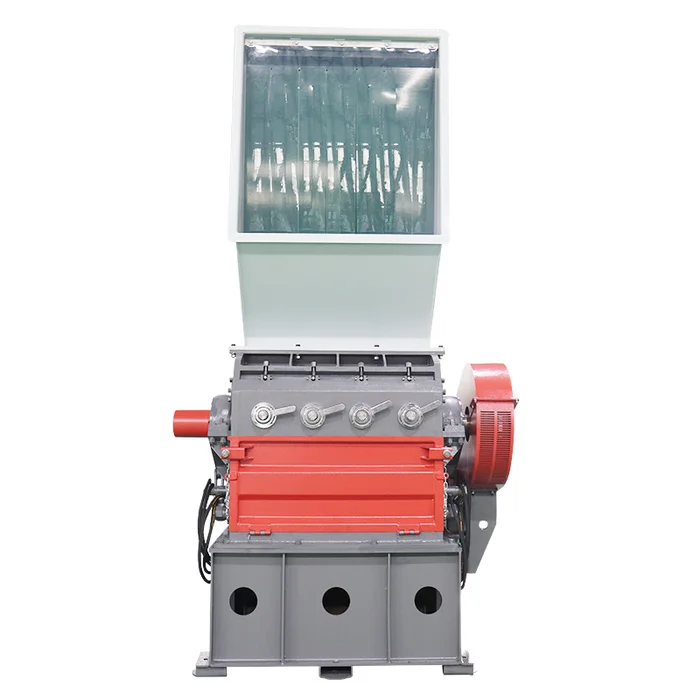
That creates both compliance and health risks. Customized Plastic Crusher Machine WHC1000/600
Why Is Negative Pressure Dust Collection So Important?
Because dust must be controlled before it escapes.
Not after.
Traditional workshops often rely on natural ventilation or simple exhaust fans. Unfortunately, this usually spreads dust instead of capturing it.
Negative-pressure systems work differently.
They create controlled airflow that pulls airborne particles toward filtration equipment before dust disperses into the workshop environment.
In our projects, we typically combine:
- Cyclone separators
- Pulse bag dust collectors
- Enclosed conveyor systems
- Sealed feeding hoppers
- Airflow balancing ducts
The goal is simple:
Control the dust pathway.
One overlooked issue is duct design.
A powerful dust collector connected to poorly designed piping behaves like an athlete breathing through a straw.
System balance matters more than isolated component size.
Can Enclosed Crushing Chambers Really Reduce Pollution?
Absolutely.
This upgrade alone can dramatically improve workshop conditions.
Older crushing systems often operate semi-open because operators want easier maintenance access. But open structures allow dust and noise to escape freely.
Modern enclosed chambers help contain:
- Dust diffusion
- Sound waves
- Material splashing
- Air turbulence
We frequently recommend modular acoustic enclosures with observation windows and maintenance access doors.
Operators still access the equipment when needed, but the system remains sealed during operation.
According to Factory Nose Reduction Association, enclosed crushing structures can reduce workshop noise levels by 12–18 dB on average.
That difference feels enormous inside a production environment.
Anyone who has stood beside an old crusher without ear protection understands this immediately.
It sounds like a helicopter arguing with a tractor.
How Does Workshop Layout Affect Environmental Compliance?
More than many people realize.
I have visited factories with excellent machines but terrible layout planning.
Dust-heavy operations were positioned near packaging areas.
Material flow crossed worker walkways.
Ventilation outlets faced directly toward neighboring buildings.
The result?
Chaos.
Good workshop design separates:
- Crushing zones
- Washing zones
- Storage zones
- Finished product areas
- Operator pathways
Airflow direction also matters enormously.
At Amige, we often redesign workshops so fresh air enters from cleaner zones and exits through dust-control areas. This prevents contamination from spreading throughout the factory.
Simple layout changes sometimes solve problems more effectively than expensive equipment upgrades.
A smart factory is not always the factory with the most machines.
Sometimes it is simply the factory with fewer bad decisions.
Why Is Noise Control Becoming A Serious Compliance Issue?
Because regulators increasingly monitor workplace safety standards alongside environmental emissions.
Continuous high noise exposure affects:
- Worker hearing
- Communication safety
- Equipment monitoring
- Employee retention
According to Occupational Manufacturing Satefy Database, prolonged exposure above 85 dB significantly increases industrial hearing risk.
Unfortunately, many old crushing workshops exceed 95 dB easily.
Especially when:
- Rotor imbalance develops
- Bearings wear out
- Blade gaps increase
- Machine foundations loosen
Noise control requires both structural and mechanical solutions.
We usually recommend:
- Acoustic insulation panels
- Vibration damping foundations
- Flexible coupling systems
- Soundproof operator rooms
- Regular rotor balancing
Good maintenance also reduces noise.
Neglected equipment always becomes louder over time.
Machines complain before they fail.
Most factories simply ignore the warning signs.
Can Intelligent Automation Help Reduce Dust And Noise?
Definitely.
Automation reduces unnecessary human interaction with high-pollution zones.
For example:
- Automatic feeding systems reduce material spills
- Intelligent load control stabilizes rotor speed
- Automated discharge reduces airborne dust
- Centralized PLC monitoring reduces operator exposure
In modern recycling plants, operators increasingly manage systems remotely from enclosed control rooms.
This improves:
- Workplace comfort
- Operational safety
- Production consistency
- Inspection compliance
According to Smart Manufacturing Systems Review, automated environmental control systems reduce uncontrolled particulate emissions by up to 31%.
That is a significant improvement.
And frankly, younger workers increasingly expect cleaner workplaces.
The era of “surviving the workshop” is disappearing.
Should Older Factories Renovate Or Build New Workshops?
Usually renovate first.
Complete reconstruction sounds impressive, but it is often unnecessary.
Many traditional workshops already possess:
- Stable infrastructure
- Existing utilities
- Production experience
- Established logistics systems
Strategic retrofitting often delivers better investment efficiency.
At Amige, we usually recommend phased upgrades:
- Dust collection optimization
- Equipment enclosure installation
- Noise insulation improvements
- Airflow redesign
- Automation enhancement
This approach minimizes downtime while gradually improving compliance.
A factory does not become modern overnight.
Industrial upgrading is a process, not magic.
Even the best machines cannot fix poor planning instantly.
Why Are Customers Paying More Attention To Environmental Compliance?
Because compliance increasingly affects business survival.
Large buyers now evaluate supplier sustainability standards more carefully.
Government inspections influence:
- Operating licenses
- Financing approvals
- Export certifications
- Customer audits
According to Gloabal Sustainable Manufacturing Index, over 57% of international plastic buyers now consider environmental production conditions during supplier qualification.
That changes everything.
Environmental compliance is no longer “extra cost.”
It is becoming competitive infrastructure.
Factories with cleaner operations often attract:
- Better customers
- Better workers
- Better financing opportunities
Meanwhile, poorly maintained workshops face growing pressure every year.
What Have I Learned From Helping Factories Upgrade?
The biggest lesson?
Most environmental problems are engineering problems.
Not political problems.
Not impossible problems.
Factories usually fail inspections because:
- Airflow is uncontrolled
- Machines are outdated
- Maintenance is neglected
- Workshop design is inefficient
Once these issues are addressed systematically, compliance becomes much easier.
At Amige, we always remind customers that environmental upgrading should improve production efficiency too.
A properly designed dust-control system protects bearings.
Noise reduction stabilizes machine structures.
Better airflow improves worker comfort.
Clean factories usually operate more smoothly.
That is not coincidence.
That is industrial logic.
Conclusion
Traditional crushing workshops can achieve modern environmental compliance through smart dust collection, soundproofing upgrades, enclosed systems, airflow optimization, and automation improvements. In today’s recycling industry, cleaner factories are not only safer and more compliant — they are also more competitive, efficient, and profitable in the long run.