Many recycling plants focus heavily on shredding capacity, motor power, and blade durability. Then they discover a costly problem. The output size does not match the next production stage. Material that is too large can reduce washing efficiency. Material that is too fine may increase energy consumption and dust generation. I have seen entire recycling lines lose productivity simply because the wrong screen size was selected. The challenge is clear. Different materials and applications require different particle sizes. One fixed solution rarely fits every production requirement.
The answer lies in adjustable screen technology. By using interchangeable screens with apertures ranging from 3mm to 20mm, recyclers can precisely control output size according to downstream processing needs. At AMIGE, we design crushing and shredding systems with flexible screen configurations that help customers achieve better product consistency, improved processing efficiency, and greater operational flexibility without replacing entire machines.
Output size may seem like a small detail.
In reality, it influences nearly every step of the recycling process.
That is why I often say the screen is not the final component.
It is the first step toward product quality.
Why Does Output Size Matter So Much in Plastic Recycling?
Many operators assume smaller is always better.
That is not true.
Every downstream process has its own preferred particle size.
For example:
- Washing lines may prefer 12mm to 20mm flakes.
- Pelletizing systems often require more uniform material.
- Fine grinding operations may need 3mm to 8mm particles.
- Sorting systems perform better with consistent dimensions.
According to the Global Recycling Efficiency Institute, particle size uniformity significantly affects washing efficiency, drying performance, and pellet quality.
Poor size control creates unnecessary bottlenecks.
Good size control creates smooth production flow.
What Role Does the Screen Play in Material Processing?
The screen acts as the gatekeeper.
Material cannot leave the crushing chamber until it reaches the desired size.
This simple principle has a major impact on performance.
The screen determines:
- Output particle size
- Material retention time
- Production efficiency
- Energy consumption
- Product consistency
When material remains longer inside the chamber, it experiences additional cutting cycles.
That improves size reduction.
However, it can also increase energy usage.
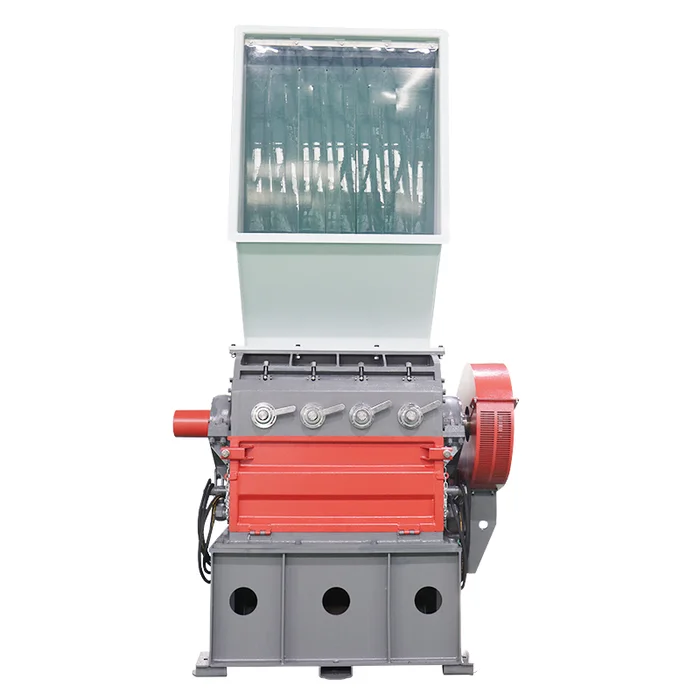
Finding the correct balance is critical. Customized Plastic Crusher Machine WHC1000/600
Why Choose Adjustable Screens Instead of Fixed Screens?
Flexibility.
That single word explains everything.
A fixed screen limits production options.
An adjustable screen expands them.
Consider a recycling plant processing multiple materials:
Monday:
HDPE drums.
Wednesday:
PP woven bags.
Friday:
ABS housings.
Each material may require a different output specification.
Without adjustable screens, operators face limitations.
With interchangeable screens, the same machine can adapt quickly.
The Industrial Material Recovery Research Center notes that flexible equipment configurations improve equipment utilization rates and production versatility.
One machine.
Multiple applications.
That is a better investment.
How Does a 3mm Screen Differ from a 20mm Screen?
The difference is greater than many people realize.
A 3mm screen produces finer output.
This often provides:
- Better material uniformity
- Improved mixing performance
- Enhanced downstream precision
However, finer screens also create:
- Higher energy demand
- Lower throughput
- Increased wear
A 20mm screen delivers:
- Higher throughput
- Lower power consumption
- Reduced rotor load
- Faster production rates
The correct choice depends on the final application.
There is no universal winner.
Only the right solution for the right process.
What Materials Benefit Most from Fine Output Sizes?
Several materials perform better with smaller particle dimensions.
Examples include:
PET Bottle Flakes
Uniform sizing improves washing and contamination removal.
Engineering Plastics
Fine particles help achieve stable extrusion performance.
Electronic Waste Plastics
Smaller particle sizes improve separation efficiency.
High-Value Recycled Materials
Consistent feedstock often increases final product value.
Research published by the Advanced Polymer Processing Laboratory highlights the relationship between particle consistency and downstream manufacturing quality.
In recycling, details create profits.
Millimeters matter.
What Materials Prefer Larger Output Sizes?
Not every application requires fine particles.
Many operations intentionally choose larger flakes.
Examples include:
Agricultural Film Recycling
Large flakes often improve washing line throughput.
HDPE Containers
Medium-size output balances efficiency and processing quality.
Pipe Recycling
Larger particles may reduce unnecessary energy consumption.
Pre-Shredding Applications
Coarser output prepares material for secondary processing.
The Global Plastics Recovery Association reports that oversized reduction beyond process requirements often increases operating costs without providing additional value.
Smaller is not always smarter.
Sometimes bigger wins.
How Does Screen Design Influence Machine Efficiency?
Screen design affects more than output size.
It influences the entire machine.
Important factors include:
- Hole diameter
- Open area percentage
- Material thickness
- Structural strength
- Airflow characteristics
A poorly designed screen can create:
- Material blockage
- Reduced throughput
- Increased vibration
- Excessive wear
A well-designed screen supports stable operation and consistent production.
At AMIGE, we treat screens as engineered components.
Not simple accessories.
Because performance depends on every detail.
What Challenges Exist When Using Very Fine Screens?
Fine screens offer benefits.
They also introduce challenges.
Common concerns include:
Reduced Throughput
Smaller openings slow material discharge.
Increased Heat Generation
Material remains inside the chamber longer.
Higher Wear Rates
More cutting cycles increase blade exposure.
Greater Dust Generation
Fine particles create additional airborne material.
This is why proper machine configuration becomes essential.
Rotor design.
Knife arrangement.
Motor selection.
Screen size.
Everything must work together.
The International Size Reduction Technology Forum emphasizes the importance of balancing particle size objectives with overall system efficiency.
How Quickly Can Operators Change Screen Sizes?
This question comes up frequently.
And for good reason.
Downtime costs money.
Modern quick-change screen systems allow operators to switch between screen sizes rapidly.
Benefits include:
- Reduced maintenance time
- Increased production flexibility
- Faster product changeovers
- Improved machine utilization
At AMIGE, we continuously improve screen replacement designs because we understand one reality.
Customers want to produce material.
Not spend hours changing components.
A machine should work for the operator.
Not the other way around.
What Should Buyers Consider When Selecting Screen Sizes?
Before choosing a screen configuration, I recommend evaluating:
- Material type
- Required output size
- Downstream processing requirements
- Production capacity targets
- Energy consumption goals
- Future material flexibility
These factors help determine the optimal screen range.
Many customers benefit from maintaining multiple screen sets.
That approach provides flexibility as business needs evolve.
The most successful recyclers prepare for tomorrow.
Not just today.
Why Will Adjustable Screen Technology Become More Important in the Future?
Recycling markets continue to diversify.
Customers process more material types than ever before.
Production requirements change frequently.
Product specifications become stricter.
As a result, flexibility becomes increasingly valuable.
Adjustable screen technology allows recyclers to respond quickly without major equipment investments.
The future belongs to adaptable systems.
Rigid solutions struggle in dynamic markets.
Conclusion
Adjustable screen designs provide recyclers with the flexibility to achieve output sizes from 3mm to 20mm while optimizing efficiency, quality, and profitability. In my experience, precise particle size control is not a minor feature. It is one of the most powerful tools for improving recycling performance and maximizing equipment value.
#PlasticCrusher #PlasticRecycling #IndustrialCrusher #PlasticMachinery #RecyclingEquipment
#PlasticGranulator #WastePlasticRecycling #SizeReduction #PlasticProcessing #AMIGE