Heavy-Duty Crusher Update: What Is the Best One-Pass Crushing Solution for Large-Diameter Pipes and Thick-Wall Housings?

Taizhou Amige Machinery Co.,Ltd

Every recycling plant eventually faces the same headache. A mountain of oversized plastic pipes. Thick-walled machine housings. Bulky industrial scraps that simply refuse to fit into conventional crushers. Operators cut them manually. Production slows down. Labor costs rise. Equipment suffers excessive wear. I have seen customers lose valuable processing hours every week because their existing systems were never designed for these extreme materials. The challenge is real, but the solution does not have to be complicated.

A one-pass crushing solution designed specifically for large-diameter pipes and thick-wall plastic housings can dramatically improve throughput, reduce labor requirements, and eliminate unnecessary pre-cutting operations. At AMIGE, we have developed heavy-duty crushing systems capable of handling oversized plastics directly, helping recyclers achieve higher efficiency, lower operating costs, and more stable particle size output in a single processing stage.

Many buyers focus only on motor power.

I prefer to focus on the entire material flow.

That is where real productivity lives.

Why Are Large-Diameter Pipes So Difficult to Crush?

Large HDPE, PVC, and PP pipes create unique challenges.

Their diameter may exceed 800mm.

Some municipal drainage pipes can even reach 1200mm or larger.

The wall thickness is another problem.

A pipe with a 50mm wall behaves very differently from thin packaging waste.

According to a report from Global Plastic Infrastructure Review, large-diameter plastic pipe usage has increased significantly in municipal projects over the past decade.

Traditional crushers encounter several problems:

  • Material bouncing
  • Feeding difficulties
  • Rotor overload
  • Excessive vibration
  • Knife wear acceleration
  • Frequent blockages

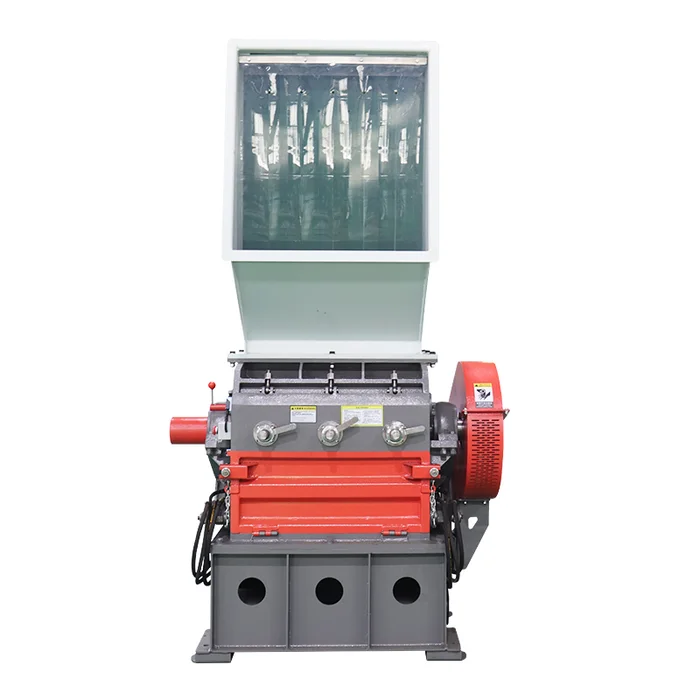
A standard crusher often becomes a very expensive noise generator when facing these materials. Industrial Plastic Waste Crusher WHC800/450

What Makes Thick-Wall Machine Housings Even More Challenging?

Machine housings are deceptive.

They look simple.

Then they destroy your productivity.

Injection-molded housings from industrial equipment, automotive parts, battery casings, and logistics containers often feature:

  • Reinforcement ribs
  • Structural corners
  • Variable wall thickness
  • Metal inserts
  • High-density engineering plastics

Many contain ABS, PP, HDPE, PA, or PC materials.

According to data published by Industrial Plastics Processing Center, thick-wall industrial components can require up to three times more crushing force than ordinary consumer plastic waste.

The problem is not just hardness.

The problem is geometry.

Odd shapes create unpredictable loading on the rotor.

That is where heavy-duty engineering becomes essential.

Why Is One-Pass Crushing Becoming the Industry Standard?

Years ago, many recyclers accepted multi-stage processing.

Cut first.

Shred second.

Crush third.

Repeat whenever necessary.

Today, labor costs tell a different story.

Every extra handling step increases:

  • Operating expenses
  • Safety risks
  • Equipment footprint
  • Energy consumption

A one-pass solution minimizes these issues.

Our customers increasingly request complete processing with minimal intervention.

This trend is also highlighted in the Global Recycling Automation Survey.

The goal is simple.

Feed large materials once.

Receive uniform flakes continuously.

No babysitting required.

What Features Allow Heavy-Duty Crushers to Process Oversized Materials?

This is where engineering matters.

Marketing brochures love big motor numbers.

I love talking about rotor design.

The rotor is the heart of the machine.

For oversized pipes and housings, we typically focus on:

Extra-Large Feed Opening

A larger feed opening reduces preparation work.

Operators spend less time cutting materials.

Productivity rises immediately.

Reinforced Rotor Structure

Heavy materials generate enormous impact loads.

A reinforced rotor prevents deformation during continuous operation.

High-Torque Drive System

Torque wins battles against thick plastics.

Not speed.

A properly designed high-torque system maintains stable crushing performance.

Wear-Resistant Cutting Tools

Our heavy-duty models frequently utilize advanced alloy steel solutions.

Knife life directly affects profitability.

Longer life means fewer shutdowns.

Intelligent Overload Protection

Modern PLC systems continuously monitor operating conditions.

When overload occurs, automatic reversal functions help prevent damage.

Nobody enjoys replacing broken components.

Especially on a Friday afternoon.

How Does Material Thickness Affect Equipment Selection?

Thickness often matters more than diameter.

A 1200mm pipe with a thin wall may be easier to process than a 600mm pipe with an extremely thick wall.

When evaluating projects, I typically review:

  • Maximum wall thickness
  • Material density
  • Material type
  • Piece dimensions
  • Moisture content
  • Required output size

According to research from Polymer Recycling Engineering Institute, crushing force requirements increase exponentially as wall thickness grows.

This is why machine selection should never rely solely on feed size.

The material tells the real story.

Can One Machine Handle Both Pipes and Thick-Wall Housings?

The short answer?

Yes.

The practical answer?

It depends on proper configuration.

A versatile heavy-duty crushing system may include:

  • Adjustable knife arrangements
  • Replaceable screens
  • Variable rotor designs
  • Different motor configurations
  • Customized feeding systems

At AMIGE, we often customize rotor geometry according to customer materials.

A municipal pipe recycler has different requirements than an automotive plastic recycler.

One machine platform.

Different optimization strategies.

That flexibility improves investment returns.

What Benefits Can Recyclers Expect After Upgrading?

The improvements are usually visible immediately.

Many customers report benefits such as:

Reduced Labor Costs

Less pre-cutting.

Less manual handling.

More automation.

Higher Throughput

Continuous feeding increases hourly output.

Better Particle Uniformity

Consistent flakes improve downstream washing and pelletizing efficiency.

Lower Maintenance Costs

Heavy-duty construction reduces unexpected downtime.

Improved Plant Safety

Fewer manual operations mean fewer risks.

Data from the Advanced Recycling Operations Benchmark Report suggests that optimized crushing systems can significantly improve overall plant productivity and equipment utilization rates.

The exact results vary.

The direction rarely does.

Upward.

What Should Buyers Consider Before Investing?

Before purchasing any heavy-duty crusher, I recommend asking several critical questions:

  1. What is the largest material dimension?
  2. What is the maximum wall thickness?
  3. What material is being processed?
  4. What output size is required?
  5. What hourly capacity is expected?
  6. Will the material contain contaminants?
  7. Is future capacity expansion planned?

These answers determine the correct machine configuration.

Not the sales brochure.

Not the paint color.

And certainly not the size of the company logo.

The right machine is the machine that matches the application.

Why Is Heavy-Duty Crushing Becoming More Important Worldwide?

Plastic products continue getting larger.

Infrastructure projects demand larger pipes.

Industrial equipment generates bigger plastic housings.

Automotive and energy sectors increasingly use engineering plastics.

As a result, recyclers face heavier and more challenging waste streams every year.

Equipment must evolve accordingly.

Heavy-duty crushing technology is no longer a niche solution.

It is rapidly becoming a core requirement for modern recycling facilities.

Those who prepare today will process tomorrow’s materials more profitably.

Conclusion

Oversized pipes and thick-wall housings demand more than ordinary crushing equipment. A properly engineered one-pass heavy-duty crushing solution reduces labor, improves throughput, and strengthens profitability. In my experience, matching machine design to material characteristics remains the fastest path to long-term recycling success.

#PlasticCrusher #HeavyDutyCrusher #PlasticShredder #IndustrialCrusher #PlasticRecycling #RecyclingEquipment #PlasticWasteRecycling #HDPERecycling #PVCRecycling #PPRecycling #PipeRecycling #LargeDiameterPipe #IndustrialRecycling #WasteManagement #CircularEconomy #RecyclingTechnology #PlasticProcessing
#SizeReduction #Granulator #RecyclingPlant #PlasticMachinery #RecyclingIndustry #IndustrialEquipment
#ManufacturingTechnology #SustainableManufacturing #HeavyDutyMachinery #EngineeringPlastics
#MaterialRecovery #AMIGE #PlasticRecyclingMachine