A small recycling plant does not need automation because an exhibition says it is fashionable. It needs automation when manual feeding, inconsistent flow, dust, repeated handling or limited labor prevents the existing process from meeting a realistic production target.
I start with the material path from arrival to accepted flakes. The correct line may automate only the true bottlenecks instead of turning every conveyor into an expensive decoration.
Map the Material Flow Before Choosing Machines
| Process stage | Buyer input | Automation question |
|---|---|---|
| Receiving and sorting | Material type, contamination and package form | What must remain manual for quality control? |
| Feeding | Largest piece, bulk density and hourly variation | How will bridging and overfeeding be prevented? |
| Size reduction | Target flake, required output and operating hours | Is one crusher sufficient or is primary shredding needed? |
| Discharge | Conveying, dust and metal-control requirements | Can material leave the chamber without accumulation? |
| Storage or downstream use | Bagging, washing or pelletizing interface | Where must flow be buffered or measured? |
Automate the Bottleneck, Not the Entire Workshop
Controlled feeding can stabilize crusher load. A discharge conveyor can reduce manual collection. Interlocks can stop upstream equipment when the crusher trips. Dust extraction and metal control may be more valuable than another conveyor when material quality is the real problem.
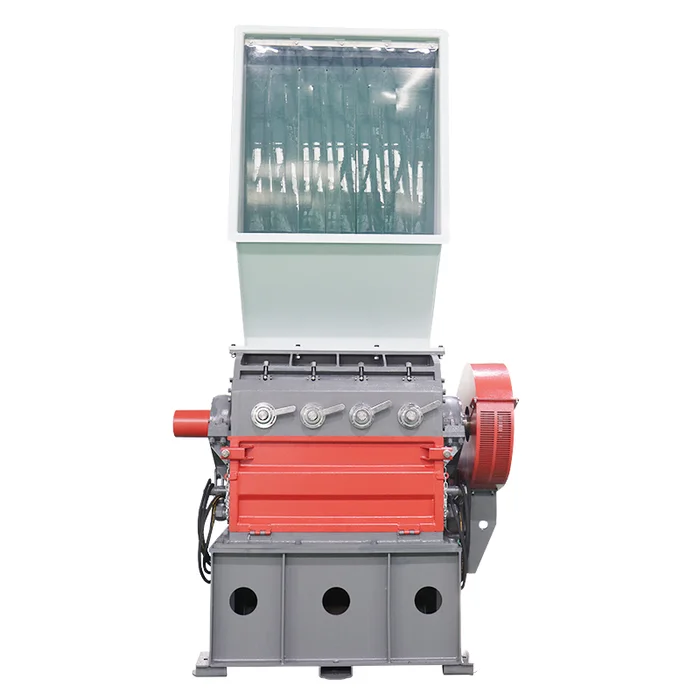
For dense rigid scrap, the WHC800/450 rigid plastic lump crusher can be reviewed as part of a line. The feed opening, rotor, screen and discharge must still be confirmed against representative material.
Plan for Operation, Maintenance and Expansion
- Keep safe access to knives, screens, bearings and cleaning points.
- Define manual and automatic operating modes.
- Show every emergency stop and interlock on the control description.
- Allow buffer space for variable incoming material.
- Confirm workshop height, floor loading and electrical supply.
- Reserve interfaces for future separation, washing or pelletizing equipment.
Frequently Asked Questions
Does a small plant need a fully automatic line?
Not always. Target the stages where labor, safety or unstable flow creates a measurable bottleneck.
Can automation increase crusher capacity?
Stable feeding and discharge can improve utilization, but the crusher and downstream equipment still define the safe process capacity.
Should a shredder be installed before the crusher?
It depends on feed dimensions, geometry and contamination. Bulky or irregular parts may benefit from primary size reduction.
How should the line handle a crusher overload?
The control sequence should stop upstream feeding, alarm the operator and follow the approved stop, inspection and restart procedure.
What is needed for a line quotation?
Send material photos, largest dimensions, hourly target, output size, operating hours, labor plan, workshop drawing and downstream process.
Request a Material-Flow Layout
Use the AMIGE inquiry page to submit the material route and workshop dimensions. We will identify which stages justify automation and which should remain simple.