An inline plastic granulator can return clean runners, sprues and rejected parts to a controlled material loop. But the investment cannot be justified by a fixed annual saving. Payback depends on the scrap generated, the portion that can be recovered, labor, energy, maintenance and the quality rules for the moulded product.
I prefer a calculation that a production manager can audit. Start with actual shift records and material purchase prices. Then compare the current handling route with the proposed beside-machine process.
Build the ROI From Measured Production Data
| Input | What to record | Why it matters |
|---|---|---|
| Recoverable scrap | Runner, sprue and reject kilograms per shift | Defines the maximum material value available |
| Approved reuse | Quality-approved regrind ratio and products | Prevents savings from exceeding process limits |
| Current handling | Sorting, transport, storage and central grinding labor | Shows which handling steps can actually be removed |
| Operating cost | Energy, knives, screens, cleaning and downtime | Converts recovered material into net savings |
| Investment scope | Granulator, conveying, dust control and installation | Defines the real project cost |
Use conservative values and calculate more than one operating scenario. A machine that looks attractive at full utilization may have a very different payback when production changes or color changeovers increase cleaning time.
Protect Regrind Quality Before Counting Savings
Immediate regrind only creates value when polymer, color and contamination remain controlled. Confirm segregation, magnet or metal-control needs, screen size, heat generation and the method used to blend regrind with virgin material.
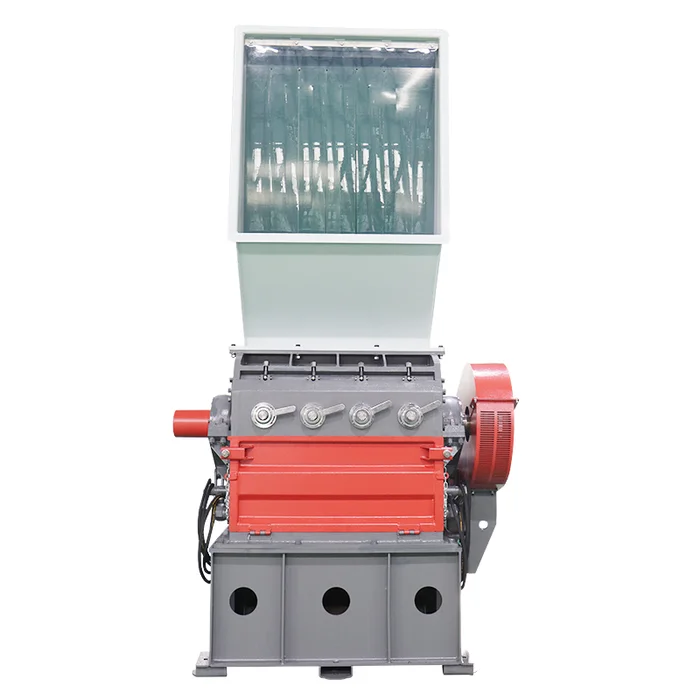
The WS650 low-noise plastic crusher can be reviewed for runners, sprues and production scrap near a moulding cell. Final suitability still depends on the largest part, polymer, target flake and required throughput.
Match the Granulator to the Production Cell
- Measure the largest runner, sprue and rejected part.
- Record scrap flow by machine and by shift.
- Confirm acceptable noise, dust and floor-space limits.
- Plan safe feeding, collection and cleaning access.
- Define changeover procedures for polymer and color.
- Include blades, screens and planned maintenance in the calculation.
Frequently Asked Questions
Can every runner and sprue be returned immediately?
No. The material must remain compatible with the product specification and the factory’s quality-control rules.
How should payback be calculated?
Subtract energy, maintenance, labor and quality-control costs from the recoverable material and handling value, then compare the result with the complete installed investment.
Is a central granulator always less efficient?
No. Central grinding can be suitable when material segregation, collection volume and staffing are already well controlled.
Does a smaller screen improve ROI?
Not automatically. A smaller screen can increase recirculation, heat, fines and energy use. Select it around the downstream process.
What information is needed for machine selection?
Send polymer, material photos, maximum dimensions, hourly scrap volume, target flake, available space, electrical standard and operating schedule.
Request an ROI and Layout Review
Use the AMIGE inquiry page to send shift-level scrap data and production-cell dimensions. We can review the equipment scope and the inputs required for a transparent payback calculation.