Expanding a plastic recycling center should increase production.
Unfortunately, adding more machines does not automatically create more usable capacity.
A larger Plastic Crusher may overwhelm an existing conveyor. A new washing system may require a different flake size. Separate controls can increase operator workload. And equipment installed without considering future expansion may need to be moved again two years later.
For a recent recycling-center expansion project in Turkey, our AMIGE engineering team therefore focused on one principle:
Build the new crushing section as a modular system, not as an isolated machine.
The modular Plastic Crushing System was planned around the customer’s material, required capacity, target flake size, existing equipment, factory layout, automation requirements, and future expansion. Instead of replacing everything at once, the system allows different modules—feeding, crushing, conveying, separation, storage, washing, and pelletizing—to be connected according to the customer’s actual production stage. This gives the recycling center greater flexibility while reducing the risk of creating new bottlenecks during expansion.
A recycling factory should grow with the customer’s business.
It should not need to be rebuilt every time the business grows.
Why Did This Turkey Recycling Center Need to Expand?
The customer’s recycling business was developing.
More material meant more opportunity.
But it also exposed limitations in the existing production process.
Before recommending new Plastic Recycling Equipment, we needed to understand:
- What plastic materials were being processed?
- What was the current actual capacity?
- Where was the production bottleneck?
- What capacity was required after expansion?
- What final flake size was needed?
- Which existing machines could remain?
- What downstream process followed crushing?
- Would another expansion be required later?
This is important.
If a customer needs 1,000 kg/h but the existing discharge system can handle only 600 kg/h, installing a 1,000 kg/h crusher does not create a 1,000 kg/h production line.
It creates an expensive waiting machine.
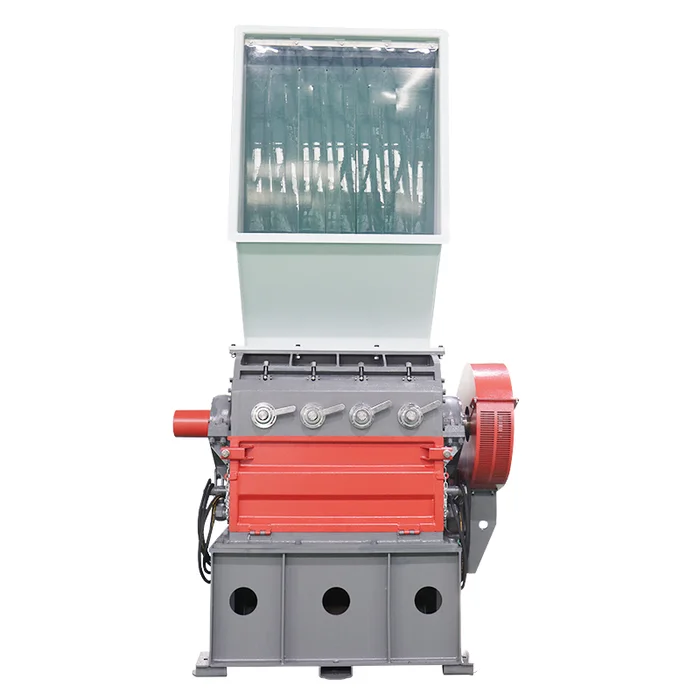
Customized Plastic Crusher Machine WHC1000/600
What Is a Modular Plastic Crushing System?
A modular system divides the recycling process into independent but connectable sections.
A basic configuration may look like:
Feeding → Plastic Crusher → Discharge Conveyor → Storage
A more advanced system may become:
Feeding → Shredding → Crushing → Metal Separation → Washing → Dewatering → Storage
Later, pelletizing can be added.
This allows the customer to expand according to:
- Material supply
- Available investment
- Factory space
- Production demand
- Final recycled product
That flexibility is particularly valuable for growing recycling companies.
You do not necessarily need to buy tomorrow’s entire factory today.
But today’s equipment should not prevent you from building tomorrow’s factory.
Why Is the Industrial Plastic Crusher the Core of the System?
The Industrial Plastic Crusher converts prepared plastic waste into a more controlled particle size for downstream processing.
But crusher selection must begin with the material.
Important factors include:
- Material type
- Maximum feeding dimensions
- Wall thickness
- Rotor width
- Blade configuration
- Motor power
- Screen opening
- Required kg/h
For example, HDPE containers behave differently from PET bottles.
PP injection scrap behaves differently from thick plastic purgings.
That is why AMIGE does not recommend a Plastic Crusher Machine only according to required capacity.
We need to know what those kilograms actually are.
Customized Plastic Grinder Waste Crusher WHC800/600
How Does Screen Size Affect Capacity and Final Flake Quality?
Buyers frequently ask:
“Can you make the output smaller?”
Usually, yes.
But the better question is:
How small does your next process actually require?
The crusher screen influences:
- Particle size
- Throughput
- Cutting frequency
- Energy consumption
- Blade wear
- Fines generation
An unnecessarily small screen may create finer flakes while reducing production efficiency.
If the material will enter a Plastic Washing Line, the flake size should support washing and separation.
If it will enter a Plastic Pelletizing Line, feeding requirements also need to be considered.
The correct screen is therefore not the smallest screen.
It is the screen that matches the complete recycling process.
[IMAGE POSITION 3: Crusher screen + uniform plastic flakes]
Why Are Conveyors Critical to Recycling Center Expansion?
Conveyors are rarely the machines customers photograph first.
But they can determine whether the entire line runs smoothly.
We need to coordinate:
- Feeding height
- Conveyor width
- Belt speed
- Crusher inlet
- Discharge height
- Material bulk density
- Line capacity
If feeding is too slow, the crusher waits.
If discharge is too slow, material accumulates.
The crusher may be excellent in both situations.
The production line is still inefficient.
This is why a Modular Plastic Crushing System must be engineered as a material-flow system rather than a collection of individual machines.
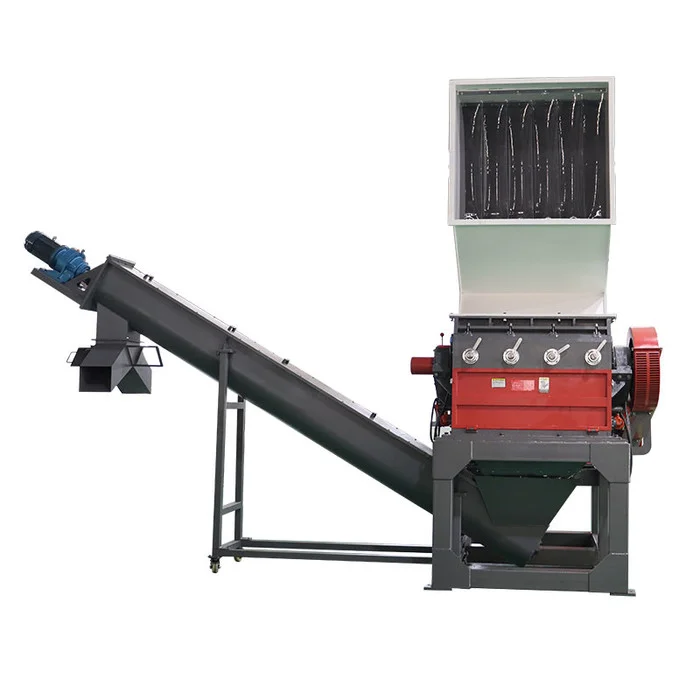
Grinder Plastic Waste Crusher WHC1200/600 With Screw Conveyor
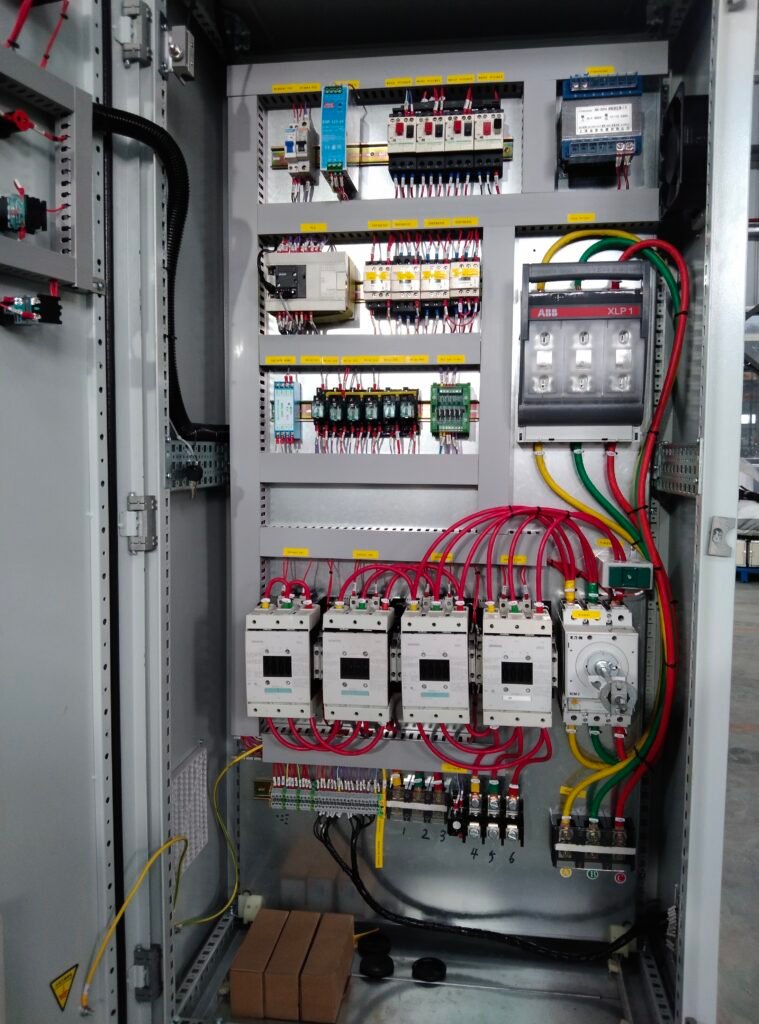
How Does PLC Automation Reduce Operator Work?
As recycling centers increase capacity, manual control becomes more expensive.
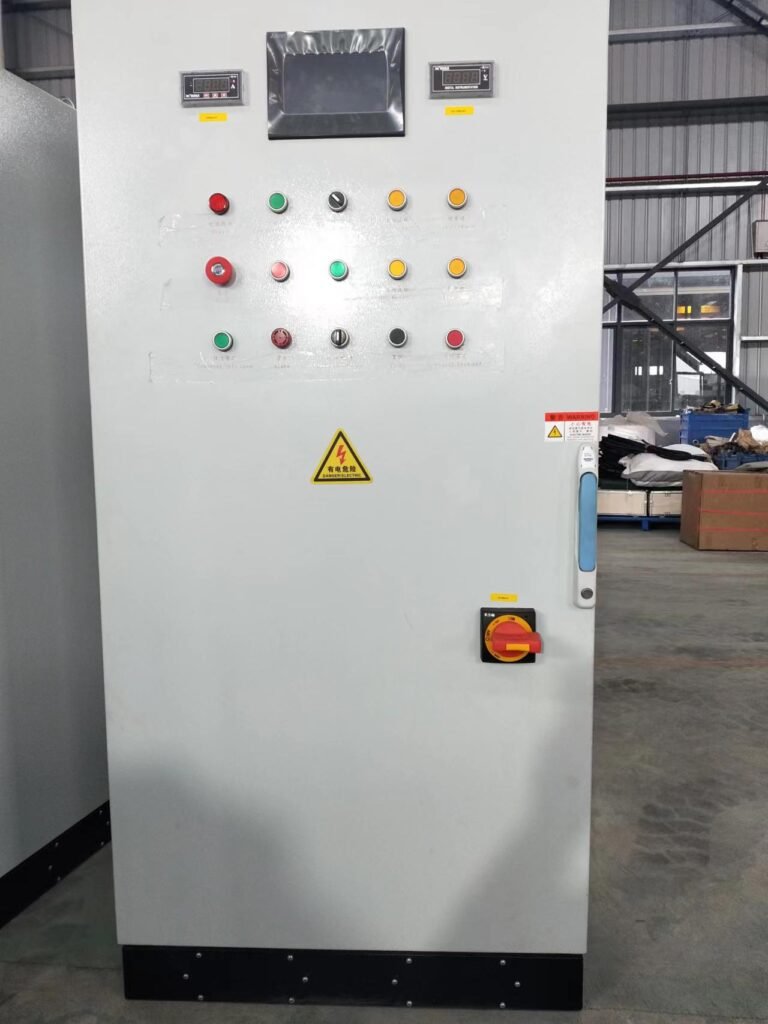
A modular system can integrate PLC control for:
- Feeding conveyor
- Plastic Crusher
- Discharge conveyor
- Motor overload
- Material-level sensors
- Alarm functions
- Downstream interlocking
For example, if the crusher stops, upstream feeding can stop automatically.
If downstream storage reaches its limit, the line can respond instead of continuing to deliver material.
The goal is not automation for decoration.
The goal is fewer unnecessary manual interventions and more predictable production.
For buyers planning higher capacity, this becomes increasingly important.
Should the Customer Add a Shredder Before the Crusher?
Sometimes yes.
Sometimes no.
This decision depends mainly on material dimensions and characteristics.
A Plastic Crusher is suitable when the incoming material can be fed safely and efficiently into its cutting chamber.
For oversized, bulky, thick, or difficult materials, we may recommend:
Feeding Conveyor → Plastic Shredder → Conveyor → Plastic Crusher
The shredder performs primary size reduction.
The crusher then produces a smaller, more controlled output.
This configuration can be suitable for materials such as:
- Large plastic containers
- Pallets
- Thick plastic blocks
- Bulky industrial scrap
- Large rigid products
Do not automatically buy both machines.
Buy the process your material actually requires.
Big Size Single Shaft Shredder WPS1200
How Does Modular Design Make Future Expansion Easier?
This was one of the most important considerations in the Turkey project.
The customer’s requirements today may not be the same three years from now.
Future expansion could include:
- Additional crushing capacity
- Plastic Shredder
- Metal separation
- Plastic Washing Line
- Dewatering system
- Drying system
- Plastic Pelletizing Line
- Additional storage
If we consider these possibilities during today’s layout planning, future expansion can become much easier.
We can think ahead about:
- Conveyor connection points
- Floor space
- Electrical capacity
- Material discharge direction
- PLC interfaces
Machines are expensive.
Planning is relatively cheap.
I prefer doing more of the cheap part before the expensive part begins.
What Should Buyers Confirm Before Expanding a Recycling Plant?
Before requesting a quotation, I recommend preparing six pieces of information:
1. Material
HDPE, PP, PET, ABS, PVC, film, rigid plastic, or mixed material?
2. Material Form
Bottle, container, pallet, pipe, block, sheet, or production scrap?
3. Maximum Size
Photos and videos are extremely useful.
4. Required Capacity
For example, 500 kg/h, 1,000 kg/h, or 2,000 kg/h.
5. Final Particle Size
What does the next process require?
6. Existing Equipment
Tell us what machines you already have.
This allows AMIGE to evaluate whether you need one Plastic Crusher Machine or a complete expansion solution.
That distinction can save a customer a lot of money.
Why Does AMIGE Recommend Modular Expansion for Growing Recyclers?
Because not every customer needs a completely new recycling plant.
Sometimes the best investment is upgrading the bottleneck.
A modular approach allows customers to preserve useful existing equipment while adding new capacity where it creates the greatest value.
For AMIGE, the objective is not:
Sell more machines.
The objective is:
Make the customer’s production process work better.
If one crusher solves the problem, recommend one crusher.
If the material requires shredding before crushing, explain why.
If future washing and pelletizing should influence today’s layout, plan for them now.
That is how equipment purchasing becomes project engineering.
Conclusion
The Turkey recycling-center expansion shows why a Modular Plastic Crushing System can be a practical solution for growing recyclers. By coordinating crushing, conveying, PLC automation, existing equipment, and future expansion, AMIGE helps customers increase capacity step by step without unnecessarily rebuilding the entire production process.
FAQ
1. What is a Modular Plastic Crushing System?
It is a recycling system divided into connectable modules such as feeding, crushing, conveying, separation, storage, washing, and pelletizing. Customers can configure or expand the system according to material, capacity, factory layout, and investment plan.
2. Can a new Plastic Crusher connect to my existing recycling equipment?
In many projects, yes. We need to check feeding height, discharge height, existing conveyor dimensions, capacity, voltage, factory layout, and downstream equipment before confirming the connection.
3. When do I need a Plastic Shredder before the crusher?
A shredder may be recommended when the material is too large, bulky, thick, or difficult to feed directly into the crusher. Material photos and videos help determine whether primary shredding is necessary.
4. How do I choose the correct Plastic Crusher capacity?
Do not select capacity from motor power alone. Material type, dimensions, bulk density, screen size, feeding method, operating conditions, and downstream capacity all affect actual kg/h.
5. What should I send AMIGE before requesting a recycling-center expansion proposal?
Send the material name, photos or videos, maximum dimensions, required capacity, target particle size, current equipment list, factory layout, local voltage, and future expansion plan. This allows us to recommend a more practical configuration.
#PlasticCrusher #PlasticCrushingSystem #IndustrialPlasticCrusher #PlasticRecycling #RecyclingEquipment
#ModularRecyclingLine #PlasticRecyclingLine #RecyclingAutomation #TurkeyRecycling #AMIGE