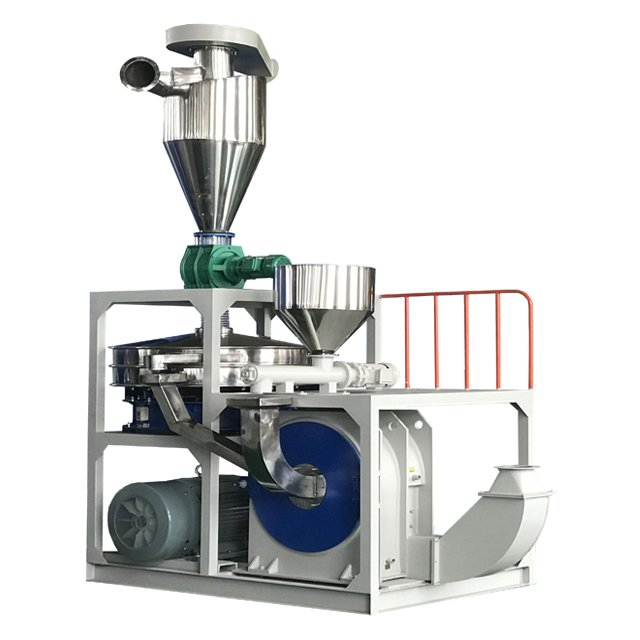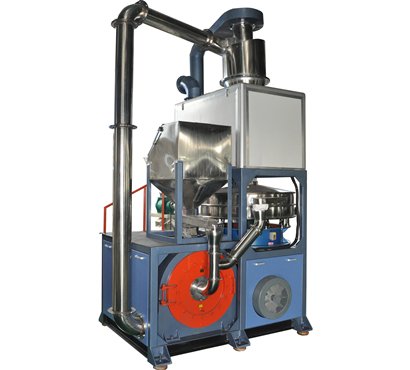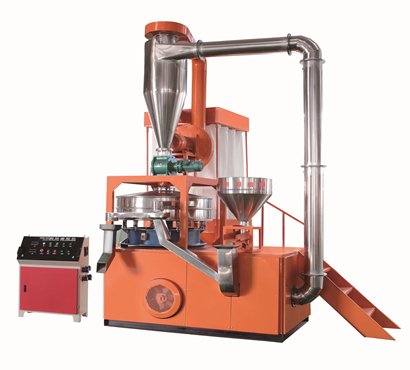
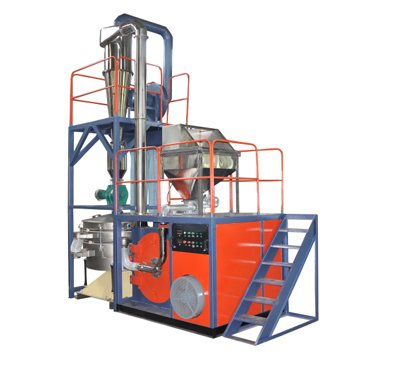
This custom plastic pulverizing system is configured around material behaviour, target powder size, cooling, screening and automation requirements. A pulverizer should not be selected from mesh size alone because heat sensitivity, feed dimensions and formulation affect grinding stability and powder quality.
Main Customization Decisions
- Disc, turbo or another grinding principle for the material
- Feed preparation and maximum incoming particle size
- Target powder range and oversize recirculation
- Air, water or combined cooling arrangement
- Screening, dust collection and conveying
- Manual, semi-automatic or continuous control system
The current page does not provide a reliable standard model table. Motor power, disc diameter, throughput, footprint and cooling load must be confirmed after the material and mesh target are known.
Material and Safety Boundaries
- Confirm polymer type, fillers and recycled content
- Identify melting, smearing or thermal-degradation risk
- Assess abrasive glass fibre or mineral filler wear
- Plan dust collection, grounding and explosion protection where required
- Separate metal and oversized feed before pulverizing
- Provide a representative material sample for difficult formulations
PVC, PE, WPC, SPC and engineering plastics may require different grinding and cooling arrangements. One configuration should not be transferred between these materials without review.
Information Required for Quotation
- Material name, photos and formulation
- Feed dimensions and upstream crusher output
- Required mesh or particle-size distribution
- Target hourly throughput and operating hours
- Cooling water and ambient conditions
- Voltage, floor space and dust-control requirements
For flooring scrap, compare the WPC/SPC plastic pulverizer. PE powder projects can review the MF Series plastic pulverizer.
Request a Custom Pulverizer Proposal
Use the AMIGE inquiry page to send the polymer, sample photos, feed size, target powder, capacity, cooling conditions and electrical standard.