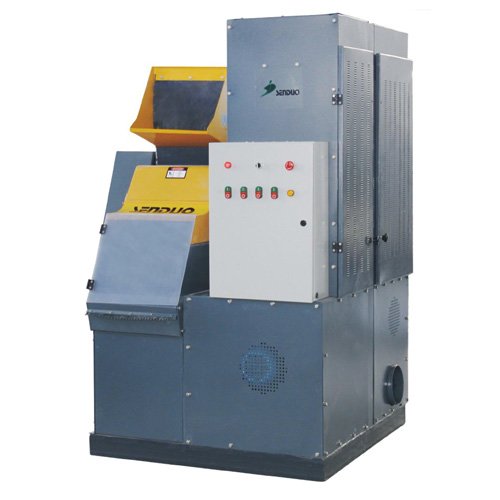
How It Works: The Process
This machine uses mechanical crushing and air separation rather than burning or chemicals, which is better for the environment (and your lungs).
-
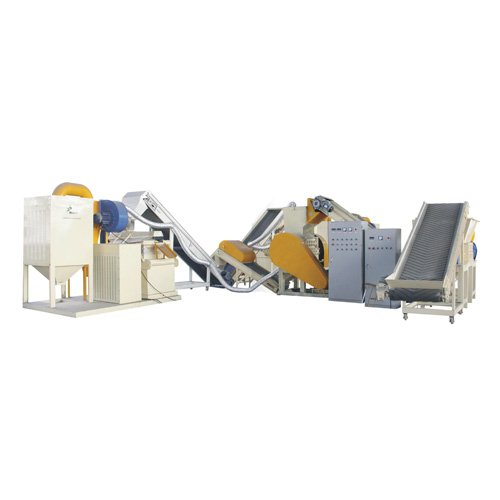
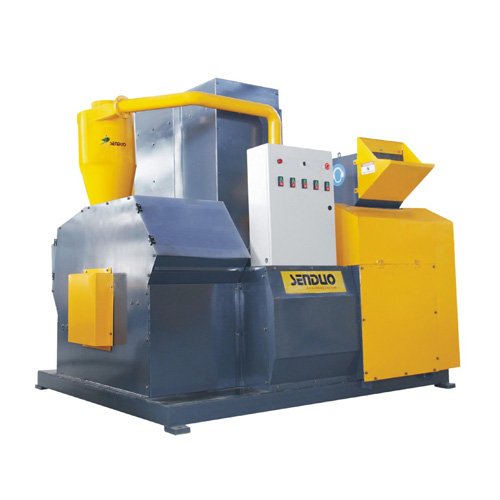
Crushing/Shredding: Scrap wires are fed into the yellow hopper. Inside, high-speed rotating blades chop the cables into small granules.
-
Air Separation: A high-pressure fan blows through the mixture. Since copper is much denser than plastic, the air lifts the lighter plastic bits while the heavy copper stays down.
-
Vibration Sifting: The machine uses a vibrating screen (often called a gravity table) to further refine the separation, ensuring the copper and plastic exit through different outlets.
-
Dust Collection: The large grey box structure on the right houses a filtration system to keep the workspace clean.
Key Features
-
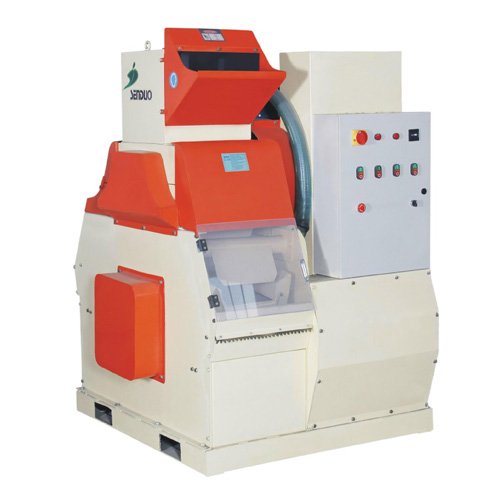
Control Panel: The white box with the buttons is the PLC (Programmable Logic Controller) or manual control hub. It allows the operator to adjust the vibration frequency and air blower speed.
-
Compact Design: This is an “all-in-one” unit, meaning the crusher, separator, and dust collector are integrated into one footprint for easier transport and setup.
-
Safety Guards: Notice the clear shielding and emergency stop buttons—essential for high-torque machinery like this.
QJ-400S01 scrap copper seprator & ranulator :Compact structure,Appearance of novel,Power saving,Stable performance,Once feeding,the single machine to complete, effective separation, with a good dust collection system.
| MODEL | POWER | VOLTAGE | ANGLE | BLADES | OUTPUT | SIZE | WEIGHT |
| QJ-400S01 | 11.92KW | 380V | 0.5-20mm | 10-2 | 80-120KG/H | 145*133*210cm | 900KG |