
Runner scrap contamination control begins before material reaches the crusher. Clean regrind can be lost through mixed polymers, wrong colors, labels, oil, metal, floor contact, open containers or residues left from the previous batch.
I recommend treating every runner stream as a traceable production material. The crusher is one control point within a larger segregation, handling, cleaning and reuse-approval process.
Map Contamination from the Machine to Regrind Storage
| Contamination source | Where it enters | Primary control |
|---|---|---|
| Wrong polymer | Shared collection or incorrect identification | Source labeling and dedicated containers |
| Wrong color | Mixed runners or incomplete changeover | Color-specific routing and documented cleaning |
| Metal | Fasteners, tools or upstream equipment | Inspection and suitable separation controls |
| Oil or grease | Machine leakage or maintenance activity | Preventive maintenance and protected material handling |
| Dust or floor debris | Open bins, sweeping or manual transfer | Closed labeled containers and defined transfer route |
| Previous batch residue | Crusher, conveyor, hose or storage bin | Verified line-clearance and changeover record |
Control Segregation, Changeover and Traceability
Define which moulding machines, polymers, colors and products may share a recycling loop. Containers should identify the source, material, batch and status. Rejected or unidentified scrap needs a separate route rather than being blended into approved regrind.
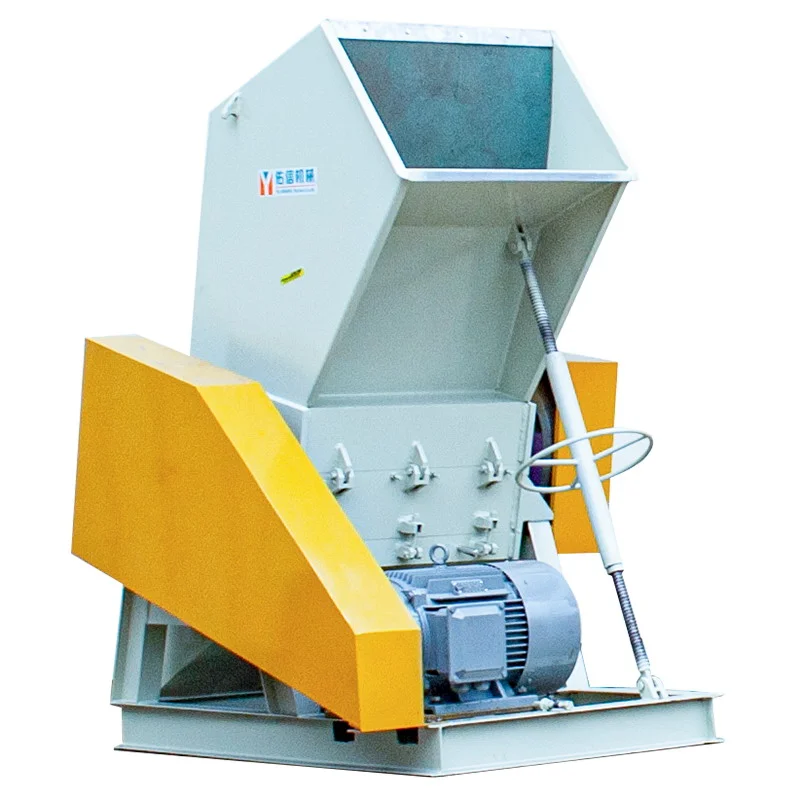
The FS800 plastic crusher can be reviewed for production scrap, but the plant must also define cleaning access, transfer path and batch controls. Equipment selection cannot replace material discipline.
Approve Regrind with Product-Specific Rules
- Define who can release regrind for reuse.
- Set product-specific blend limits where approved.
- Record source material, crushing batch and destination.
- Check particle distribution, visible contamination and moisture as applicable.
- Quarantine off-spec or unidentified material.
- Investigate defects before increasing regrind use.
The control plan should match the quality requirements of the moulded product. Regrind that is suitable for one application may be unacceptable for another.
Frequently Asked Questions
Can all runners return directly to injection moulding?
No. Reuse depends on material identity, contamination, degradation, product requirements and the factory’s quality approval.
Should every polymer have a dedicated crusher?
Not always, but shared equipment requires validated cleaning, scheduling and traceability that prevent cross-contamination.
How should unidentified runner scrap be handled?
Quarantine it and use a separate approved route. Do not blend it into a traceable regrind batch.
What belongs in a crusher changeover record?
Record the previous and next material, cleaning steps, inspected locations, removed residue, responsible person and release status.
What information is needed for a controlled regrind system?
Send polymers, colors, runner sizes, moulding machines, hourly volumes, reuse rules, transfer layout and current contamination problems.
Request a Runner-Flow Review
Use the AMIGE inquiry page to provide the runner streams and reuse requirements. We can review crusher access, changeover and material flow without mixing the equipment decision with quality approval.