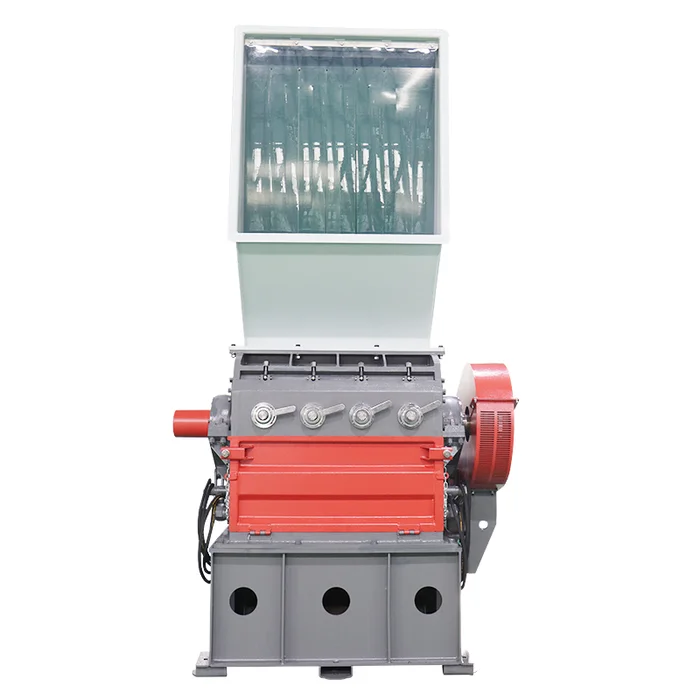
Metal, oversized parts and dense material bundles can overload a plastic crusher or damage knives, screens and bearings. Protection should reduce the consequence of an abnormal feed, but it must not be sold as a promise that every foreign object will be detected before damage occurs.
I ask buyers to separate four functions: preventing contamination, detecting abnormal load, stopping or reversing the machine, and investigating the cause before restart. One sensor cannot replace the complete process.
Build Protection in Layers
| Protection layer | Typical function | Important limitation |
|---|---|---|
| Material control | Sorting, inspection and metal removal before feeding | Depends on contamination size and presentation |
| Controlled feeding | Limits sudden bundles and chamber overfill | Does not identify every hard object |
| Electrical monitoring | Detects abnormal current or load conditions | Thresholds require commissioning for the material |
| Speed or motion monitoring | Identifies rotor slowdown or stoppage | Response occurs after operating conditions change |
| Stop or reverse logic | Interrupts feeding and protects the drive path | Cannot guarantee that knives avoid all contact |
Define the Control Sequence Before Commissioning
The control design should state which signal triggers an alarm, feed stop, crusher stop or controlled reversal. It should also define the number of automatic attempts, lockout conditions and the information shown to the operator.
When evaluating an industrial plastic crusher, confirm overload logic together with the feed conveyor, metal-control equipment and downstream system. A protected crusher inside an uncoordinated line can still create unsafe recovery work.
Use a Safe Reset and Investigation Procedure
- Stop upstream feeding when an abnormal load is detected.
- Prevent unexpected restart during inspection.
- Identify and remove the foreign object using the approved procedure.
- Inspect knives, fasteners, screen and chamber before resuming.
- Record the event and adjust sorting or feed controls where needed.
- Train operators on alarms, lockout and escalation responsibilities.
Frequently Asked Questions
Can a crusher detect every metal object?
No. Detection depends on the technology, object, material flow and installation. Upstream prevention remains important.
Is automatic reversal suitable for every crusher?
No. The drive, rotor, control logic and material must support it. Reversal should follow the manufacturer’s approved sequence.
Does current monitoring prove that the chamber is clear?
No. It indicates electrical load behavior. The cause of an alarm still requires safe inspection.
What should happen after an overload trip?
Stop feeding, secure the machine, investigate the cause, inspect affected components and restart only under the approved procedure.
What information is needed to configure protection?
Provide material type, largest parts, expected contaminants, feed method, throughput, upstream equipment and required line-control interface.
Request a Protection and Control Review
Use the AMIGE inquiry page to send the material risk, feeding method and line-control requirements. We will review the crusher, upstream prevention and reset logic as one system.