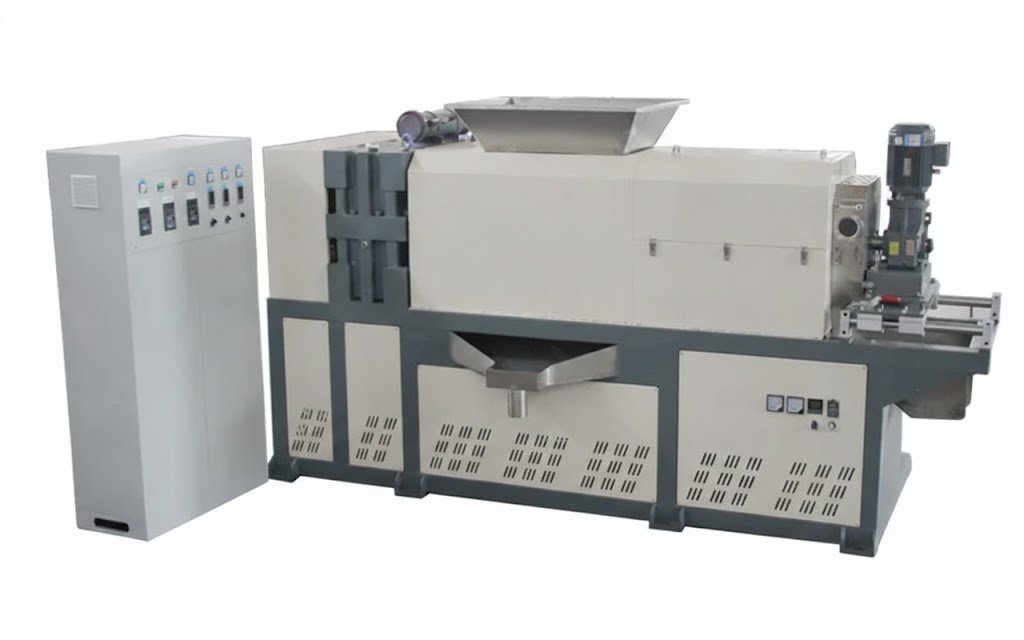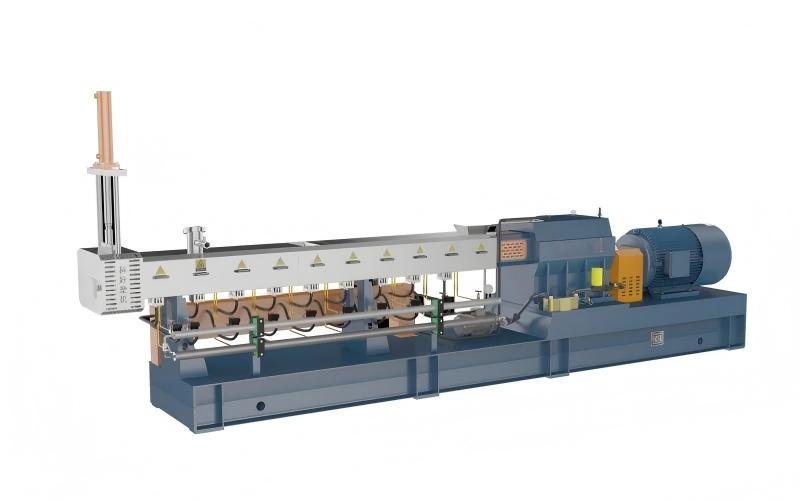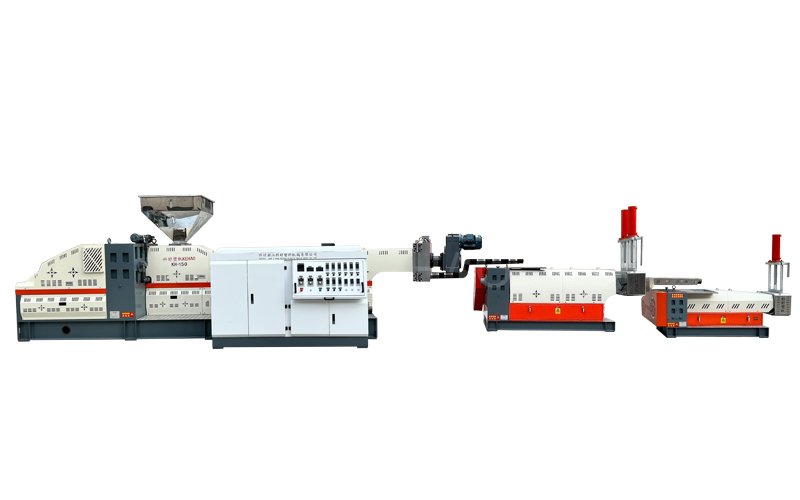
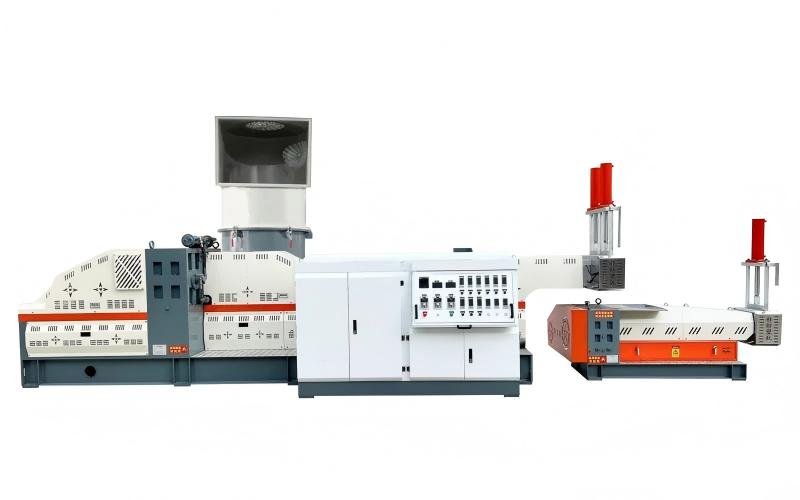
This compactor-fed two-stage pelletizing line combines material densification and controlled feeding with two extrusion stages. It is intended for low-bulk-density PE/PP film, woven bags and selected washed flexible scrap that is difficult to feed consistently through a basic hopper.
When Compactor Feeding May Help
- Loose film or woven bags bridge in a conventional hopper
- Feed bulk density varies during production
- Washed flexible material requires more stable metering
- The line needs integrated densification before extrusion
A compactor does not replace proper washing or moisture control. Excess water, sand, metal and incompatible polymers must be addressed before extrusion.
Recorded Reference Models
| Model | Screw diameter | Screw length | Main motor | Reference output |
|---|---|---|---|---|
| 130 | 130 mm | 4300 mm | 75–90 kW | 7–8 t/24 h |
| 160 | 160 mm | 5500 mm | 132–185 kW | 13–15 t/24 h |
These figures are current-page reference data. Usable output depends on bulk density, moisture, compactor load, filtration, degassing, pelletizing method and operating schedule.
Moisture and Pelletizing Boundaries
- Report measured moisture after washing and dewatering
- Confirm whether a squeeze dryer or thermal drying stage is required
- Specify printing, labels, sand and metal contamination
- Confirm water-ring, strand or another cutting method
- Provide cooling-water quality and available utility capacity
- Define pellet size, filtration and downstream use
Review the plastic film squeeze dryer for upstream dewatering or compare the two-stage film pelletizing line for another feeding arrangement.
Request a Compactor-Fed Line Assessment
Use the AMIGE inquiry page to send material photos, polymer type, moisture, bulk density, contamination, pellet target, required output and voltage.