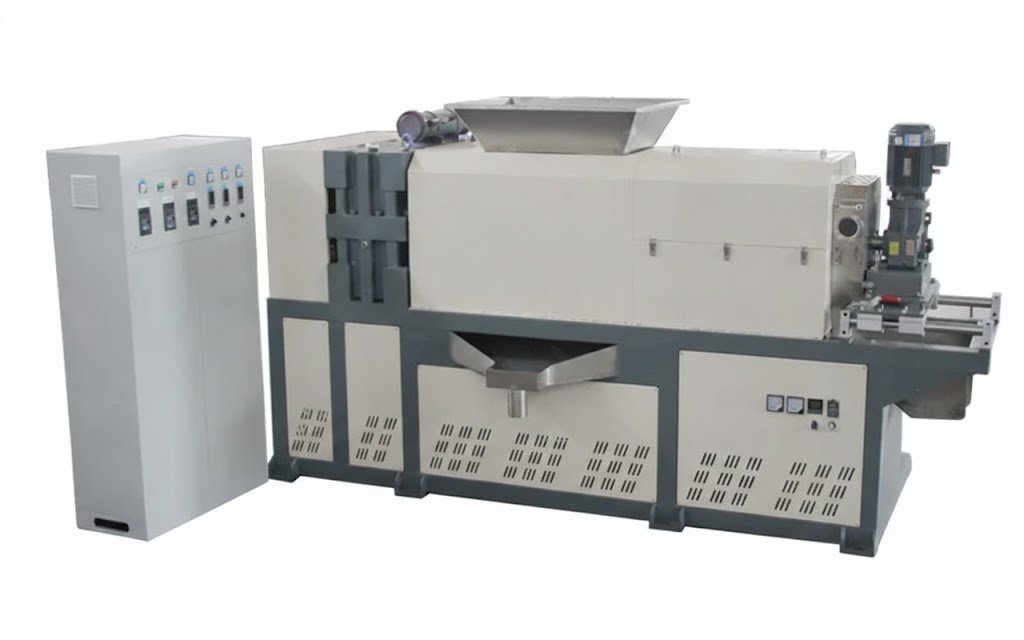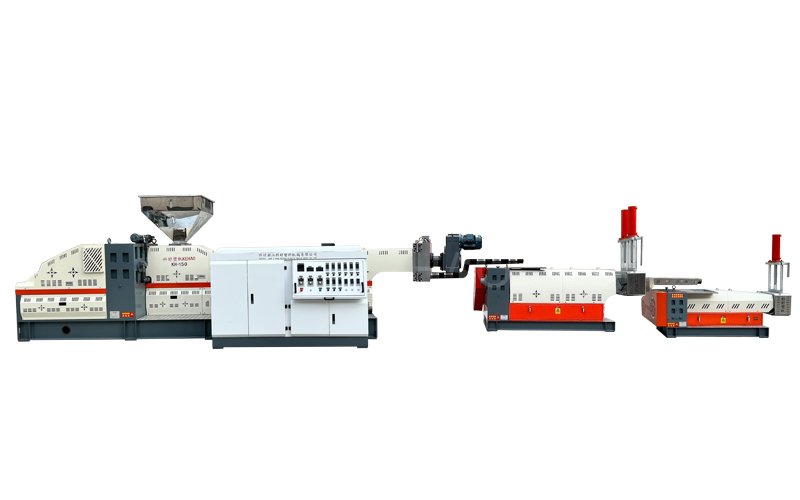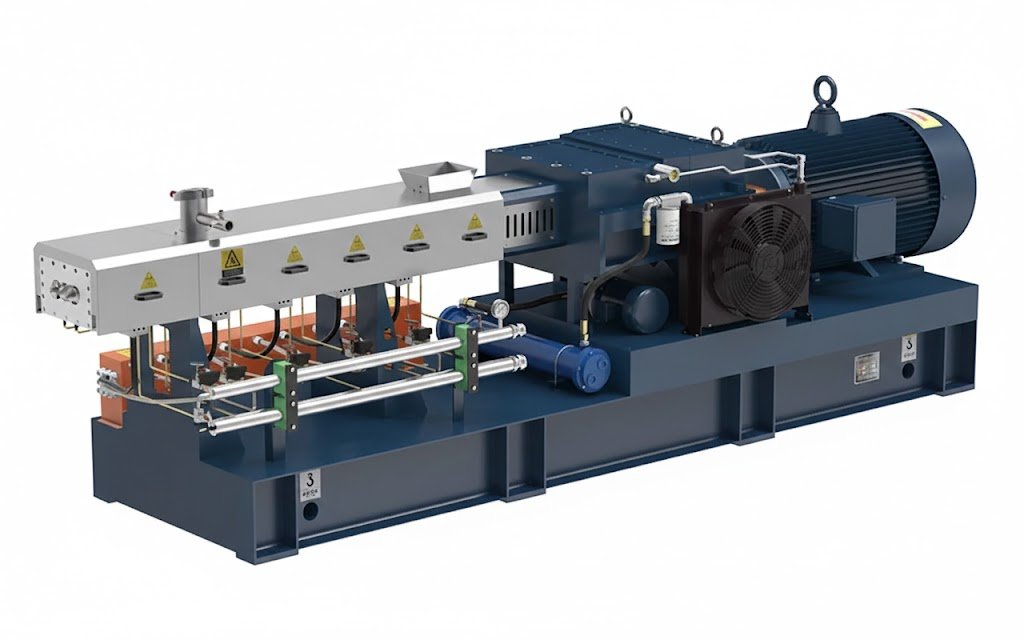
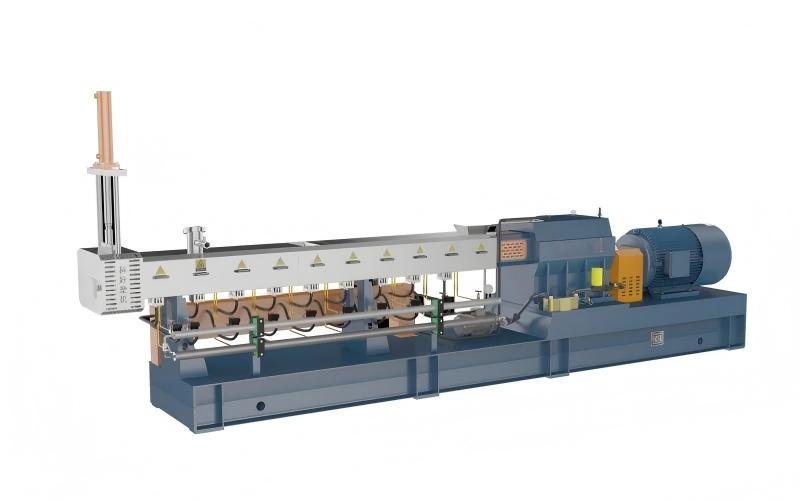
This twin-screw auxiliary extruder is intended as an additional processing stage within a plastic pelletizing line. It may be used when the project requires more mixing, degassing, melt stabilization or filtration than a single extrusion stage can provide. It is not a complete recycling line by itself.
When an Auxiliary Stage May Be Useful
- Recycled material needs an additional degassing or filtration step
- Formulation requires more controlled mixing before pelletizing
- The main extruder needs pressure separation from the final cutting stage
- A production line is being upgraded around an existing upstream machine
The final arrangement depends on polymer type, melt condition, contamination, additive loading and the connection to the upstream and downstream equipment.
Recorded Configuration Range
| Item | Current page reference |
|---|---|
| Screw diameter | 50–120 mm, configurable |
| L/D ratio | 22:1–48:1 |
| Main motor | 30–110 kW |
| Reference output | 200–800 kg/h |
| Temperature-control accuracy | ±1°C |
These figures describe a recorded option range rather than one standard machine. Actual output, motor and screw configuration require confirmation against the material, formulation and complete line layout.
Integration Information Required
- Polymer type, recycled content and additives
- Existing main-extruder model and melt output
- Moisture, volatile content and contamination
- Required filtration level and pelletizing method
- Target output and operating hours
- Connection height, floor space, voltage and controls
For compounding applications, compare the co-rotating twin-screw extruder. For recycled flexible plastics, review the two-stage film pelletizing line.
Request an Auxiliary Extruder Assessment
Send the upstream machine, material, melt condition, filtration requirement, pelletizing method, target output and electrical standard through the AMIGE inquiry page. We will assess whether an auxiliary twin-screw stage is justified.