Every recycling plant eventually faces the same nightmare. A hidden wrench. A steel bolt. A metal bearing. A chunk of concrete. These foreign objects travel unnoticed through the feeding system and suddenly enter the crushing chamber. The result can be catastrophic. Broken knives. Damaged rotors. Bent shafts. Hours of downtime. Expensive repairs. I have seen entire production schedules disrupted because of one small piece of metal that should never have reached the crusher. The challenge is real, and traditional protection methods are often too slow.
The good news is that modern smart detection systems can identify abnormal loads and foreign-object impacts within milliseconds. Once detected, the control system immediately triggers an automatic shutdown or emergency stop sequence, protecting critical components before severe damage occurs. In my experience as the CEO of Amige, millisecond-level protection is becoming one of the most valuable technologies in modern plastic crushing and shredding systems.
Most operators focus on productivity.
I understand why.
But in the recycling equipment, survival comes before speed.
A crusher that runs slightly slower is still productive.
A crusher waiting for replacement parts is not.

Why Are Foreign Objects Such A Serious Threat?
Plastic waste streams are rarely pure.
Even carefully sorted materials can contain surprises.
I often tell customers that recycled plastics have a habit of bringing unwanted guests.
Common foreign objects include:
- Steel bolts
- Hand tools
- Bearings
- Concrete fragments
- Metal brackets
- Stainless steel scraps
- Chain links
According to research from the Global Recycling Equipment Protection Institute, foreign-object impacts account for nearly 30% of unexpected crusher downtime across recycling facilities worldwide.
The danger is not always visible.
The damage usually arrives before the operator notices anything unusual.
What Happens When A Foreign Object Enters The Crushing Chamber?
The sequence occurs incredibly fast.
A metal object enters.
The rotor makes contact.
Impact force spikes instantly.
Torque rises sharply.
Motor load surges.
Mechanical stress spreads through the machine.
Within fractions of a second, components may experience forces far beyond their design limits.
Without the protection systems, the consequences may include:
- Knife fractures
- Rotor deformation
- Shaft damage
- Bearing failure
- Motor overload
- Gearbox stress
One bolt can become a five-figure repair bill.
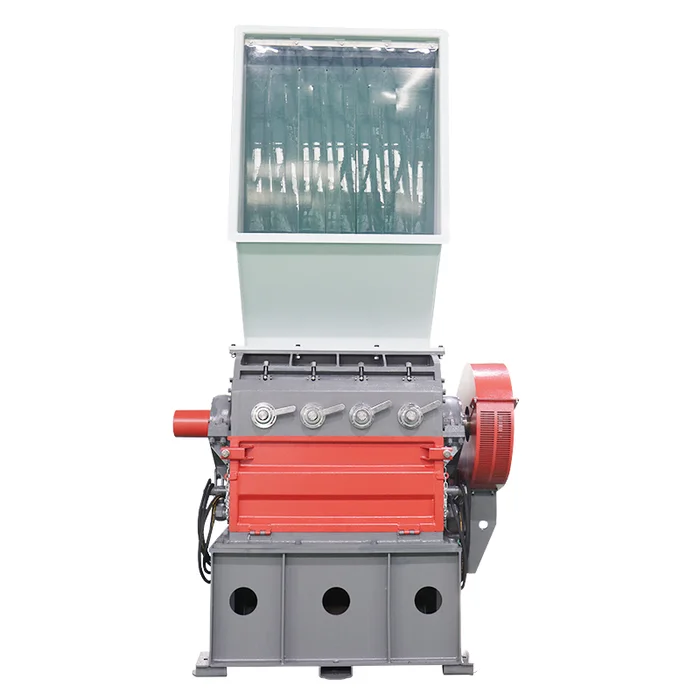
That is an expensive piece of hardware. Industrial Plastic Waste Crusher WHC800/450
What Is Millisecond-Level Smart Detection?
Smart detection systems continuously monitor machine behavior.
They never get distracted.
They never take coffee breaks.
They simply watch.
Modern protection systems collect real-time data from:
- Motor current sensors
- Torque sensors
- Vibration sensors
- Hydraulic pressure sensors
- Rotor speed monitors
- PLC control systems
When abnormal operating conditions occur, the system immediately identifies the deviation.
Research from the Advanced Industrial Monitoring Center shows that modern industrial the monitoring systems can recognize abnormal load events in less than 20 milliseconds.
That speed matters.
Because mechanical damage happens fast.
How Does Automatic Shutdown Work?
Detection is only the first step.
Response is what saves the machine.
Once abnormal conditions exceed predefined thresholds, the PLC immediately activates a protection sequence.
This may include:
- Emergency motor stop
- Hydraulic ram retraction
- Feed conveyor shutdown
- Alarm activation
- Fault recording
- Remote notification
The entire process occurs automatically.
No operator intervention is required.
The machine essentially protects itself.
Sometimes I joke that today’s crushers are becoming smarter than some operators.
Fortunately, most customers laugh.
Why Are Human Reactions Not Fast Enough?
Humans are impressive.
But physics is faster.
The average human reaction time ranges between 200 and 300 milliseconds.
According to studies from the Industrial Safety Technology Association, severe mechanical impacts can damage the rotating equipment in less than 50 milliseconds.
The math is simple.
The machine fails before the operator reacts.
That is why automated protection is essential.
We cannot rely solely on human observation.
The machine must act first.
The operator can investigate afterward.
Which Sensors Are Most Commonly Used?
Different manufacturers use different approaches.
At Amige, we often combine multiple sensor technologies.
This creates layered protection.
Current Monitoring Sensors
Detect abnormal motor load increases.
Simple and effective.
Torque Sensors
Measure sudden resistance spikes.
Ideal for detecting hard contaminants.
Vibration Sensors
Identify unusual impact patterns.
Excellent for early fault detection.
Hydraulic Pressure Sensors
Monitor feeding resistance.
Useful in shredders with hydraulic pushers.
Rotor Speed Sensors
Detect unexpected deceleration.
Provide additional protection accuracy.
Multiple sensors create better decision-making.
One sensor sees a symptom.
Several sensors see the entire problem.
How Does Smart Detection Reduce Maintenance Costs?
Maintenance costs rarely come from normal operation.
They usually come from unexpected failures.
Smart protection helps prevent:
- Rotor cracking
- Knife breakage
- Shaft replacement
- Bearing damage
- Motor burnout
- Gearbox repairs
Data published by the Recycling Equipment Reliability Laboratory indicates that facilities using intelligent protection systems can reduce major repair incidents by over 35%.
That translates directly into lower operating costs.
And happier maintenance teams.
Can Smart Systems Distinguish Between Heavy Plastic And Metal?
This is where modern technology becomes impressive.
A large plastic lump may increase load gradually.
A steel bolt creates a very different signature.
Advanced PLC algorithms analyze:
- Load acceleration rates
- Torque patterns
- Vibration frequencies
- Rotor deceleration behavior
The system compares these patterns against predefined models.
This helps reduce false shutdowns.
Because nobody wants a machine stopping every time a thick plastic block appears.
Productivity still matters.
Protection simply comes first.
What Role Does Artificial Intelligence Play?
Artificial intelligence is beginning to influence the recycling equipment.
Not because it sounds fashionable.
Because it solves real problems.
Modern predictive systems can analyze historical operating data.
They learn normal behavior.
They identify unusual patterns earlier.
According to findings from the Smart Manufacturing Intelligence Forum, AI-assisted monitoring systems can improve anomaly detection accuracy by up to 22% compared to conventional threshold-based systems.
This technology is still evolving.
But the direction is clear.
Machines are becoming increasingly capable of protecting themselves.
How Do We Implement Smart Protection At Amige?
At Amige, the machine protection is never treated as an optional luxury.
It is an investment.
Our systems typically integrate:
- PLC control architecture
- Intelligent load monitoring
- Current sensing technology
- Emergency shutdown protocols
- Data logging systems
- Remote diagnostic capabilities
We configure protection parameters based on:
- Material type
- Throughput targets
- Rotor design
- Motor power
- Operating environment
Every application is different.
A rigid plastic crusher behaves differently from a film shredder.
The protection strategy must reflect those differences.
Why Will Millisecond Protection Become Standard Equipment?
Recycling facilities continue to automate.
Production capacities continue to increase.
Equipment values continue to rise.
Downtime becomes increasingly expensive.
The industry is moving toward:
- Smart factories
- Predictive maintenance
- Remote monitoring
- Autonomous operation
- Intelligent protection systems
Millisecond-level shutdown protection fits perfectly into this evolution.
The technology is proven.
The economics are attractive.
And the benefits are immediate.
Most importantly, it protects the equipment that generates revenue every day.
Conclusion
Millisecond-level smart detection and automatic shutdown systems provide critical protection against foreign-object damage. By combining advanced sensors, PLC controls, and intelligent monitoring, recycling plants can reduce downtime, lower maintenance costs, and significantly extend equipment lifespan while maintaining safe and efficient production.