You have piles of plastic waste sitting in your yard. Bottles, containers, scrap. You need to crush them into small flakes. But your old crusher is broken. And you have no idea who to buy from next. I have been exactly where you are. Fifteen years ago, I started Amige with one small machine and a big dream. Today, I run a company that ships crushers all over the world, including to Bolivia. I know the struggle. And I know the solutions.
A plastic crusher (also called a plastic granulator) is different from a shredder. Crushers use rotating blades to cut plastic into smaller pieces, typically 10mm to 30mm flakes. The top manufacturers that serve Bolivia include Amige, Wiscon, Genox, Harden, and Vecoplan. To find a good one, look at blade material, motor power, screen hole size, and after-sales support in your region.
Now, I am going to give you the real list. Not just names copied from Google. These are companies I have personally evaluated, visited, or worked with. Some are excellent. Some are decent. A few you should approach with caution.
What Is the Difference Between a Plastic Crusher and a Plastic Shredder?
Let me clear this up right away. Many people use these terms interchangeably. They should not.
A plastic crusher (granulator) uses high-speed rotating blades to cut plastic against fixed blades. It produces small, uniform flakes. It is ideal for clean, pre-sorted plastic waste like PET bottles, HDPE containers, and PP scraps.
A plastic shredder uses low-speed, high-torque rotors to tear materials apart. It handles bulkier, dirtier items like pipes, drums, and mixed waste.
For most Bolivian recyclers processing bottle-grade materials, a crusher is the better choice. It is cheaper, more energy-efficient, and produces cleaner output. This comparison between crushers and shredders explains the technical differences in detail.
Top 10 Plastic Crusher Manufacturers for Bolivia
1. Amige (China) — Yes, That Is My Company
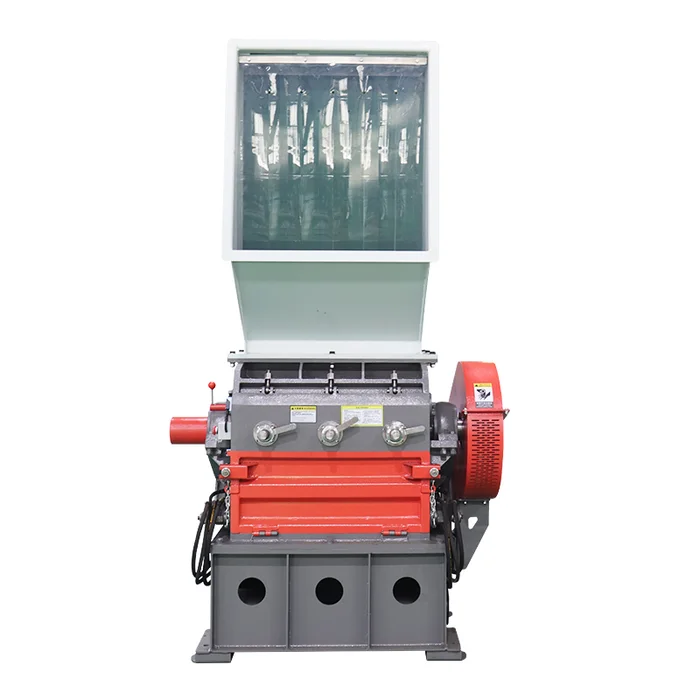
I will not pretend to be objective here. Our crushers are built for exactly the kind of work Bolivian recyclers do. We specialize in PET bottle crushers and HDPE granulators. Our machines use Cr12MoV alloy steel blades. They run on 30HP to 120HP motors. We ship to Bolivia through the port of Arica regularly. And we offer one-year warranties with remote video support. Industrial Plastic Waste Crusher WHC800/450
2. Wiscon Envirotech (China)
Wiscon makes excellent crushers for PET and PP materials. They have strong quality control and good export experience to Latin America. Their prices are mid-range. Their service is reliable.
3. Genox (China/Australia)
Genox is a premium brand in the crushing space. Their machines are built for heavy-duty, continuous operation. Not cheap. But if you need a machine that runs 16 hours a day, Genox delivers.
4. Harden Machinery (China)
Harden produces rugged crushers that handle tough materials well. They are particularly good for crushing thick-walled products like pipes and fittings. Their blade design is above average.
5. Vecoplan (Germany)
If budget is not a concern, Vecoplan is among the best in the world. German engineering, long lifespan, excellent precision. However, spare parts and service in Bolivia may be a challenge.
6. Zerma (Germany/China)
Zerma has a strong reputation for granulators. They manufacture in both Germany and China. The Chinese-made models are more affordable while maintaining decent quality. Good for medium-scale operations.
7. Pulian (China)
Pulian is a lesser-known brand that makes solid entry-level crushers. They are affordable and simple to maintain. Ideal for small recyclers in Bolivia who are just starting out.
8. Jwell Machinery (China)
Jwell is a giant in the plastic extrusion industry. Their crushers are not their main product, but they make decent ones. Good if you want to buy a complete recycling line from one supplier.
9. Reliance (China)
Reliance makes small to medium granulators at very competitive prices. They are popular among PET bottle recyclers in South America. Check the blade steel quality before ordering.
10. DGM (China)
DGM focuses on crushers and granulators specifically. Their machines are basic but functional. They ship worldwide and are willing to customize. Good for budget-conscious buyers.
What Blade Material Should You Look For?
I have seen crushers fail within three months because of poor blade quality. The blade is what does the work. If it wears out quickly, your entire operation suffers.
For plastic crushers, I recommend D2 tool steel or Cr12MoV alloy steel. These materials hold an edge longer and resist chipping. Ask the manufacturer about their heat treatment process. Proper vacuum heat treatment makes the blade harder and more durable. This guide on crusher blade material explains the hardness ratings you should aim for.
A quality set of blades on a plastic crusher should last 8 to 14 months before needing sharpening. If a manufacturer tells you their blades will last five years, they are either lying or selling you a machine you barely use.
What Motor Power Is Right for Your Operation?
Every week, someone calls me and says: “I want the biggest motor you have.” That is almost always a mistake.
Here is my practical advice based on years of field experience:
表格
| Material Type | Recommended Motor Power | Throughput |
|---|---|---|
| PET bottles, thin films | 30HP to 60HP | 300 to 500 kg/hr |
| HDPE containers, PP scraps | 60HP to 100HP | 500 to 1000 kg/hr |
| Thick pipes, heavy scrap | 60HP to 120HP | 500 to 1200kg/hr |
Bigger is not better. Bigger costs more to buy and more to run. Match the motor to your actual material and volume. You can always upgrade later. This motor power calculator for crushers can help you estimate your exact needs.
How Many Blades Should a Good Crusher Have?
This is a detail many buyers overlook. The number of blades on the rotor directly affects output quality and efficiency.
For a standard plastic crusher:
- 3 to 5 rotor blades — Common for general-purpose crushing
- 6 to 10 rotor blades — Better for producing finer, more uniform flakes
- 2 fixed blades (at minimum) — These work against the rotating blades to cut material
More blades generally mean finer output but lower throughput. Fewer blades mean coarser output but higher volume. Tell the manufacturer exactly what flake size you need and ask them to recommend the right blade configuration.
What Screen Size Should You Choose?
The screen (sieve) sits under the rotor and determines the final flake size. Most crushers come with one screen, but you can order multiple sizes.
Common screen hole diameters for plastic crushing:
| Screen Hole Size | Best For |
|---|---|
| 8mm to 10mm | Fine flakes for washing lines |
| 12mm to 16mm | General-purpose recycling |
| 18mm to 22mm | Coarse crushing before granulation |
I always tell my customers to buy at least two screens with their machine. It costs very little extra and gives you flexibility. This screen size selection guide has a detailed chart for different materials.
What Should You Know About Shipping to Bolivia?
Landlocked countries add complexity. Bolivia is no exception. But it is not impossible.
Most of our machines go through Puerto de Arica in Chile. The sea freight from China to Arica takes 25 to 35 days. Then the equipment travels overland to Bolivia, which adds 5 to 7 days.
Estimated shipping costs for a plastic crusher:
| Item | Estimated Cost |
|---|---|
| Sea freight (China to Arica) | $1,500 to $3,000 |
| Overland (Arica to Bolivia) | \500 to \1,500 |
| Customs clearance | $300 to $800 |
| Total | $2,300 to $5,300 |
These numbers depend on the machine weight and your specific city. I recommend asking the manufacturer for a CIF Arica quote. That means the price includes cost, insurance, and freight to the port. You handle the rest locally.
How Can You Verify a Manufacturer Before Paying?
I have seen too many buyers lose money to bad suppliers. Here is my personal verification checklist:
- Request a live factory video call — See the machines being built. If they refuse, move on.
- Ask for customer references in Latin America — Not just in their country. Specifically in your region. And call those references.
- Check for Spanish-language support — Do they have someone who speaks your language? Communication problems cause big delays.
- Request blade material certifications — They should be able to show you mill test reports for the steel they use.
- Ask about warranty terms in writing — A verbal promise is worthless. Get it on paper.
- Search for complaints — Use phrases like “estafa Amige” or “problemas con [company name]” in Spanish. See what comes up.
I personally invite every serious buyer to do these checks. A good manufacturer welcomes scrutiny. Only bad ones hide from it.
Does Your Factory Need a Complete Recycling Line or Just a Crusher?
Many buyers in Bolivia ask me this. The answer depends on what you want to produce.
If you only want to crush plastic and sell the flakes, a standalone crusher is enough. You can buy it for $4,000 to $15,000 depending on size.
If you want to wash, dry, and pelletize your material, you need a complete recycling line. That includes a crusher, washer, friction washer, rinsing tank, drying system, and pelletizer. A full line can cost $30,000 to $150,000.
My advice: Start with a crusher. Learn the business. Prove your market. Then expand to a full line. I have seen too many people buy an entire factory and shut down within a year because they could not find enough feedstock or customers.
Conclusion
Finding the right plastic crusher manufacturer for Bolivia takes work. But it pays off. Focus on blade quality, motor power that matches your material, appropriate screen sizes, and a manufacturer who offers real after-sales support. The top 10 companies I listed above are a good starting point.
#PlasticCrusher #PlasticGranulator #BoliviaRecycling #PETRecycling #IndustrialMachinery #RecyclingEquipment #PlasticRecycling #CrusherBlades #SouthAmericaRecycling #Amige