India’s plastic recycling industry is evolving at an impressive pace. Yet many small recycling stations face a growing challenge. Collection volumes are increasing. Labor costs are rising. Customers demand higher-quality recycled materials. Traditional standalone crushers and manually operated systems can no longer keep up with market expectations. During a recent plastics exhibition in India, I noticed a clear trend. More recycling business owners were actively searching for automated, high-capacity crushing and recycling lines that could help them scale operations and improve profitability.
The reason is straightforward. Small recycling stations want to become modern recycling enterprises. They need higher throughput, lower labor dependence, better material consistency, and stronger competitiveness. High-capacity automatic crushing lines are no longer viewed as luxury investments. They are becoming essential production assets for companies that want sustainable growth in India’s rapidly expanding recycling market.
What caught my attention was not the machines.
It was the conversations.
Five years ago, many visitors asked for the cheapest crusher.
Today, they ask how to process more tons per day.
That shift says everything.

Why Is India’s Plastic Recycling Industry Expanding So Rapidly?
India has become one of the world’s most dynamic recycling markets.
Urbanization continues to generate increasing amounts of plastic waste.
Manufacturing growth creates more industrial plastic scrap.
Government initiatives are encouraging better waste management practices.
According to data from India Circular Economy Research Institute, plastic recycling investments have increased significantly over recent years.
Recycling entrepreneurs see opportunity.
Investors see opportunity.
Equipment suppliers certainly see opportunity.
At the exhibition, I met business owners from multiple regions.
Many started with small manual operations.
Many now plan industrial-scale facilities.
The market is maturing quickly.
Why Are Small Recycling Stations Feeling Pressure to Upgrade?
The answer appeared repeatedly during discussions.
Volume.
Volume.
And even more volume.
Many small recycling stations originally processed a few hundred kilograms per hour.
That was sufficient years ago.
Today, incoming material quantities often exceed processing capacity.
Material begins piling up.
Labor requirements increase.
Operating efficiency declines.
Customers become impatient.
Several plant owners told me they are receiving more recyclable materials than their current systems can handle.
That is a good problem.
But it is still a problem.
According to Global Waste Processing Benchmark Center, facilities that fail to expand processing capacity often experience declining profit margins despite higher material availability.
Nobody wants to see valuable materials sitting idle.
Waste should become revenue.
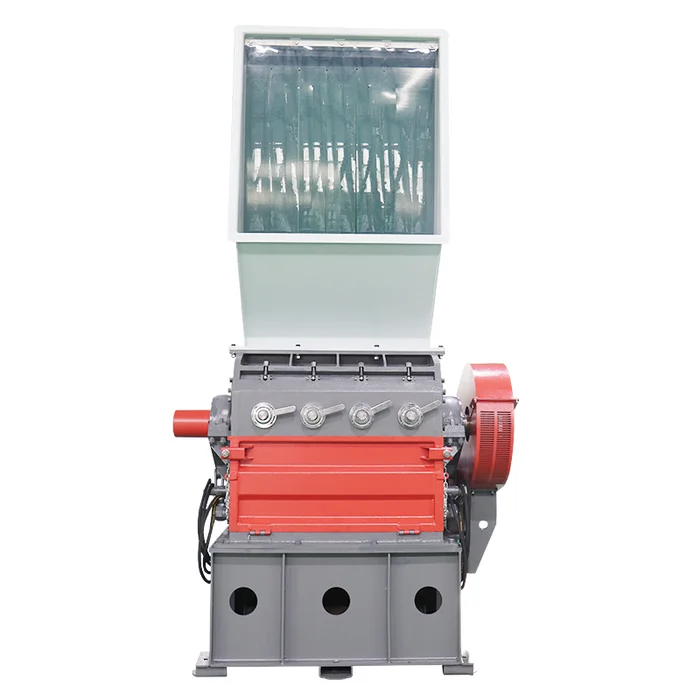
Not inventory. Industrial Plastic Waste Crusher WHC800/450
What Types of Materials Are Driving Equipment Demand?
One fascinating observation was the diversity of materials discussed.
India’s recycling market is remarkably broad.
Visitors described processing:
- HDPE bottles
- Plastic drums
- PP woven bags
- Agricultural film
- Injection molding scrap
- Plastic pallets
- PVC profiles
- Household plastic products
Different materials create different challenges.
Flexible films require special feeding designs.
Rigid plastics demand stronger cutting systems.
Bulky products require effective shredding before crushing.
This is why one-size-fits-all solutions rarely succeed.
At AMIGE, we always begin with material analysis.
Machines should adapt to materials.
Not the other way around.
Why Are Automatic Crushing Lines Becoming More Attractive?
Automation was one of the hottest topics at the exhibition.
Not surprisingly.
Labor shortages affect many regions.
Training operators takes time.
Human error impacts productivity.
Automatic systems solve many of these challenges.
Modern crushing lines can integrate:
- Automatic feeding
- Conveyor transport
- Metal separation
- Crushing systems
- Dust collection
- Material storage
According to Industrial Automation Development Forum, automated recycling facilities often achieve significantly higher operational consistency compared to manual systems.
Many visitors were particularly interested in reducing labor dependency.
Machines do not request holidays.
Machines do not change jobs.
Machines simply need proper maintenance.
As a CEO, I appreciate that level of consistency.
What Production Capacities Are Buyers Looking For?
This was perhaps the biggest surprise.
Demand is growing rapidly.
Several years ago, many inquiries focused on 300–500 kg/hour systems.
Today, conversations frequently involve:
- 1000 kg/hour lines
- 1500 kg/hour lines
- 2000 kg/hour lines
- 3000 kg/hour lines
Some larger investors even discussed future expansion plans exceeding these capacities.
The mindset has changed.
Companies are no longer investing solely for current demand.
They are investing for future growth.
According to Asia Recycling Infrastructure Observatory, many emerging-market recyclers are adopting larger-scale processing systems earlier in their development cycle.
That trend was clearly visible at the exhibition.
How Important Is Energy Efficiency During Equipment Selection?
Extremely important.
Electricity costs matter.
Especially in high-volume operations.
Every serious buyer asked about power consumption.
Not just machine price.
This is encouraging.
Smart investors understand operational economics.
A slightly more efficient machine can generate substantial savings over years of operation.
Several visitors specifically asked about:
- Motor efficiency
- Rotor design
- Blade geometry
- Throughput-to-energy ratios
According to Industrial Energy Performance Laboratory, optimized rotor and cutting designs can significantly reduce energy consumption while maintaining output performance.
Efficiency is no longer optional.
It is a competitive advantage.
Why Are Buyers Looking Beyond Standalone Crushers?
This trend stood out throughout the exhibition.
Buyers increasingly seek complete solutions.
Not individual machines.
Many visitors asked about integrated systems including:
- Shredders
- Crushers
- Washing lines
- Dewatering units
- Pelletizing systems
Their objective is simple.
Reduce handling.
Increase automation.
Improve material quality.
Create higher-value recycled products.
The industry is moving toward complete recycling plants.
Standalone equipment still has a place.
But integrated systems are becoming increasingly popular.
Especially among growth-oriented businesses.
What Role Does After-Sales Support Play in Purchasing Decisions?
A surprisingly large one.
Many visitors shared past experiences.
Some positive.
Some frustrating.
Several buyers mentioned difficulties obtaining spare parts from suppliers.
Others complained about slow technical support.
These experiences influence future purchasing decisions.
At AMIGE, we believe equipment support begins before equipment delivery.
Customers asked detailed questions about:
- Spare parts availability
- Technical training
- Installation support
- Remote troubleshooting
- Maintenance guidance
Good support protects investments.
Poor support creates expensive downtime.
The difference is enormous.
What Did I Learn From Conversations With Indian Recycling Entrepreneurs?
I learned that ambition is everywhere.
Many business owners started small.
Very small.
Some began with a single crusher.
Others started with manual sorting operations.
Today, many are planning major expansions.
What impressed me most was their long-term vision.
They are not merely buying equipment.
They are building businesses.
They are creating infrastructure.
They are positioning themselves for future demand.
This mindset aligns perfectly with global recycling trends.
According to Global Circular Economy Strategy Center, scalable recycling infrastructure will play an increasingly important role in sustainable industrial development.
The entrepreneurs I met understand this.
And they are acting on it.
What Does This Mean for Plastic Machinery Manufacturers?
It means our responsibility is growing.
Customers expect more than machines.
They expect expertise.
They expect solutions.
They expect partnership.
For manufacturers like AMIGE, success depends on helping customers transition smoothly from small-scale operations to industrial-scale production.
That requires:
- Engineering capability
- Process knowledge
- Customization flexibility
- Reliable support
The days of simply selling equipment are fading.
The future belongs to solution providers.
Conclusion
The India plastics exhibition revealed a powerful trend. Small recycling stations are rapidly transforming into larger, automated operations. Demand for high-capacity crushing lines continues to grow. For recycling entrepreneurs seeking higher productivity and profitability, automation is no longer the future—it is already the present.