Your industrial paper shredder processes cardboard, office paper, and packaging waste every day. Production seems normal until dust begins accumulating around the cutting chamber, motor, and ventilation openings. Operating temperatures rise, filters become restricted, and the machine requires increasingly frequent shutdowns. What initially appears to be a housekeeping problem may develop into a serious mechanical and fire hazard. At AMIGE, I believe controlling paper dust deserves just as much attention as shredding capacity, equipment reliability, and long-term operating costs.
Paper dust buildup in an Industrial Paper Shredder can restrict cooling airflow, interfere with heat dissipation, increase maintenance requirements, and provide combustible material for fires. Worn cutters, unsuitable feeding, blocked discharge systems, bearing problems, and inadequate dust extraction may increase these risks. Improving operational reliability requires effective dust control, appropriate cutting configurations, temperature monitoring, preventive maintenance, and professional combustible dust hazard assessment. At AMIGE, we recommend evaluating the entire shredding process rather than relying on motor power or a conventional dust collector alone.
A shredder should reduce paper waste, not create new safety problems. Understanding where dust comes from and why it accumulates can help you make better equipment purchasing decisions.
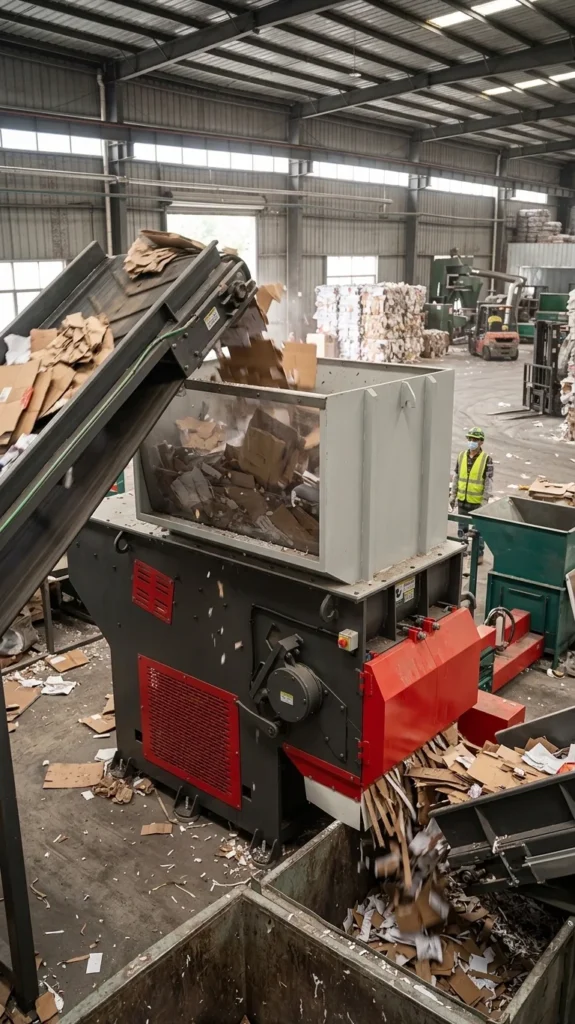
Why Does an Industrial Paper Shredder Generate Excessive Paper Dust?
An Industrial Paper Shredder reduces paper and cardboard through mechanical cutting and tearing.
During this process, small cellulose fibers and particles are released. The amount of dust depends on paper condition, cutting geometry, moisture content, and the required output size.
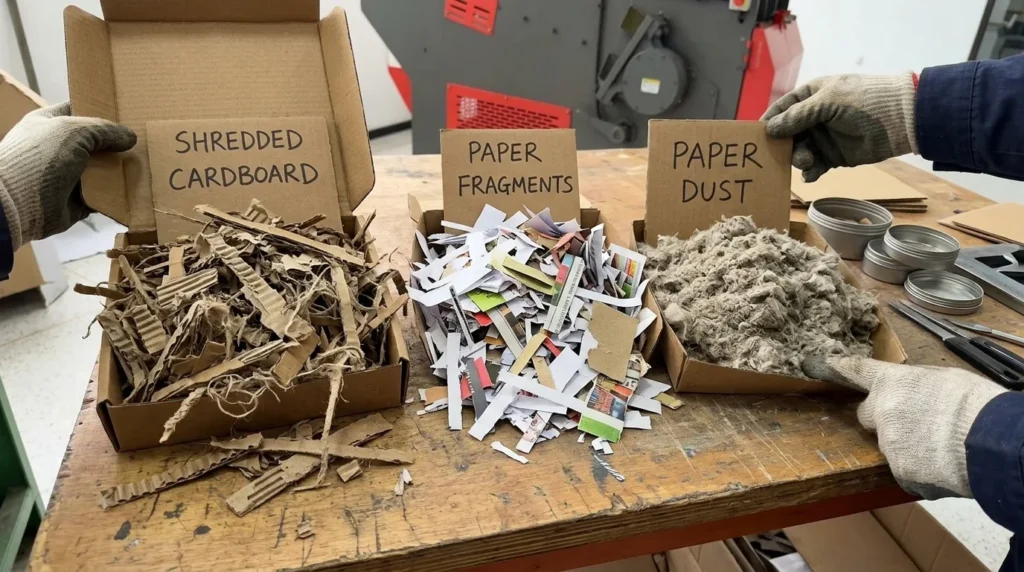
Common contributing factors include worn cutters, repeated cutting, unsuitable screens, brittle paper, and excessive mechanical processing.
We should first determine whether dust generation is excessive for the intended application rather than assuming every visible particle indicates a machine defect.
WPS1000 Single-Shaft Plastic Shredder
How Does Paper Dust Buildup Cause Equipment Overheating?
Dust accumulation can interfere with equipment cooling.
When deposits restrict motor ventilation openings or cover heat-dissipating surfaces, operating temperatures may increase. Restricted discharge can also increase cutting resistance and motor loading.
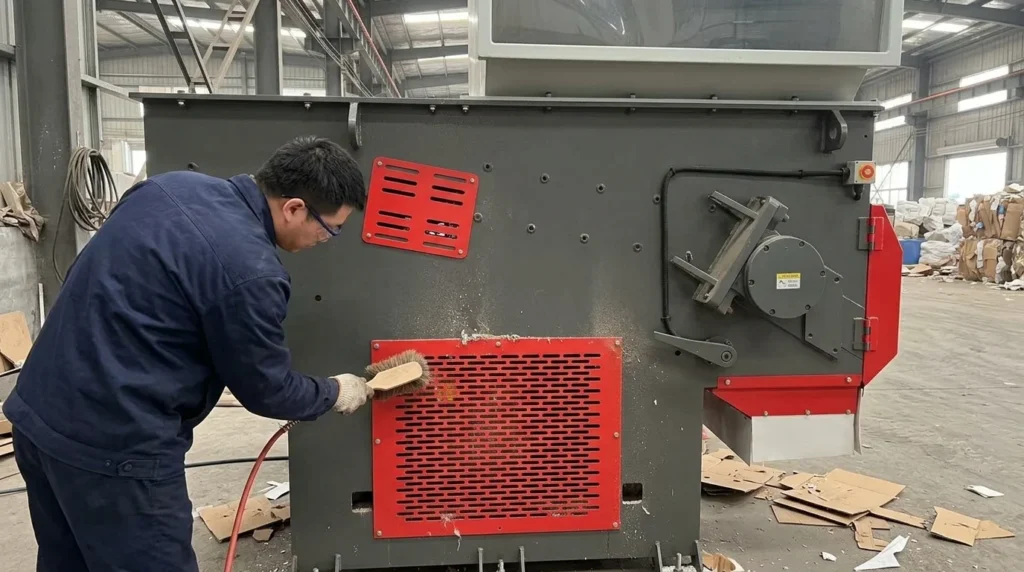
However, overheating may also result from electrical problems, inadequate lubrication, bearing damage, or excessive mechanical loads.
I recommend investigating temperature trends and operating conditions before replacing components.
A larger motor cannot solve every cooling problem.
Why Can Paper Dust Create Serious Fire Risks?
Paper dust contains combustible cellulose material.
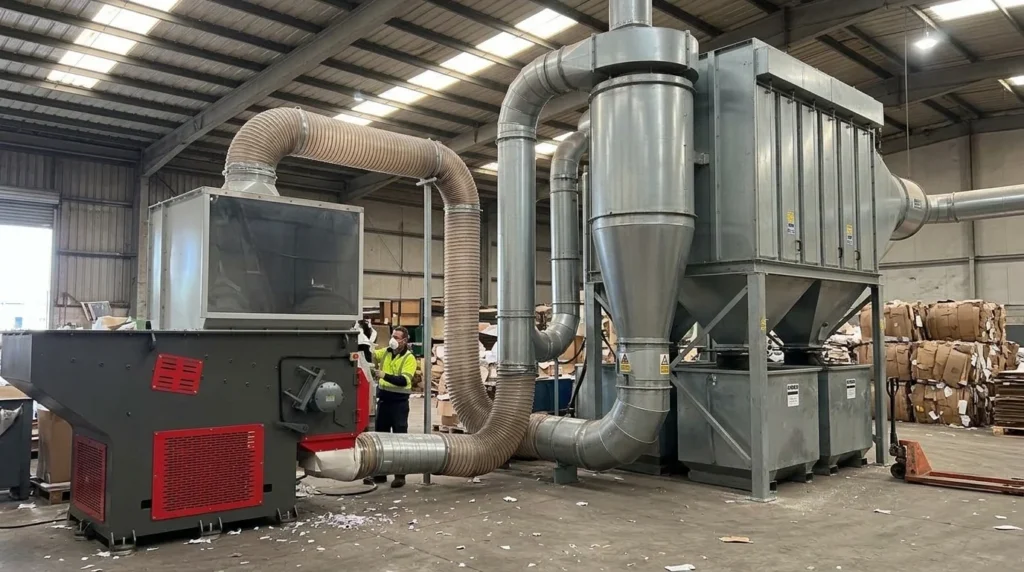
Accumulated combustible dust can also contribute to flash fires or explosions under certain conditions.
Potential ignition sources include overheated bearings, electrical faults, friction, and sparks associated with foreign metal contamination.
For this reason, an Industrial Paper Shredder Machine should be evaluated as part of the complete production environment, not as an isolated machine.
Can Worn Shredder Blades Increase Dust Generation?
Yes. Worn cutters may tear and repeatedly work the paper instead of achieving the intended cutting action efficiently.
This may increase fines generation, mechanical resistance, and operating loads.
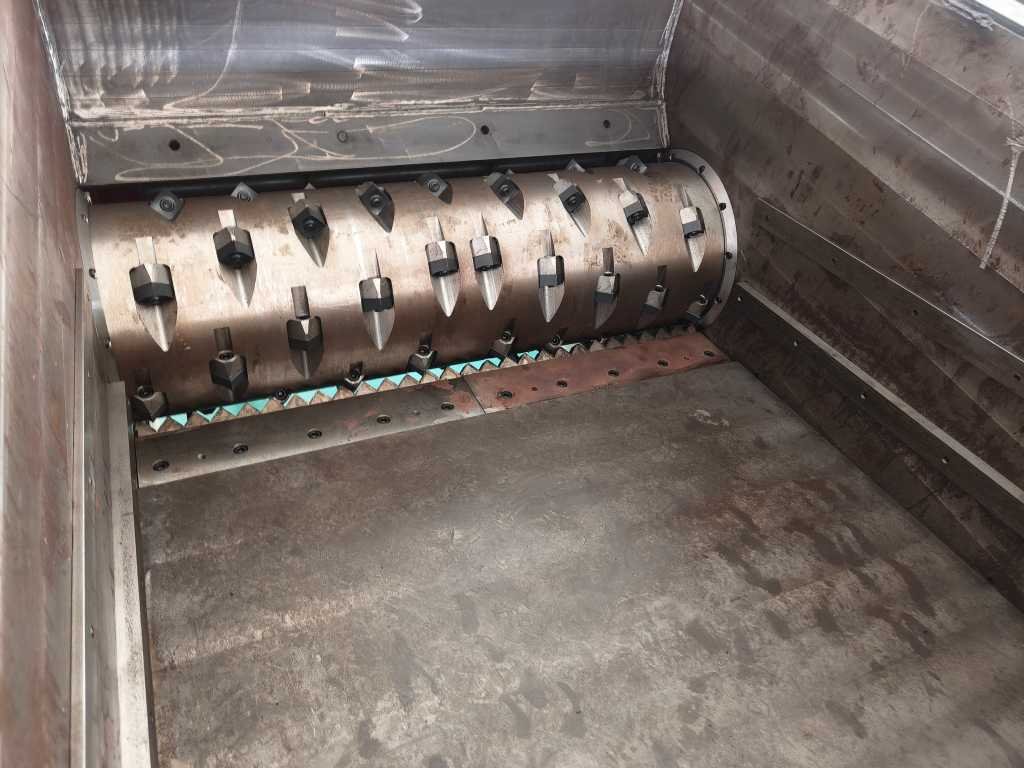
When selecting Industrial Shredder Blades, I recommend evaluating cutter geometry, material compatibility, wear resistance, and maintenance accessibility.
There is no universal blade configuration for office paper, cardboard, paper rolls, and compacted paper bales.
The cutting system must match the actual feedstock.
How Do Feeding and Discharge Problems Affect Operating Temperature?
Irregular feeding can create fluctuating cutting loads.
Large bundles of paper or compacted cardboard may overload equipment that was selected for smaller, loose materials.
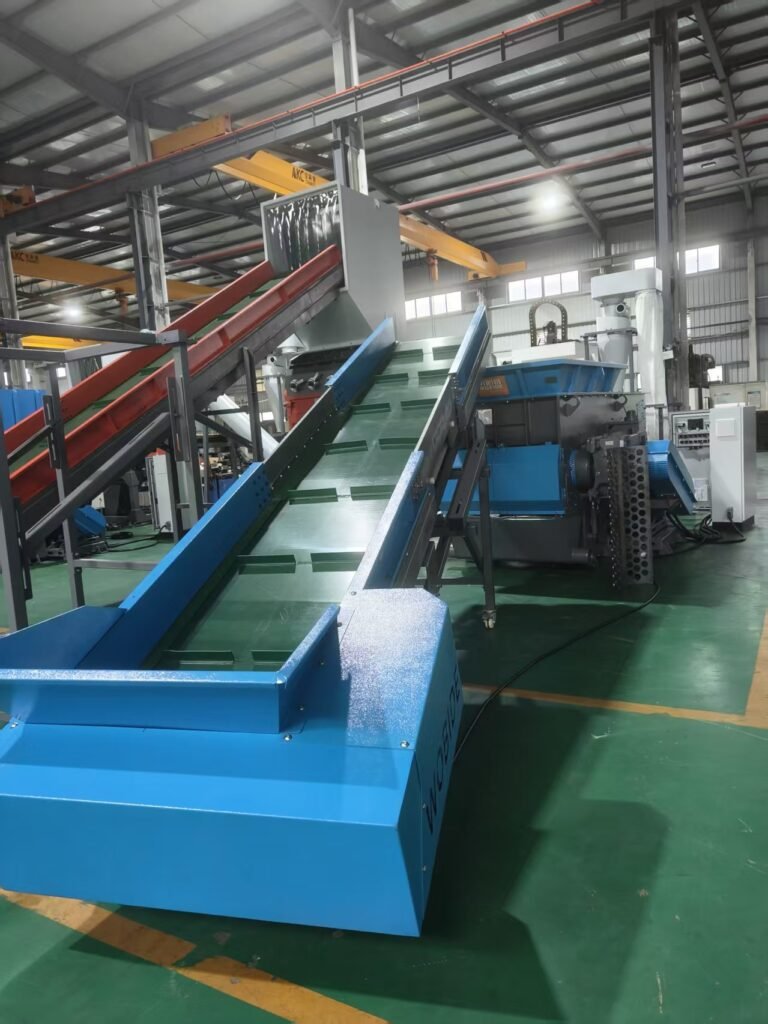
Restricted discharge may also cause processed material to accumulate inside suitable machine configurations.
For a Cardboard Shredder Machine, feeding and discharge capacity should be coordinated with the effective shredding capacity.
Pushing more paper into the machine does not necessarily increase final production.
Can a Dust Collection System Eliminate Paper Shredder Fire Risks?
A suitable Paper Dust Collection System can help capture airborne particles and reduce deposits around equipment.
However, dust collection does not automatically eliminate fire risks. Collectors and ductwork can themselves present combustible dust hazards.
Effective dust control requires appropriately designed collection, containment, and safe housekeeping practices.
Dust extraction and any necessary explosion protection must be engineered by qualified specialists for the actual dust characteristics and installation conditions.
An ordinary industrial vacuum or conventional dust collector should not automatically be considered suitable.
How Do Bearing Problems Increase Overheating Risks?
Bearings support the cutting shafts under repeated mechanical loads.
Incorrect lubrication, contamination, misalignment, or excessive loading may increase friction and operating temperature.
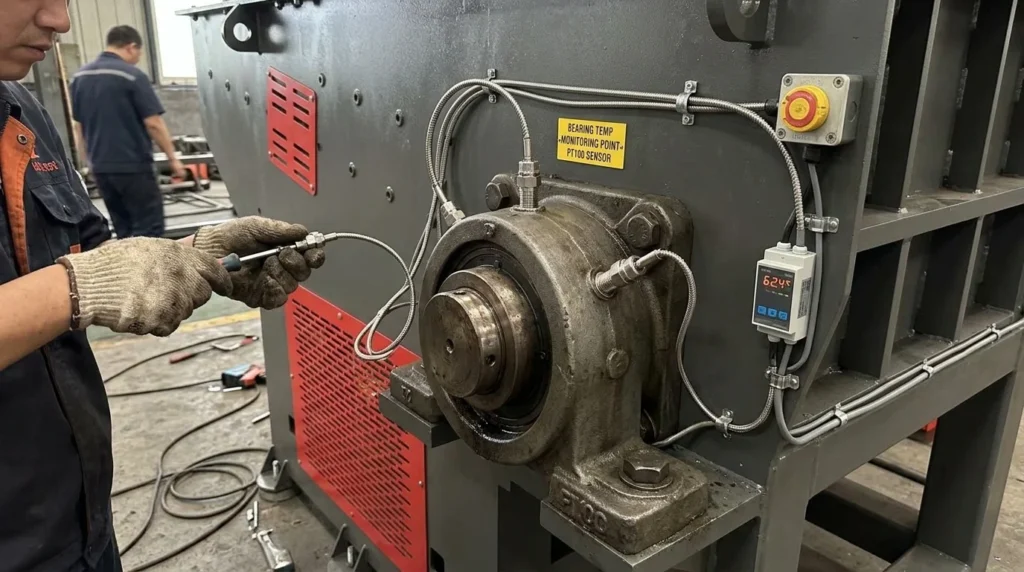
Depending on the equipment design, temperature and vibration monitoring may help identify developing problems.
However, there is no universal safe bearing temperature for every shredder.
Alarm limits and maintenance requirements should follow the component manufacturer’s specifications and the site’s safety assessment.
How Can Preventive Maintenance Reduce Paper Dust Buildup?
I recommend establishing an Industrial Shredder Maintenance program covering the cutting chamber, ventilation system, discharge equipment, bearings, and dust extraction components.
Inspection frequency should reflect actual dust generation, operating hours, and equipment requirements.
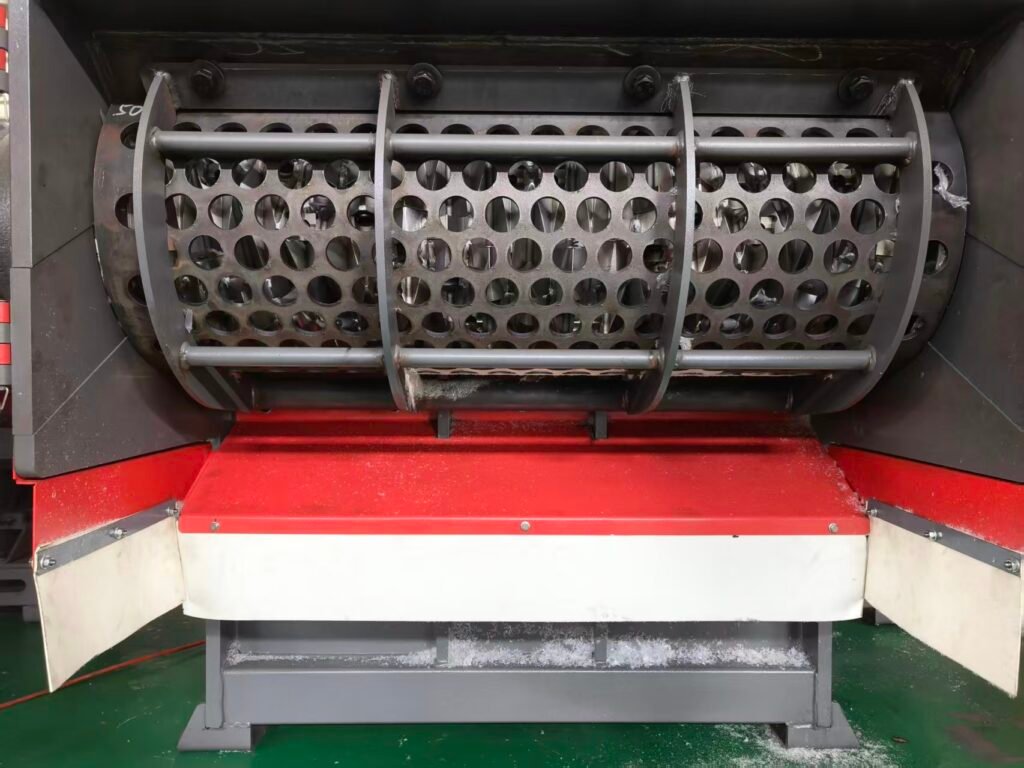
Before accessing mechanical components, trained personnel must isolate hazardous energy, verify isolation, and secure moving components according to approved procedures.
Avoid cleaning methods that disperse combustible dust into the air.
If smoke, burning odors, or suspected smoldering material appears, follow the site’s emergency plan. Do not open equipment or disturb accumulated dust to investigate a suspected internal fire.
Should You Choose a Single-Shaft or Double-Shaft Paper Shredder?
Both configurations may be suitable for selected paper recycling applications.
The correct choice depends on the material, required fragment size, production capacity, and downstream processing.
| Selection Factor | Single-Shaft Shredder | Double-Shaft Shredder |
| Typical function | Controlled size reduction | Primary coarse shredding |
| Output size control | Often screen-controlled | Depends on cutter design |
| Suitable applications | Selected paper and packaging waste | Selected bulky cardboard and paper waste |
| Dust generation | Application-dependent | Application-dependent |
| Fire protection | Requires assessment | Requires assessment |
A Heavy Duty Paper Shredder does not automatically offer better dust control simply because it has a larger motor or lower operating speed.
Representative material testing remains important.
What Should Buyers Confirm Before Purchasing a Paper Recycling Shredder?
Before recommending a Paper Recycling Shredder, we need to understand:
- Paper or cardboard type.
- Material photos or videos.
- Maximum dimensions and bale density.
- Required capacity in kg/h.
- Target shredded material size.
- Moisture and contamination conditions.
- Existing dust extraction equipment.
- Site safety requirements and electrical supply.
At AMIGE, we evaluate these factors to determine whether a proposed shredding configuration is appropriate.
Specialized combustible dust protection and regulatory compliance must be evaluated separately by qualified professionals.
Our objective is to recommend practical equipment within its verified operating limits.
Contact AMIGE for a Plastic Crusher Quote
Conclusion
Paper dust buildup can contribute to overheating, maintenance problems, and serious fire hazards. Effective dust control, suitable cutting systems, equipment monitoring, and professional safety assessment are essential. At AMIGE, we help customers evaluate shredding configurations based on actual material characteristics and production requirements.
Frequently Asked Questions
1. Why does my industrial paper shredder produce excessive dust?
Possible causes include worn blades, repeated cutting, unsuitable screen openings, brittle paper, and inappropriate cutting configurations. Material characteristics and the required output size should also be evaluated.
2. Can paper dust cause an industrial shredder to catch fire?
Yes. Paper dust is combustible and may contribute to fires or dust explosions under certain conditions. Suitable dust control, ignition prevention, and professional hazard assessment are essential.
3. Can a low-speed paper shredder reduce dust generation?
A suitable low-speed cutting system may reduce unnecessary fragmentation in certain applications. However, dust generation also depends on cutter geometry, paper condition, feeding, and output requirements.
4. Is a conventional dust collector sufficient for paper recycling?
Not necessarily. Dust collection equipment must be suitable for the actual dust characteristics and associated hazards. Specialized fire and explosion protection may be required.
5. What information does AMIGE need to recommend an industrial paper shredder?
Please provide paper type, material photos or videos, maximum dimensions, bale density, required capacity, target output size, dust extraction requirements, and local industrial voltage.
Call to Action
Is excessive paper dust causing overheating, frequent maintenance, or production interruptions in your shredding operation?
Send AMIGE your paper or cardboard waste photos or videos, material dimensions, required processing capacity, and target output size.
Our engineering team can evaluate your material and discuss suitable shredding configurations, maintenance requirements, and integration with appropriately engineered dust control systems.
Request a customized industrial paper shredder quotation and technical equipment recommendation from AMIGE.
#IndustrialPaperShredder #PaperShredder #PaperRecycling #CardboardShredder
#PaperDust #DustCollection #CombustibleDust #ShredderMaintenance #RecyclingMachinery #AMIGE