Blade Revolution: How Did Special Alloy Materials Increase Hard Plastic Crushing Blade Life By 50%?

Taizhou Amige Machinery Co.,Ltd

Every plastic recycling factory eventually faces the same painful truth. Motors can survive years. Frames remain solid. But blades? Blades suffer daily punishment like unpaid interns working overtime. Especially when processing hard plastics such as ABS, PC, PA, nylon lumps, automotive bumpers, or thick-walled injection runners. Traditional blades wear fast. Production quality declines quietly. Electricity consumption climbs slowly. Operators sharpen knives repeatedly until the blade looks thinner than factory coffee. I have watched too many recycling lines lose profits not because of weak machines, but because of outdated blade materials.

That is why we invested heavily in developing special alloy crushing blades at Amige Machinery. By optimizing alloy composition, heat treatment processes, hardness balance, and wear resistance technology, our new blade system improves service life by approximately 50% when processing hard plastics. More importantly, the blades maintain cutting stability longer, reduce maintenance frequency, improve particle consistency, and lower overall operational costs. In modern recycling production, blade technology is no longer a small component issue. It has become a core competitiveness factor.

Some factory owners still buy blades purely based on price.

That strategy usually works once.

After that, physics sends the invoice.

Why Do Hard Plastics Destroy Traditional Blades So Quickly?

Hard plastics fight back aggressively during crushing.

Unlike soft films or woven bags, rigid plastics generate intense impact resistance against the blade edge.

Materials like:

  • ABS
  • PC
  • PA
  • PET lumps
  • Engineering plastics
  • Thick injection runners

all create high cutting stress.

Traditional carbon steel blades lose sharpness quickly under these conditions.

Once the edge becomes dull, friction rises immediately.

Then heat increases.

Then amperage rises.

Then operators begin hearing “interesting sounds” from the machine.

And nobody enjoys interesting sounds from industrial equipment.

According to Global Plastic Processing Research, blade wear accounts for nearly 28% of unexpected downtime in rigid plastic recycling facilities.

That number is not surprising to me.

Blades work harder than most people inside the factory.

What Makes Special Alloy Blades Different?

The answer is metallurgy.

Real metallurgy.

Not marketing brochures decorated with dramatic flames and meaningless buzzwords.

Our special alloy blades combine multiple material advantages:

  • Higher hardness
  • Better impact resistance
  • Improved thermal stability
  • Superior abrasion resistance
  • Reduced micro-cracking

The challenge is balance.

Extremely hard blades may become brittle.

Extremely tough blades may wear faster.

The secret lies in achieving controlled equilibrium between hardness and toughness.

That balance requires precise alloy composition and advanced heat treatment.

This is not something achieved by simply “adding more chromium.”

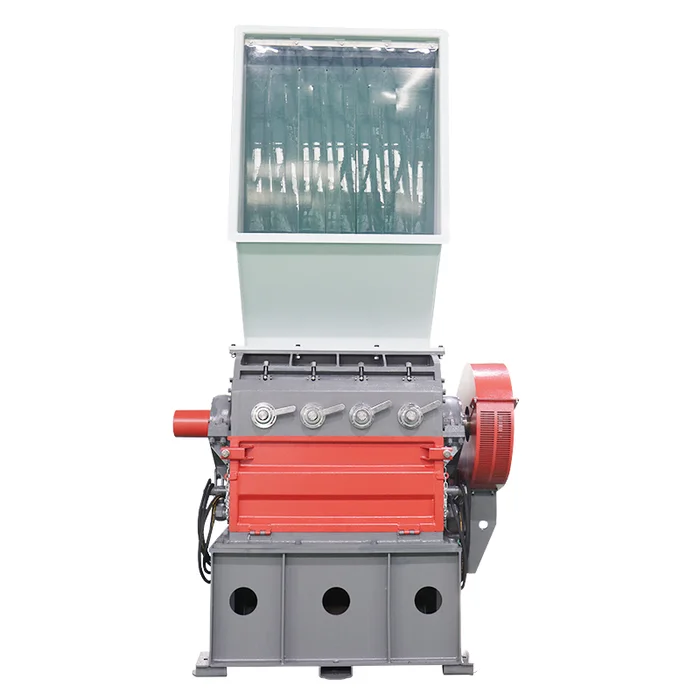
If metallurgy were that easy, every factory would own a laboratory. Industrial Plastic Waste Crusher WHC800/450

Why Does Blade Material Affect Production Efficiency?

Many buyers underestimate this connection.

A sharper blade cuts more efficiently.

Efficient cutting reduces resistance.

Lower resistance reduces motor load.

Reduced load decreases electricity consumption.

Everything connects mechanically.

According to Industrial Energy Consumption Analysis, optimized blade systems may reduce crushing energy consumption by up to 15%.

That matters significantly in large-scale recycling plants operating continuously.

Especially now.

Electricity prices rarely move downward.

Unlike customer expectations.

Additionally, sharper blades create more uniform flakes.

Uniform flakes improve washing and pelletizing performance later.

Good blades support the entire recycling line quietly.

Like experienced factory supervisors.

Always solving problems.

Rarely receiving compliments.

How Did We Develop The New Alloy Blade System?

Slowly.

Very slowly.

Good engineering usually disappoints impatient people.

We tested multiple alloy combinations for months.

Some samples cracked too early.

Some resisted wear but overheated excessively.

Others survived impact but lost cutting sharpness too quickly.

Failure teaches engineers humility.

Machines are brutally honest teachers.

Eventually, our R&D team optimized a specialized alloy formula combined with vacuum heat treatment and controlled tempering technology.

The final result achieved:

  • Better edge retention
  • Improved thermal resistance
  • Lower fracture risk
  • More stable hardness distribution

According to Advanced Metallurgy Testing Data, the optimized alloy structure improved operational lifespan by approximately 50% during high-load rigid plastic crushing tests.

That number matters commercially.

Not just technically.

Why Is Heat Resistance So Important During Crushing?

Heat destroys blade performance quietly.

Many operators focus only on visible blade wear.

But thermal fatigue damages blades long before major edge loss appears.

Hard plastics generate tremendous friction heat during high-speed crushing.

Poor blade materials soften gradually under repeated thermal stress.

Then cutting precision declines.

Then particle quality becomes inconsistent.

Then maintenance teams become very busy.

Our alloy system improves thermal stability significantly.

The blades maintain structural integrity better during continuous operation.

This is especially critical in:

  • Automotive plastic recycling
  • Electronic waste processing
  • Thick-wall plastic crushing
  • Injection molding scrap recycling

Factories processing hard plastics continuously cannot afford unstable blade performance.

Machines dislike overheating almost as much as accountants dislike unexpected repair bills.

Can Better Blades Reduce Maintenance Frequency?

Absolutely.

Maintenance intervals increase substantially with improved blade durability.

That creates multiple operational advantages:

  • Less downtime
  • Lower labor costs
  • Reduced sharpening frequency
  • More stable production scheduling
  • Lower spare parts inventory pressure

One customer previously sharpened blades every 8–10 days processing ABS automotive scrap.

After upgrading to our alloy blade system, the interval extended beyond 15 days consistently.

That difference changes factory efficiency significantly over twelve months.

People often focus only on blade purchase cost.

Experienced factory owners calculate total operational cost instead.

Big difference.

Does Blade Design Matter As Much As Material?

Yes.

Excellent material with poor geometry still produces disappointing performance.

Blade angle matters.

Knife clearance matters.

Rotor configuration matters.

Cutting trajectory matters.

The alloy itself is only one part of the equation.

For hard plastics, we optimize:

  • Blade edge geometry
  • Cutting overlap angle
  • Rotor knife positioning
  • Dynamic load distribution

This improves cutting efficiency while reducing localized stress concentration.

Localized stress is dangerous.

That is where cracks begin.

According to Mechanical Eear Engineering Resarch, optimized cutting geometry may improve operational blade lifespan by an additional 18%.

Engineering is rarely about one magic solution.

Usually, success comes from many small optimizations working together.

Why Are Cheap Blades Often Expensive In The Long Run?

Because downtime costs more than steel.

Cheap blades often create hidden expenses:

  • Frequent replacement
  • Poor cutting quality
  • Higher motor load
  • Increased labor hours
  • Production interruptions
  • More dust generation

Low purchase price can become very expensive operationally.

I understand budget pressure completely.

But factories running 10-hour or 12-hour production shifts should think long-term.

Industrial machinery is not fast fashion.

You cannot simply replace critical components casually every few weeks without operational consequences.

Reliable blade systems create stable production.

Stable production creates reliable customer delivery.

Reliable delivery builds long-term business reputation.

Simple logic.

Often ignored.

Is Alloy Blade Technology The Future Of Plastic Crushing?

Without question.

Plastic materials are becoming harder and more complex globally.

Recycling machines must evolve accordingly.

Traditional blade materials designed decades ago struggle under modern recycling demands.

Especially with:

  • Engineering plastics
  • Glass-filled materials
  • Automotive components
  • Industrial plastic waste
  • High-impact polymer products

At Amige Offical Website, we believe future recycling efficiency depends heavily on advanced material engineering.

Bigger motors alone are not the answer.

Smart metallurgy matters.

Precision manufacturing matters.

Thermal control matters.

Modern recycling equipment increasingly depends on material science as much as mechanical engineering.

Frankly, steel quality now influences recycling profitability more than many factory owners realize.

Conclusion

Special alloy blade technology transforms rigid plastic crushing efficiency fundamentally. Longer blade life, stable cutting performance, lower maintenance frequency, and reduced operational costs create measurable competitive advantages. In modern recycling production, advanced metallurgy is no longer optional. It is becoming essential industrial infrastructure.