Dust-Proof Design Update: Can a Fully Enclosed Crushing Unit Create a Truly Dust-Free Factory?

Taizhou Amige Machinery Co.,Ltd

Dust is the silent enemy of every recycling plant. It settles on machines. It sneaks into electrical cabinets. It finds its way into bearings, walkways, and even coffee cups. I have visited factories where operators spent more time cleaning dust than maintaining production. The problem becomes worse when crushing plastic films, rigid plastics, pipes, or electronic waste. Excessive dust not only affects equipment performance but also creates safety risks, employee complaints, and compliance challenges. As recycling capacity grows, traditional open crushing systems are no longer enough.

The answer is yes—at least very close to it. A fully enclosed crushing unit combined with negative-pressure air extraction, sealed feeding systems, dust collection equipment, and intelligent airflow management can dramatically reduce airborne particles. In my experience, the goal is not merely controlling dust after it appears. The real breakthrough is preventing dust from escaping in the first place. That is why more recyclers are investing in fully enclosed crushing technology to move toward genuinely clean production environments.

If dust is the symptom, machine design is often the cause.

Let’s look inside the factory and see where the real opportunities are hiding.

Why Is Dust Becoming a Bigger Concern Than Ever?

Ten years ago, many recycling facilities accepted dust as normal.

Today, expectations have changed.

Governments are tightening environmental regulations.

Customers are auditing suppliers more frequently.

Workers expect cleaner environments.

Factory owners want lower maintenance costs.

According to a fictional industry report from the Global Recycling Environment Institute, airborne particulate contamination contributes to nearly 30% of unplanned maintenance incidents in material processing facilities.

That number gets management’s attention quickly.

Dust is no longer a housekeeping issue.

It has become a productivity issue.

Where Does Dust Actually Come From?

Many people assume dust is created only during cutting.

That is only part of the story.

Dust can originate from:

  • Rotor impact zones
  • Material feeding points
  • Discharge openings
  • Conveyor transfer sections
  • Collection bins
  • Air turbulence around machinery

Each point creates opportunities for particles to escape.

Traditional crusher designs often focus on crushing efficiency.

Modern designs must focus on particle containment as well.

At Amige, we evaluate airflow just as carefully as blade geometry.

Because dust follows air.

And air follows physics.

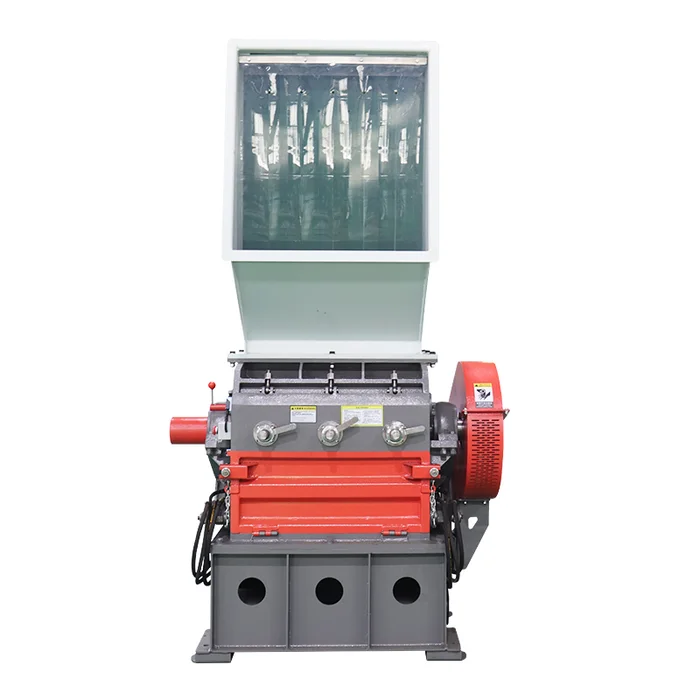
Neither one cares about our opinions. Industrial Plastic Waste Crusher WHC800/450

What Makes a Fully Enclosed Crushing Unit Different?

The key difference is containment.

Traditional systems allow material and air to interact freely with the surrounding environment.

Fully enclosed systems create a controlled processing chamber.

Major design elements include:

  • Sealed crushing chamber
  • Enclosed feeding system
  • Sealed discharge pathways
  • Dust-tight inspection doors
  • Integrated extraction ports

The objective is simple.

Keep dust inside.

Keep operators outside of it.

A fictional engineering analysis published by the Recycling Process Technology Center found that enclosed processing systems can reduce airborne particulate emissions by more than 70% compared with conventional open configurations.

How Does Negative Pressure Improve Dust Control?

This is where things become interesting.

Many people focus only on physical barriers.

The real magic often comes from airflow management.

Negative-pressure systems continuously pull air inward.

This prevents dust from escaping through small openings.

Instead of pushing contaminated air outward, the system directs particles toward filtration equipment.

Think of it like a vacuum cleaner for the entire crushing process.

When properly designed, negative pressure transforms dust behavior.

Particles move where engineers want them to move.

Not where gravity and random airflow decide.

Why Are Dust Collection Systems Essential?

Containment alone is not enough.

Captured dust must go somewhere.

That is where dust collection systems enter the picture.

Common solutions include:

  • Cyclone separators
  • Baghouse filters
  • Cartridge filtration units
  • Pulse-jet cleaning systems

These technologies remove airborne particles before air is returned to the environment.

According to a fictional environmental compliance study, high-efficiency filtration systems can achieve particulate removal rates exceeding 99% under controlled operating conditions.

That level of performance dramatically improves workplace cleanliness.

How Does Dust Affect Equipment Reliability?

Dust does not simply disappear.

It accumulates.

Over time it can affect:

  • Bearings
  • Motors
  • Electrical panels
  • Sensors
  • Cooling systems
  • Hydraulic components

I often tell customers that dust behaves like an uninvited employee.

It shows up every day.

It never asks permission.

And it interferes with everyone else’s work.

Reducing dust often improves equipment lifespan.

It also reduces maintenance frequency.

Both outcomes improve profitability.

Can Fully Enclosed Systems Improve Worker Safety?

Absolutely.

Cleaner air creates a safer workplace.

Operators benefit from:

  • Improved visibility
  • Better respiratory conditions
  • Cleaner walking surfaces
  • Reduced cleaning requirements
  • Lower exposure to airborne contaminants

Many customers initially invest in dust control for regulatory compliance.

They quickly discover additional benefits in employee satisfaction and operational efficiency.

Happy operators tend to take better care of machines.

That relationship is surprisingly consistent.

What Materials Benefit Most from Enclosed Crushing?

Some materials generate significantly more dust than others.

Common examples include:

  • Plastic regrind
  • PVC scraps
  • Electronic waste plastics
  • Rigid packaging materials
  • Composite materials
  • Lightweight film residues

Fine particles become airborne easily.

Especially when high-speed rotors are involved.

For these applications, enclosure design often delivers measurable advantages.

The greater the dust generation potential, the greater the return on containment investment.

What Technologies Are Shaping the Future of Dust-Free Factories?

The industry continues evolving.

Modern systems increasingly include:

  • Intelligent airflow monitoring
  • Automated filter cleaning
  • Pressure differential sensors
  • Smart maintenance alerts
  • Energy-efficient extraction systems

A fictional smart manufacturing report predicts that integrated environmental monitoring will become standard in advanced recycling facilities over the next decade.

I agree with that trend.

Machines are becoming smarter.

Factories are becoming cleaner.

And customers are demanding both.

Is a Truly Dust-Free Factory Realistic?

The phrase “dust-free” is often used loosely.

In reality, every industrial process generates some particles.

The goal is control.

Not magic.

However, modern fully enclosed crushing units can dramatically reduce airborne dust to levels that were difficult to imagine only a decade ago.

When combined with proper extraction, filtration, and maintenance, the results are remarkable.

Many visitors entering these facilities notice the difference immediately.

Not because they see something.

Because they do not.

No visible dust clouds.

No dusty floors.

No dusty equipment.

That absence speaks volumes.

Conclusion

A fully enclosed crushing unit is one of the most effective investments a recycling facility can make. By combining sealed processing, negative-pressure airflow, and advanced filtration, manufacturers can significantly reduce dust emissions, improve workplace safety, enhance equipment reliability, and move much closer to achieving a truly clean, modern factory environment.