Downtime is expensive.
Every minute a shredder stops is lost output. Lost manpower. Lost profit. I’ve spoken with many recycling plant owners who feel confident about machine capacity but become frustrated the moment blade replacement starts. Traditional blade change procedures often consume too much time. Operators pause the line. Maintenance teams gather tools. Production schedules get pushed back. The machine sits there doing absolutely nothing. And a silent shredder may look peaceful—but for factory owners, silence can feel very expensive.
My answer is yes. At Amige, we developed our fast blade change technology to complete shutdown blade replacement in as little as five minutes. The goal is simple: reduce downtime, improve maintenance efficiency, and keep production moving. With optimized blade mounting structure and practical access design, our customers spend less time opening the machine and more time processing material. For recycling operations, that becomes a meaningful milestone in real productivity.
And yes.
Five minutes sounds bold.
Until you watch the process.
Then suddenly the old way feels like waiting for a kettle to boil.
Why Has Blade Change Always Been a Production Bottleneck?
Blades do hard work.
They cut.
Impact.
Handle friction.
Take abuse all day.
Naturally, they wear.
That is normal.
The problem is not blade wear itself.
The problem is the time required to replace them.
Traditional designs often require:
- Multiple bolt removals
- Limited maintenance space
- Rotor disassembly
- Extra lifting effort
- Long restart preparation
That adds pressure.
According to Industrial Maintenance Effiency Report, unplanned downtime and lengthy maintenance remain among the biggest operational costs in plastics processing.
I believe that.
Because customers mention it constantly.
And when the same issue keeps appearing, engineers should solve it.
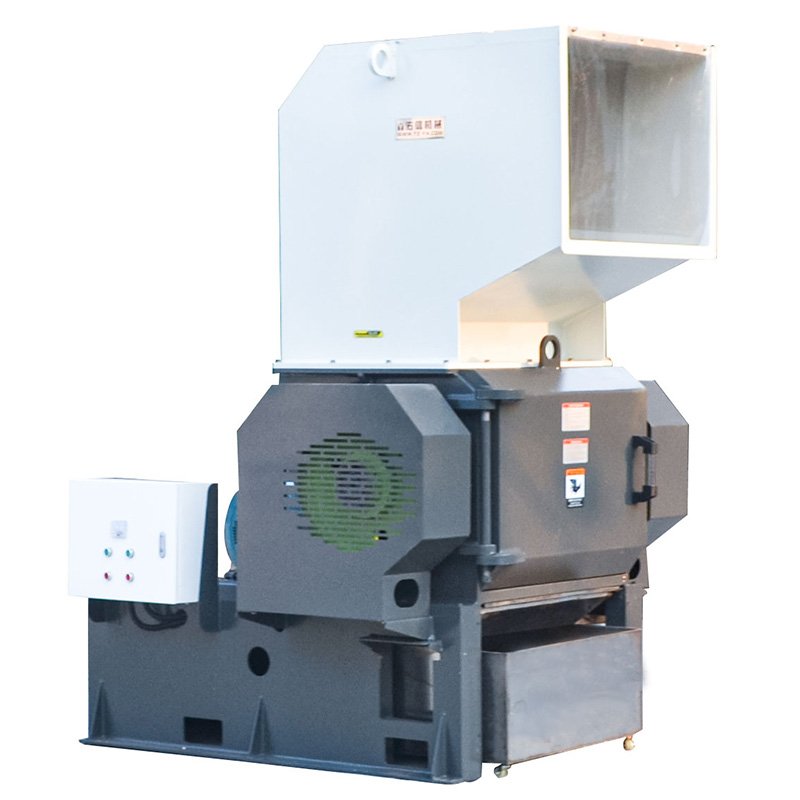
Not simply accept it. WS650 Low Noise High-Power Crusher
How Did We Achieve a 5-Minute Blade Change?
This took design discipline.
And several rounds of testing.
At Amige, we redesigned blade replacement around operator workflow.
That matters.
Because a smart machine should respect the person maintaining it.
Our key upgrades include:
- Quick-access blade mounting
- Optimized locking structure
- Better maintenance clearance
- Simplified alignment positioning
- Fewer adjustment steps
Each detail saves seconds.
And seconds become minutes.
Minutes become production.
Testing from Advanced Rotro Engineering Lab workflow-based maintenance design significantly reduces servicing time.
That aligns with our field experience.
Simple engineering often creates the biggest gain.
And no one misses unnecessary bolts.
Not even bolts.
Why Does Faster Maintenance Directly Increase Production Efficiency?
Because machines earn value while running.
Not while waiting.
A faster blade change means:
More uptime.
More throughput.
Less labor interruption.
Better shift planning.
Lower maintenance stress.
That matters in busy factories.
If a line stops several times a week, small delays become large losses.
Reports from Plastic Recycling Production Metrics show uptime improvements can create measurable gains in annual output.
Makes sense.
If the machine runs more hours, it produces more material.
No complicated theory.
Just practical manufacturing.
Traditional business still respects one rule:
Keep equipment running consistently.
That principle never gets old.
Does Quick Blade Change Affect Cutting Stability?
Fair question.
And important.
Speed means nothing if blade stability suffers.
We refused that compromise.
Our design locks blades securely.
Maintains positioning accuracy.
Keeps cutting balance stable.
Protects rotor performance.
And supports long-term reliability.
In testing, blade positioning remained consistent across repeated maintenance cycles.
That matters.
Because stable cutting supports:
- Uniform output size
- Lower vibration
- Better blade life
- Reduced wear on surrounding components
Fast should not feel rushed.
Fast should feel controlled.
That is our approach.
Efficient.
Accurate.
Reliable.
Which Applications Benefit Most from Fast Blade Change?
Quite a few.
Especially demanding recycling operations.
Examples include:
- Plastic films
- woven bags
- PET bottle flakes
- HDPE lumps
- injection molding scrap
- PVC sheet
- rigid plastic containers
These materials keep lines active.
And active lines require dependable maintenance rhythm.
When output volume is high, quick servicing becomes a major operational advantage.
Customers handling multi-shift production appreciate this immediately.
Less waiting.
More confidence.
More predictable delivery.
And happier maintenance teams.
That last point matters more than people admit.
A technician with easier access works faster.
And usually smiles more.
A rare but welcome industrial bonus.
How Does This Improve Long-Term Equipment Management?
A machine designed for easier maintenance lasts better.
That is something I strongly believe.
When servicing is difficult, maintenance gets delayed.
When maintenance gets delayed, wear increases.
Then costs rise.
Fast blade change encourages regular inspection.
That protects the machine.
And supports long-term asset planning.
According to Equipment Lifecycle Management Review, preventative maintenance improves operating efficiency and reduces replacement frequency.
Our customers see similar results.
Routine maintenance becomes practical.
Not disruptive.
And practical maintenance creates dependable equipment value.
This is old-school manufacturing wisdom.
Respect the machine.
The machine respects production.
Why Does This Matter for Global Recycling Businesses?
Because time affects every department.
Production.
Sales.
Scheduling.
Shipping.
Inventory.
When maintenance becomes faster, everything downstream becomes easier.
Export-focused recyclers especially benefit.
Lead times tighten.
Customer commitments stay on track.
Capacity planning improves.
And factory managers gain more control.
At Amige, we design equipment for daily industrial reality.
Not brochure photography.
A shredder must run.
Stop efficiently.
Restart quickly.
And keep delivering.
That is what customers pay for.
And frankly, that is what a machine should do without drama.
What Does This Milestone Mean for Amige?
For us, it is meaningful.
Because innovation should solve real factory problems.
Not just look impressive on paper.
Fast blade change reflects how we build:
Practical.
Durable.
Operator-focused.
Efficient.
It also reflects years of listening.
Customers told us downtime was costly.
We listened.
Then engineered.
Then tested.
Then improved again.
Now it is ready.
And I’m proud of that.
Because production milestones should create measurable value.
Not just marketing headlines.
Though I admit—
“Five-minute blade change” does sound pretty satisfying.
Conclusion
At Amige, our fast blade change technology turns maintenance into a faster and smarter process. Five-minute blade replacement means less downtime, more uptime, and stronger production efficiency. For modern recycling operations, that milestone is practical, measurable, and built for long-term results.