A glass-fiber-reinforced nylon crusher should be evaluated with the buyer’s actual parts, glass content range, moisture condition and contamination. Reinforcement can change stiffness, abrasion and fracture behavior, so a test on unfilled nylon does not represent the same cutting duty.
I recommend agreeing on the feed batch and inspection method before the trial. A useful test measures usable output and examines the cutting system after processing; it does not rely on a short video of material leaving the chamber.
Define a Representative Reinforced-Nylon Test
| Test variable | Record before the run | Acceptance evidence |
|---|---|---|
| Material grade | Polymer and reinforcement information available to the buyer | Test batch matches the intended production scrap |
| Feed geometry | Largest dimensions, wall thickness and mass | Parts enter the chamber safely and consistently |
| Contamination | Metal, dirt, labels or mixed polymers | Accepted limits and separation steps are documented |
| Machine setup | Rotor, knives, clearance and screen | Configuration is recorded for repeatability |
| Run conditions | Feed rate, duration and sampling method | Output can be compared on the same basis |
| Post-test inspection | Starting blade and chamber condition | Wear, chips, buildup and fasteners are checked |
Inspect Blades, Rotor and Chamber After the Trial
Stable discharge during a short run does not show the complete wear response. Stop and inspect the blade edges, fixed knives, clearance, screen, chamber surfaces and fasteners using the approved procedure. Record any polishing, rounding, chips, embedded contamination or abnormal heat.
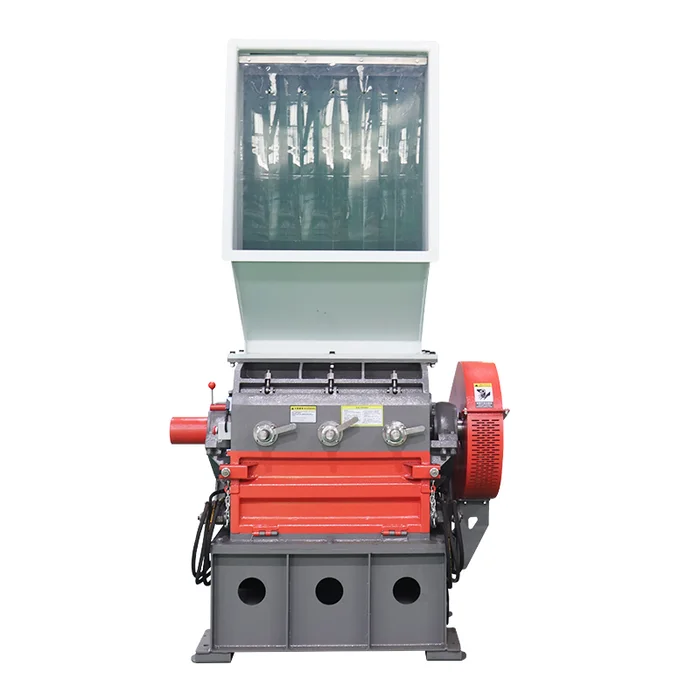
The WHC800/450 industrial plastic crusher can be reviewed for rigid engineering-plastic scrap, but the blade material, geometry and machine configuration must be matched to the reinforced feed.
Compare Usable Output and Lifecycle Cost
- Measure target fraction, oversize and fines separately.
- Record usable output rather than hopper input alone.
- Observe recirculation, heat, dust and motor-load trend.
- Track inspection and sharpening intervals by processed material.
- Include downtime, blades, screens and labor in the comparison.
- Keep unreinforced and reinforced test results separate.
A lower initial machine price may not mean a lower processing cost. The buyer needs repeatable test conditions and ongoing wear records before estimating cost per usable unit of output.
Frequently Asked Questions
Why is glass-filled nylon more demanding than unfilled nylon?
The reinforcement changes the material’s stiffness, fracture behavior and abrasive interaction with cutting components.
Can one short test predict blade service life?
No. It can identify immediate feeding, cutting or damage issues, but service life requires longer operating and maintenance records.
Should reinforced nylon be shredded before granulation?
That depends on part size, thickness, feed consistency and whether the granulator can accept the parts safely.
Why inspect the screen after the test?
The screen affects recirculation and output, and abrasive or contaminated material may reveal wear or damage requiring review.
What should be sent for a crusher test?
Send material grade, reinforcement range, photos, maximum dimensions, contamination, hourly volume, target flake and downstream process.
Request a Representative Material Test
Use the AMIGE inquiry page to provide reinforced-nylon samples and the intended output specification. We can define the machine setup, sampling and post-test inspection in advance.