Plastic waste is everywhere. In landfills, oceans, and even the Arctic snow. Canada—known for its clean image—hasn’t been immune. For years, the country exported tons of waste overseas. But now, as the world tightens its borders to foreign trash, Canada faces a hard truth: it must handle its own plastic problem. The question is—how is it building a sustainable recycling system that actually works?
Canada is building its plastic recycling system through extended producer responsibility (EPR) laws, advanced sorting facilities, and national coordination between provinces. In simple terms, the government is making producers pay for the plastics they put on the market, encouraging better design, reuse, and recycling. The goal? A circular economy where nothing goes to waste.
Let’s break down how this northern giant is trying to reinvent its plastic destiny—and what lessons we, as machine manufacturers, can take from it.
What’s wrong with Canada’s plastic recycling system?
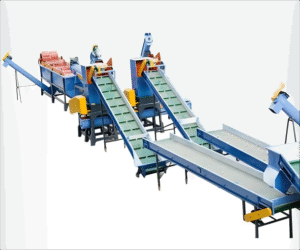
Before fixing the problem, Canada had to admit it had one. For years, most provinces relied on municipal recycling programs, each with different rules. What one city recycled, another sent to landfill. Customized Plastic Crusher Machine WHC1000/600, only about 9% of plastic waste in Canada is actually recycled. The rest? Landfilled, burned, or exported.
The reasons are structural—fragmented systems, outdated facilities, and limited domestic markets for recycled plastic. And when China banned plastic waste imports in 2018, Canada’s recycling model collapsed almost overnight. Suddenly, local recyclers were left with warehouses full of unprocessed waste.
That crisis forced a new question: should recycling depend on local government, or should producers take responsibility?
What is Extended Producer Responsibility (EPR), and why is it crucial?
EPR flips the recycling burden from citizens to corporations. Under this policy, manufacturers, importers, and retailers are financially and operationally responsible for the plastic packaging they sell.
British Columbia led the way. HDPE strap hard material washing line, and today it boasts one of the highest recovery rates in North America—about 78% for consumer packaging plastics.
For companies, that means redesigning products for recyclability. For machine suppliers like us, it means rising demand for high-efficiency shredders and washing lines that can process these recovered materials.
When policy meets machinery, real change happens.
How are provinces aligning under national standards?
Here’s where it gets interesting. Canada is a federation—provinces have autonomy over waste management. That’s why EPR programs used to differ widely. Now, Ottawa is pushing for national harmonization through the Zero Plastic Waste Agenda 2030.
This program sets national recycling targets and promotes shared data systems to track plastic flows. Quebec and Ontario have already started aligning their EPR systems with British Columbia’s model.
As an equipment manufacturer, I see this as a clear signal: standardization creates predictability. And predictability fuels investment. When recycling rules are the same across provinces, infrastructure grows faster.
What role does technology play in Canada’s recycling reform?
Technology is the backbone of this transition. Old recycling facilities relied on manual sorting and low-efficiency crushers. Today, advanced optical sorting, AI recognition, and robotic pickers are changing the game.
The Canadian Circular Tech Report 2025 notes that machine-learning-based sorters can improve material purity by 25–30%. Meanwhile, high-torque shredders (like those we build at Amige) handle mixed plastics without frequent jams, increasing throughput.
Canada’s recycling upgrade isn’t just policy-driven—it’s technology-enabled. And that’s where we fit in.
How does Canada deal with different types of plastics?
One big challenge is that “plastic” isn’t one material—it’s many. PET bottles, HDPE containers, PVC pipes, PP packaging, and multilayer films all behave differently when shredded or melted.
That’s why Canada’s recycling system focuses on stream separation. PET and HDPE are processed locally, while complex plastics go to specialized facilities. Waste Plastic Recycling Shredder Machine WPS800 shows a 35% increase in sorting lines dedicated to film and flexible packaging.
For us in the equipment business, this trend means one thing: customization. No single shredder fits all. Machines must adapt to density, shape, and contamination levels. Canada’s recyclers are learning that fast.
How does Canada encourage circular design?
Recycling is only half the story. The other half is designing for recycling. Canada’s government is working with producers to redesign packaging—simplifying materials, avoiding dark pigments, and labeling products with clear recycling symbols.
Single shaft shredder WPS600, more than 300 brands have joined the Canada Plastics Pact, pledging to make all packaging recyclable or compostable by 2025.
As a manufacturer, I love seeing this mindset shift. It’s not just about compliance—it’s about creating machinery that serves smarter products. When plastics are designed to be recycled, our job downstream becomes easier and more efficient.
What are the main challenges Canada still faces?
Let’s be honest—Canada’s recycling system still has cracks. Collection is improving, but recycling infrastructure is uneven. Remote provinces and northern regions struggle with logistics. The cost of shipping waste to processing centers often outweighs its market value.
Moreover, recycled resin still competes with cheap virgin plastic. The Polymer Market Outlook 2025 predicts that until carbon pricing or subsidies level the field, recycled content will remain at a cost disadvantage.
That’s why public procurement policies—like requiring recycled plastic in government projects—are key to keeping demand stable.
How does this transformation affect global suppliers like us?
For companies like Amige, Canada’s recycling reform is a signal to adapt. Clients want low-energy, noise-controlled, and highly automated shredders. They also need equipment compliant with North American safety standards and capable of handling various polymers efficiently.
We’ve started customizing our machines for Canadian recyclers—bigger torque for frozen winter operations, smarter PLC controls for remote monitoring, and easy blade maintenance systems.
In short, when Canada raises its recycling game, we sharpen ours.
What can other countries learn from Canada’s system?
Canada’s strength lies in coordination. Instead of letting municipalities battle it out, it’s aligning stakeholders—government, producers, and recyclers—under one national vision.
That’s something developing regions can emulate: clear roles, measurable targets, and accountability.
According to the Global Recycling Systems Study 2025, countries adopting EPR and centralized data management see recycling efficiency improve by up to 40%.
The takeaway? Recycling isn’t about machines alone—it’s about systems thinking.
And when systems work, sustainability follows.
Conclusion
Canada’s plastic recycling system is still a work in progress—but it’s moving fast. Policy, technology, and business are finally speaking the same language.
For us in the recycling equipment industry, it’s a sign of where the global market is heading: cleaner, smarter, and more circular.