Many recycling companies invest heavily in high-quality shredders but overlook one small detail that can dramatically affect performance—the blade angle. A perfectly engineered shredder equipped with the wrong blade geometry may consume more electricity, produce lower throughput, accelerate blade wear, and generate inconsistent particle sizes. I have visited recycling plants where customers blamed the machine, only to discover that the real problem was improper blade selection. That is exactly why AMIGE is launching a new live technical webinar. Our senior engineers will explain how different material hardness requires different blade angles, and how a simple adjustment can improve both productivity and profitability.
Our upcoming live webinar will guide recycling professionals through the relationship between material hardness, blade angle, cutting efficiency, power consumption, and blade life. Using real production cases, our senior engineers will demonstrate how to select the proper blade geometry for soft films, rigid plastics, engineering plastics, pallets, pipes, woven bags, and other materials. The goal is to help customers maximize machine performance while reducing operating costs and maintenance frequency.
A blade is more than a piece of steel.
It is the point where engineering meets material.
Choose the right angle, and the entire production line performs better.
Why Does Blade Angle Matter More Than Many People Think?
Many customers focus on blade material.
Others ask about hardness.
Far fewer ask about blade angle.
Yet blade geometry directly influences:
- Cutting resistance
- Material penetration
- Rotor load
- Energy consumption
- Particle size
- Blade lifespan
According to the Global Cutting Technology Research Center, optimized blade geometry significantly improves shredding efficiency while reducing operating costs.
A great blade is not only hard.
It is correctly designed.
Why Are We Hosting This Technical Webinar?
Our engineers answer the same questions every week.
Customers often ask:
- Which blade angle is suitable for HDPE?
- Why do my blades wear too quickly?
- Why does the motor overload?
- Which knife design is best for soft film?
- Can one blade process every material?
Instead of answering individually, we decided to organize a comprehensive online technical seminar.
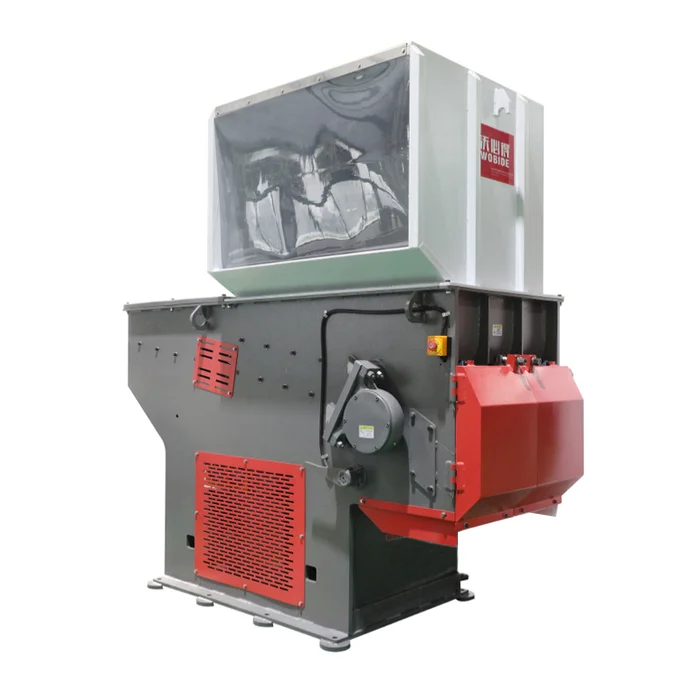
Knowledge becomes far more valuable when shared. Waste Plastic Recycling Shredder Machine WPS800
How Does Material Hardness Affect Blade Selection?
Different plastics behave differently during shredding.
Soft Plastics
Examples include:
- LDPE film
- Stretch film
- Agricultural film
- PP woven bags
These materials require blade geometry that minimizes wrapping while maintaining efficient shearing.
Medium-Hard Plastics
Including:
- HDPE bottles
- PP containers
- PET sheets
- Plastic crates
Balanced cutting geometry provides stable throughput and consistent particle size.
Hard Plastics
Such as:
- Thick-walled pipes
- Plastic pallets
- Engineering plastics
- ABS blocks
These materials require stronger cutting support and optimized edge angles to reduce impact loads.
The Advanced Polymer Processing Institute highlights blade selection as a key factor affecting cutting performance.
Material characteristics determine blade requirements.
Not the other way around.
What Will Our Engineers Demonstrate Live?
This webinar focuses on practical operation.
Our engineers will demonstrate:
Different Blade Profiles
Comparing various cutting geometries.
Material Testing
Real shredding demonstrations using multiple plastics.
Blade Installation
Proper positioning and fastening techniques.
Performance Comparison
Evaluating throughput, energy consumption, and blade wear.
Theory is useful.
Watching real machines work is even better.
How Does Blade Angle Influence Energy Consumption?
Incorrect blade geometry increases cutting resistance.
Higher resistance means:
- Higher motor load
- Increased electricity consumption
- Greater vibration
- Lower throughput
Optimized blade angles reduce unnecessary cutting force.
According to the Industrial Energy Efficiency Laboratory, optimized cutting systems improve energy efficiency while maintaining production capacity.
A better cut often requires less power.
Efficiency begins at the cutting edge.
Can Proper Blade Selection Extend Blade Life?
Absolutely.
Proper blade geometry distributes cutting forces more evenly.
Benefits include:
- Lower impact loading
- Reduced edge chipping
- Slower wear
- Longer maintenance intervals
Longer blade life reduces:
- Spare parts costs
- Downtime
- Maintenance frequency
The correct angle protects both the blade and the machine.
Why Doesn’t One Blade Fit Every Material?
Every recycling application is unique.
Processing:
- PET bottles
- Plastic pallets
- PVC pipes
- LDPE films
- Woven bags
- Engineering plastics
requires different cutting characteristics.
Selecting a universal blade often means compromising performance.
Customization creates better results.
The best blade is the one designed for your material.
What Other Topics Will Be Covered?
The webinar also includes discussions on:
Blade Materials
DC53, D2, SKD11, and other common options.
Blade Heat Treatment
How hardness affects wear resistance.
Rotor Design
Interaction between rotor structure and blade geometry.
Maintenance Tips
Daily inspection and replacement procedures.
Our goal is not only to improve cutting.
We also want to simplify maintenance.
Who Should Attend This Webinar?
This session is designed for:
- Plastic recycling plant owners
- Production managers
- Maintenance engineers
- Injection molding factories
- Plastic product manufacturers
- Recycling equipment distributors
Whether you already operate shredders or plan to purchase one, the knowledge shared will help optimize equipment performance.
Good engineering knowledge pays dividends for years.
How Does AMIGE Continue Supporting Customers Beyond Equipment?
At AMIGE, we believe technical education is part of our responsibility.
In addition to manufacturing equipment, we provide:
- Online technical seminars
- Live equipment demonstrations
- Preventive maintenance training
- Remote troubleshooting
- Factory visits
- Process optimization guidance
Machines solve production challenges.
Knowledge helps customers maximize those machines.
Why Will Blade Optimization Become More Important?
Plastic recycling continues becoming more specialized.
Customers expect:
- Higher throughput
- Lower energy consumption
- Longer blade life
- Better particle consistency
- Lower operating costs
Blade optimization directly supports all these objectives.
Sometimes the smallest engineering detail delivers the largest competitive advantage.
That is exactly what we hope to demonstrate during our live webinar.
Conclusion
Choosing the correct blade angle according to material hardness is one of the simplest and most effective ways to improve shredding efficiency, reduce energy consumption, extend blade life, and increase profitability. Through our upcoming live webinar, AMIGE’s senior engineers will share practical knowledge and real production experience to help customers optimize every cut and maximize the value of their recycling equipment.
#PlasticShredder #ShredderBlade #BladeAngle #PlasticRecycling #IndustrialShredder
#PlasticCrusher #RecyclingEquipment #TechnicalWebinar #PlasticMachinery
#AMIGE