Selling a machine is only the beginning of the relationship. Keeping that machine running efficiently for years is the real challenge. In the plastic recycling industry, unexpected downtime means lost production, delayed deliveries, and higher operating costs. That is why I have always believed that after-sales service should receive the same attention as equipment design. During our latest global service tour, the AMIGE after-sales team traveled to Brazil to perform routine preventive maintenance for one of our long-term recycling customers. The visit once again proved that regular maintenance creates measurable value far beyond the initial equipment purchase.
During our scheduled maintenance visit in Brazil, the AMIGE service engineers completed comprehensive inspections of the customer’s shredding and crushing systems, including bearing lubrication, blade wear analysis, hydraulic station servicing, electrical system verification, and production optimization. The result was improved equipment reliability, reduced downtime risks, and renewed customer confidence in long-term plant performance.
I often tell customers one simple truth.
Machines appreciate attention.
Neglect is expensive.
Maintenance is much cheaper.
Why Is Preventive Maintenance So Important?
Many factories wait until a machine stops.
Then maintenance begins.
I prefer the opposite approach.
Preventive maintenance helps identify small issues before they become major failures.
Benefits include:
- Reduced downtime
- Longer equipment life
- Lower repair costs
- Stable production quality
- Higher operating efficiency
According to the Global Industrial Maintenance Research Institute, preventive maintenance programs significantly improve equipment availability and reduce lifecycle operating costs.
A machine rarely fails without warning.
Someone simply has to notice the warning.
Why Did Our Team Visit Brazil?
Brazil remains one of the largest plastic recycling markets in South America.
Many customers operate continuously.
Some facilities run multiple shifts every day.
That level of production demands consistent equipment performance.
Our visit focused on:
- Routine maintenance
- Technical inspections
- Operator communication
- Performance optimization
- Preventive recommendations
For us, after-sales service is not a reaction.
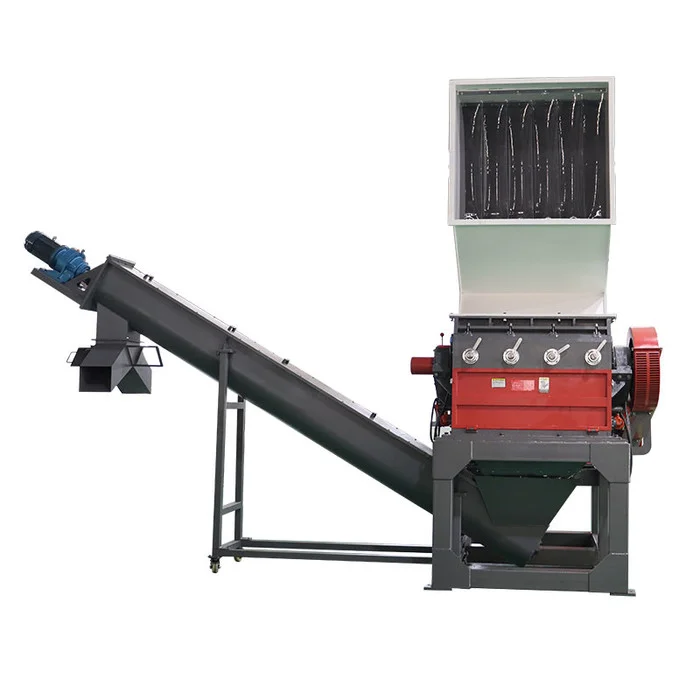
It is a planned strategy. Grinder Plastic Waste Crusher WHC1200/600 With Screw Conveyor
What Equipment Was Inspected?
During the service visit, our engineers inspected several core systems.
These included:
Single-Shaft Shredder
Checking rotor condition, blade wear, screen integrity, and hydraulic feeding performance.
Heavy-Duty Plastic Crusher
Inspecting bearings, cutting chamber, rotor balance, and discharge system.
Conveying Equipment
Verifying belt alignment, motor condition, and feeding consistency.
Electrical Control System
Testing PLC operation, emergency stop functions, sensors, and protection devices.
Every component contributes to overall system reliability.
Ignoring small parts often creates large problems.
What Maintenance Procedures Were Performed?
Routine maintenance followed a structured checklist.
Major tasks included:
- Bearing lubrication
- Hydraulic oil inspection
- Filter replacement
- Blade clearance adjustment
- Bolt torque verification
- Electrical cabinet cleaning
- Safety system testing
- Belt tension inspection
According to the Industrial Equipment Reliability Center, systematic maintenance programs improve machine reliability while reducing unexpected failures.
Maintenance is rarely exciting.
Reliable production certainly is.
Why Is Blade Inspection So Critical?
Blades perform the hardest work inside every shredder.
Gradual wear affects:
- Throughput
- Particle size
- Energy consumption
- Product quality
Our engineers carefully measured:
- Blade wear
- Rotor condition
- Knife clearance
- Fastener integrity
Where necessary, adjustments were completed immediately.
Small corrections prevent major replacements.
That principle applies to both machinery and business.
How Did Hydraulic System Maintenance Improve Performance?
The hydraulic station controls material feeding in the single-shaft shredder.
Smooth feeding creates stable production.
During inspection we checked:
- Oil cleanliness
- Pressure stability
- Cylinder movement
- Hose condition
- Seal integrity
The Global Hydraulic Technology Association reports that clean hydraulic systems significantly improve operational reliability.
Hydraulics rarely ask for attention.
Until they stop working.
Then they receive everyone’s attention.
Why Was Operator Communication So Valuable?
Technical service is not only about machines.
It is also about people.
Our engineers discussed with operators:
- Daily operating habits
- Material changes
- Maintenance routines
- Production challenges
- Future expansion plans
Many valuable improvements came directly from operator feedback.
Operators understand machines differently.
Engineers understand systems differently.
Together they solve problems faster.
What Improvements Were Recommended?
Following the inspection, our team proposed several optimization measures.
These included:
Improved Lubrication Schedule
More precise maintenance intervals.
Blade Rotation Planning
Extending blade service life.
Hydraulic Oil Monitoring
Routine contamination analysis.
Material Feeding Optimization
Reducing unnecessary rotor loading.
None of these changes required expensive upgrades.
Most involved better maintenance discipline.
Small habits often produce large savings.
How Does Preventive Service Benefit Customers?
Customers immediately recognize several advantages.
These include:
- Fewer emergency repairs
- Lower maintenance costs
- Longer equipment lifespan
- Better production stability
- Higher product consistency
The International Manufacturing Service Observatory highlights preventive service as one of the highest-return investments for industrial equipment owners.
Machines reward consistency.
So do customers.
Why Does Global After-Sales Support Matter?
Modern recycling businesses operate globally.
Equipment suppliers should do the same.
Our global service strategy includes:
- On-site inspections
- Remote diagnostics
- Online technical support
- Spare parts supply
- Operator training
Customers increasingly evaluate suppliers by long-term support rather than initial purchase price.
That trend continues growing worldwide.
The relationship should not end when the machine ships.
That is where it truly begins.
What Did We Learn from This Visit?
Every customer visit teaches us something.
This project reinforced several important lessons:
- Preventive maintenance prevents expensive failures.
- Customer feedback drives product improvement.
- Local operating conditions matter.
- Training remains essential.
- Reliable service builds lasting partnerships.
Every inspection improves not only the customer’s equipment.
It also improves our future machine designs.
That feedback loop keeps innovation moving.
Why Will Global Service Become Even More Important?
Plastic recycling equipment continues becoming more advanced.
Automation increases.
Production volumes grow.
Downtime becomes increasingly expensive.
As a result, professional after-sales service will become an even greater competitive advantage.
At AMIGE, we view service as part of the product.
Not something separate.
Machines create value.
Service protects that value.
Conclusion
Our routine maintenance visit in Brazil demonstrated the importance of proactive after-sales service. Through preventive inspections, technical optimization, and close customer collaboration, the AMIGE team helped improve equipment reliability, extend machine life, and reduce downtime risks. For us, delivering machinery is only the first step. Supporting our customers throughout the entire equipment lifecycle is the commitment that truly defines AMIGE.
#AfterSalesService #PlasticRecycling #PlasticShredder #PlasticCrusher #PreventiveMaintenance
#IndustrialMaintenance #RecyclingEquipment #PlasticMachinery #TechnicalSupport #AMIGE