Plastic waste is everywhere. Bottles, drums, crates, pipes, films, lumps, purgings—the material arrives in all shapes, and usually in a very bad mood. For recyclers in Uruguay, the problem is simple but painful: without the right plastic crusher, production becomes slow, noisy, costly, and unpredictable. I have seen good recycling projects lose money because the first crushing step was treated like an afterthought. That is like buying a racehorse and feeding it biscuits.
The top plastic crusher manufacturers for Uruguay are usually not all physically based inside Uruguay. The stronger list includes global manufacturers and exporters serving the Uruguayan market, including Amige, Rapid, CMG, ZERMA, Vecoplan, Aceretech, Genox, NGR, Wiscon, and Lesintor. To find a good supplier, I always check material testing, blade quality, motor configuration, after-sales support, spare parts, and real experience with plastic recycling equipment.
If you want a crusher that behaves like a loyal worker instead of an angry dinosaur, keep reading. I will show you how I judge suppliers from my CEO chair.
Is Uruguay a big plastic crusher manufacturing country?
Let me be frank. Uruguay is not known as a major plastic crusher manufacturing hub. It has recycling companies, importers, distributors, and industrial users. But large-scale production of plastic crushers is limited compared with China, Germany, Italy, Sweden, or the United States.
That does not mean buyers in Uruguay have weak options. Quite the opposite. Many Uruguayan recyclers import machines from established international suppliers. The smart move is to search for manufacturers that can serve Uruguay with shipping, documentation, technical support, and spare parts. In B2B machinery, geography matters. But capability matters more. A nearby weak supplier is still weak. A strong supplier with good service is money well protected.
What are the top 10 plastic crusher manufacturers serving Uruguay?
Here is my practical list. This is not an official government ranking. It is a buyer-focused shortlist based on product relevance, market visibility, machine range, and suitability for plastic crushing applications.
I include companies that can help Uruguayan buyers process PET bottles, HDPE drums, PP crates, PVC pipes, injection scraps, films, and other recyclable plastics. Some are better for light factory waste. Some are better for heavy-duty recycling plants. As always, the machine must fit the material. A crusher is not magic. It is steel, torque, blades, and common sense.
Why do I put Amige on the list?
Yes, I will start with us. I am the CEO of Amige, so I will not pretend to be shy. Shyness is useful at dinner, not when choosing industrial machinery.
At Amige, we focus on plastic crushers, shredders, and recycling auxiliary equipment. Our plastic crushers are built for factories and recyclers that need stable output, easy maintenance, and strong cutting performance. For Uruguay, we usually discuss material type first. PET bottle flakes? HDPE pipe? PP injection runners? Soft film? Each one needs a different cutting chamber, blade design, motor power, and screen size.
A good crusher must be simple to operate and hard to damage. That is my philosophy. Beautiful brochures do not crush plastic. Good steel does.
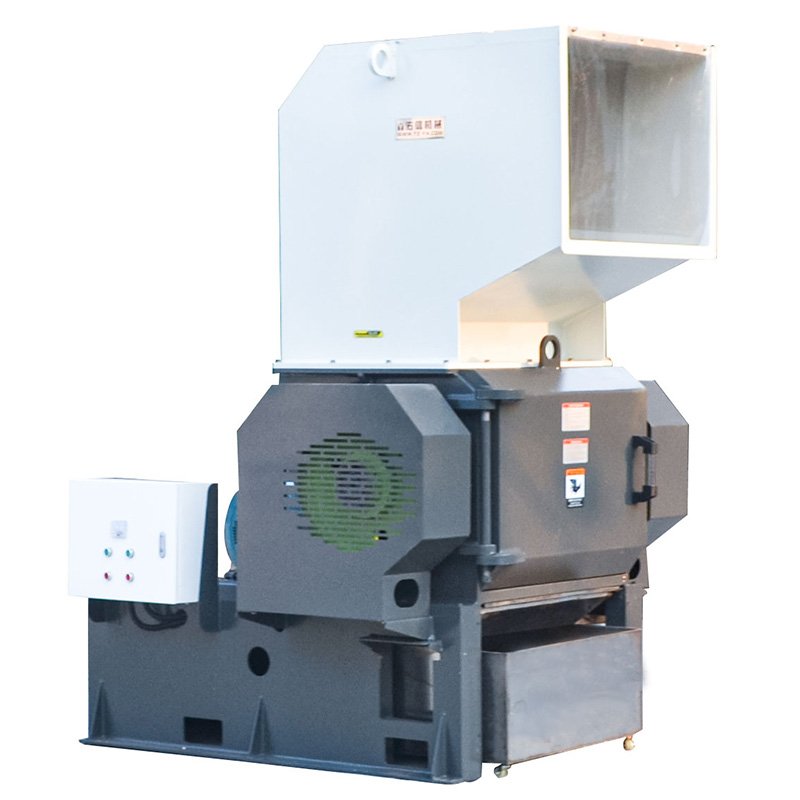
We help customers compare capacity, feeding method, blade material, noise control, dust collection, and maintenance cost. For buyers studying plastic crusher manufacturers in Uruguay, Amige is a strong option when they want direct factory communication and custom machinery. WS650 Low Noise High-Power Crusher
Which international brands are also worth watching?
Rapid Granulator is a respected name in granulators and plastic size reduction. The company is known for high-quality machines used in injection molding, blow molding, extrusion, and recycling operations. For factories in Uruguay that need precision granulation, Rapid can be a serious candidate.
CMG Granulators is another strong brand. It is especially known in plastics processing sectors such as thermoforming, extrusion, blow molding, and PET preform recycling. If a buyer needs a refined granulator for production scrap, CMG deserves attention. These brands are not usually the cheapest. But cheap machines sometimes become expensive teachers. And trust me, tuition is high.
ZERMA is widely recognized in size-reduction equipment. Its product range includes granulators, shredders, and pulverizers. For Uruguayan buyers handling mixed plastic waste, rigid plastics, or production scraps, ZERMA is often part of the discussion.
Vecoplan is stronger in shredding and size-reduction systems, especially for heavier recycling applications. If a recycling plant needs a complete front-end system before washing, pelletizing, or sorting, Vecoplan can be suitable. For industrial plastic crusher projects, the key question is whether the buyer needs a crusher, a shredder, or both.
Who completes my top 10 manufacturer shortlist?
Aceretech is active in plastic recycling lines, including crushing, washing, and pelletizing systems. It is a practical option for buyers who want more than one machine. If a Uruguayan recycler wants a complete PET or PE/PP recycling line, Aceretech may be worth comparing.
Genox manufactures recycling machinery, including shredders, granulators, washing lines, and complete systems. It is suitable for heavier waste streams and integrated solutions. I like to include Genox when customers need a more system-based conversation rather than a single-machine purchase.
NGR is more famous for recycling and pelletizing systems, but it is relevant when the crusher is part of a full in-house recycling setup. For clean industrial scrap from film, fiber, or injection production, NGR-style systems can be useful.
Wiscon is another manufacturer offering granulators and size-reduction systems for plastics. Buyers looking for plastic granulator suppliers can compare Wiscon when they need medium to heavy-duty crushing capacity.
Lesintor offers plastic crushers and auxiliary equipment, especially for factory recycling and production waste. It is often attractive to budget-sensitive buyers who still want a structured product range.
So, my top 10 shortlist is: Amige, Rapid, CMG, ZERMA, Vecoplan, Aceretech, Genox, NGR, Wiscon, and Lesintor. If someone asks me for “Uruguay manufacturers,” I translate that into “reliable manufacturers serving Uruguay.” That is the honest procurement answer.
How should you compare plastic crusher manufacturers?
Start with the material. Always. If a supplier gives you a quotation before asking about your plastic waste, raise one eyebrow. Maybe two.
A proper supplier should ask about material type, size, hardness, moisture, contamination, feeding method, expected output, final particle size, and downstream process. Crushing PET bottles is different from crushing thick HDPE drums. Crushing PVC pipe is different from crushing injection runners. The blade does not care about your hopes. It cares about physics.
Second, check the rotor and blade design. Open-rotor designs can be good for bottles and hollow materials. Staggered blades may improve cutting efficiency. Claw blades may suit harder materials. Flat blades may suit softer or thinner plastics. The right design improves output and reduces power waste.
Third, ask about blade steel. In our industry, blades are like teeth. Weak teeth make a hungry machine look very sad. Look for strong tool steel, proper heat treatment, and easy blade adjustment. A crusher that is difficult to maintain will slowly steal your profit.
What technical specifications matter most?
Motor power matters, but it is not the whole story. Some buyers think a bigger motor solves everything. That is like thinking louder music improves dancing. Sometimes it helps. Often it just annoys the neighbors.
The key specs include crushing chamber size, rotor diameter, blade quantity, screen hole size, motor power, feeding opening, output capacity, electrical control system, bearing quality, and safety protection. For plastic crusher capacity, I always want realistic data based on tested material, not beautiful numbers floating in the air.
Screen size decides final particle size. Smaller holes create smaller flakes, but output may drop. Larger holes improve throughput, but flakes may be too big for washing or pelletizing. This is why one “standard machine” cannot satisfy everyone.
Noise and dust control also matter. In Uruguay, as in any serious market, factory safety and operator comfort are important. Ask about soundproof models, dust collection options, emergency stops, safety switches, and overload protection. A machine should crush plastic, not patience.
How can buyers in Uruguay verify supplier quality?
Ask for a material test video. Not a cinematic video with dramatic music. I mean your material, your target output, and your expected screen size. If possible, send samples to the factory. A real test is better than ten sales promises.
Ask for machine photos before shipment. Ask for nameplate details. Ask for packing photos. Ask for spare parts lists. Ask for user manuals and electrical diagrams. If the supplier hesitates over basic documentation, that is not a small red flag. That is a red carpet leading to trouble.
Check export experience. Shipping machinery to Uruguay requires proper documents, HS codes, packing lists, invoices, and sometimes local compliance checks. A manufacturer familiar with machinery import documentation saves time and reduces surprises.
Also ask about voltage and frequency. Uruguay commonly uses 220V/380V and 50Hz in many industrial settings, but buyers must confirm their own facility requirements. Never assume electrical details. Electricity is not famous for forgiveness.
What questions should you ask before placing an order?
Ask what materials the crusher is designed for. Ask what materials it should not process. A good supplier will tell you limitations. A bad supplier says, “No problem,” so often that the phrase becomes meaningless.
Ask about capacity by material. For example, PET bottles may have one output level, while thick HDPE lumps may have another. Ask whether the quoted capacity is based on loose material, compressed material, clean scrap, or mixed waste. The word “capacity” without context is a slippery fish.
Ask how long blade replacement takes. Ask if blades can be resharpened. Ask how many spare blades are included. Ask about bearings, belts, screens, and electrical parts. The machine purchase is only chapter one. The spare parts story decides whether the ending is happy.
Ask about warranty. But do not stop there. Warranty language is easy to write. Service ability is harder. I always prefer suppliers who can explain troubleshooting clearly. If they can teach you, they probably understand their machine.
Should you choose the cheapest plastic crusher supplier?
Sometimes the cheapest machine is acceptable. If your material is light, your output is low, and your budget is tight, a simple crusher may do the job. I am not against saving money. I am Chinese. We respect value like farmers respect rain.
But the cheapest option becomes dangerous when the application is heavy. Thick plastic lumps, dirty materials, large containers, and continuous operation demand stronger frames, better blades, larger bearings, and safer controls. Saving 10% at purchase can cost 30% in downtime. That is not saving. That is delayed pain.
When comparing plastic crusher price, look at total ownership cost. Include blade life, electricity use, labor, downtime, spare parts, shipping, installation, and expected machine lifespan.
A professional supplier will help you calculate value. A weak supplier only repeats price. Price matters, of course. But price without performance is just a number wearing a nice hat.
What makes a good plastic crusher manufacturer for Uruguay?
A good manufacturer understands application, not only machine models. They ask questions before quoting. They offer clear technical advice. They provide drawings, videos, manuals, and spare parts. They also respond after payment. That last part is very important. Some suppliers disappear faster than socks in a washing machine.
For Uruguay, I would also check Spanish or English communication, export experience to South America, packaging quality for sea freight, and availability of remote technical support. If local service is limited, the machine must be easy to maintain, and spare parts must be shipped quickly.
A good supplier should help with model selection. For bottles, a medium-speed crusher may work. For large rigid plastics, a shredder plus crusher may be better. For film, special feeding and anti-wrapping design may be needed. For pipes, a long feeding opening may save labor.
At Amige, we always try to match the machine to the real workshop. I prefer boring reliability over dramatic surprises. In recycling machinery, boring is beautiful. Boring means the machine runs every day, operators are calm, and accountants smile quietly.
How do I recommend starting your supplier search?
First, write a one-page requirement sheet. Include material photos, size, weight, contamination level, hourly capacity, final flake size, working hours per day, voltage, and available space. This saves time and makes suppliers take you seriously.
Second, contact three to five manufacturers. Do not contact twenty unless you enjoy spreadsheet suffering. Compare technical answers, not only prices. A supplier who explains trade-offs is usually better than one who only says, “Yes, friend, best price.”
Third, request test videos or references. For high-value orders, sample testing is worth it. You would not buy shoes without knowing the size. Why buy a crusher without testing the material?
Fourth, confirm spare parts and delivery time. Screens, blades, belts, and bearings should be easy to identify and reorder. A machine waiting three months for a small part is a very expensive statue.
What warning signs should buyers avoid?
Avoid vague quotations. If the offer says “plastic crusher, high capacity, good quality,” and nothing else, be careful. That is not a quotation. That is a fortune cookie.
Avoid suppliers who cannot explain blade material, chamber size, screen options, or motor configuration. Avoid suppliers who promise impossible capacity. Avoid suppliers who refuse testing. Avoid suppliers who use only stock videos. Stock videos are fine for marketing, but not enough for buying.
Avoid choosing only by machine weight. Heavy can mean strong. It can also mean old design and poor engineering. Ask where the weight is useful: frame, rotor, bearings, chamber thickness, or base structure.
Avoid ignoring installation. Even a good crusher needs correct foundation, wiring, feeding, discharge, and operator training. A plastic crusher is part of a process. It is not a lonely hero.
What is my final buying checklist?
Before choosing a plastic crusher manufacturer in Uruguay or for Uruguay, I recommend checking ten points.
Material match. Realistic output. Blade quality. Rotor design. Screen size. Safety protection. Spare parts. Export documents. Supplier response speed. Test evidence.
If a manufacturer performs well in these ten areas, you are moving in the right direction. If they fail several, pause. A pause before buying is cheaper than regret after delivery.
My practical advice is simple. Buy the machine that fits your plastic, your workers, your budget, and your future growth. Not the machine with the loudest sales pitch. Loud machines are already enough. We do not need loud suppliers too.
Conclusion
Uruguay may not have many local plastic crusher manufacturers, but buyers have strong global options. Compare Amige, Rapid, CMG, ZERMA, Vecoplan, Aceretech, Genox, NGR, Wiscon, and Lesintor carefully. Test material, verify specs, and choose reliability over noise.
#Plastic Crusher #Plastic Crusher Machine #Plastic Recycling Machine #Uruguay Recycling Equipment #Industrial Plastic Crusher #Waste Plastic Recycling #Plastic Granulator Recycling Machinery Supplier #Crusher Manufacturer #AMIGE Machinery