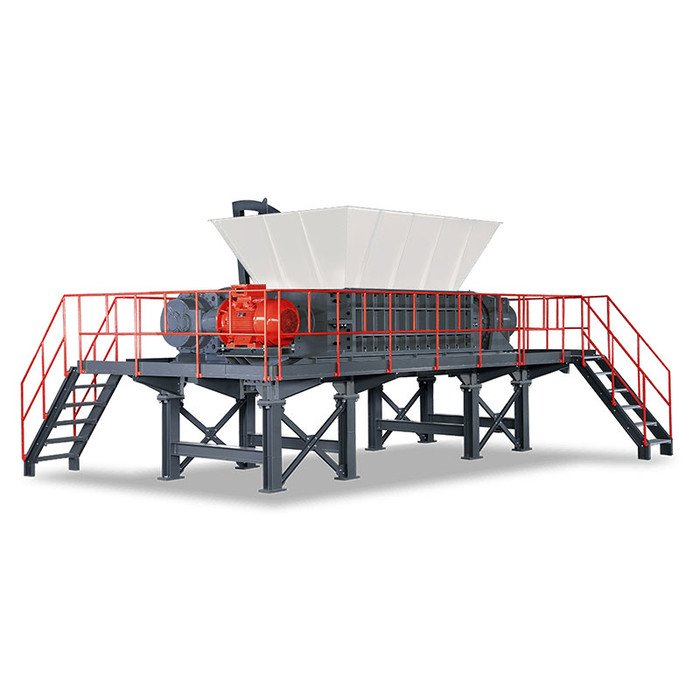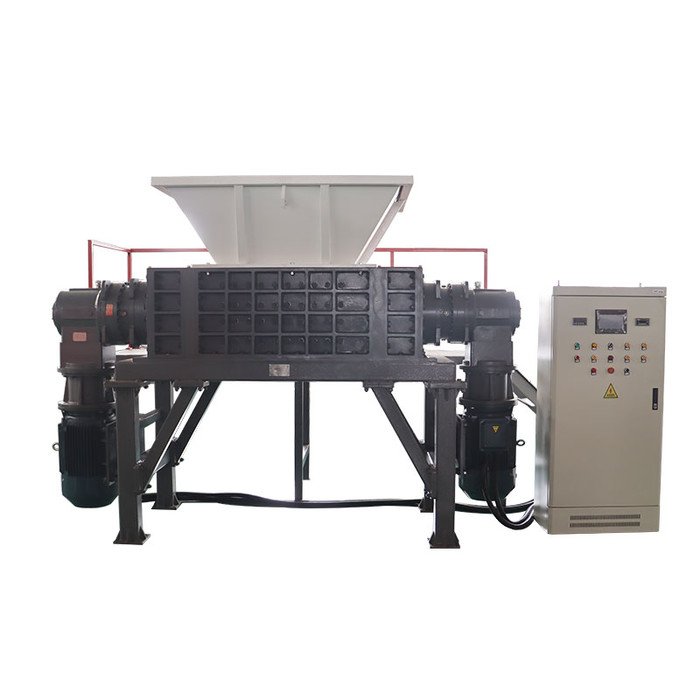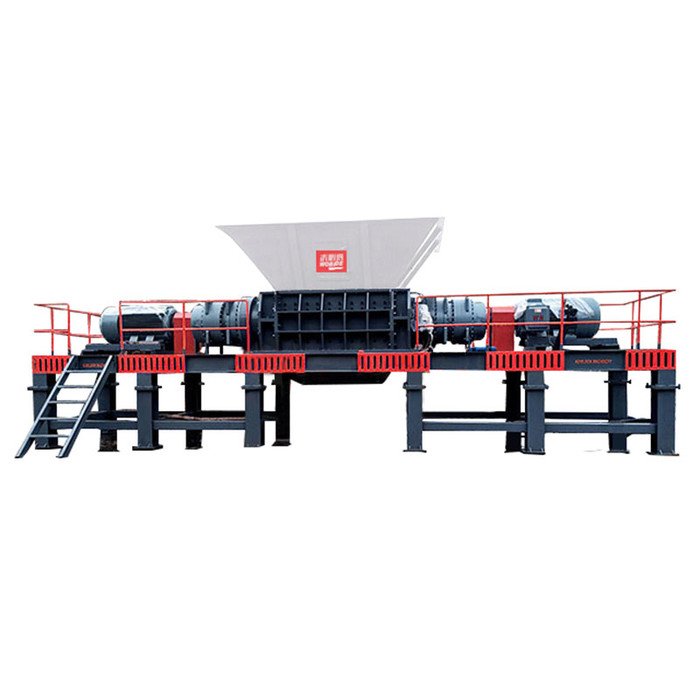
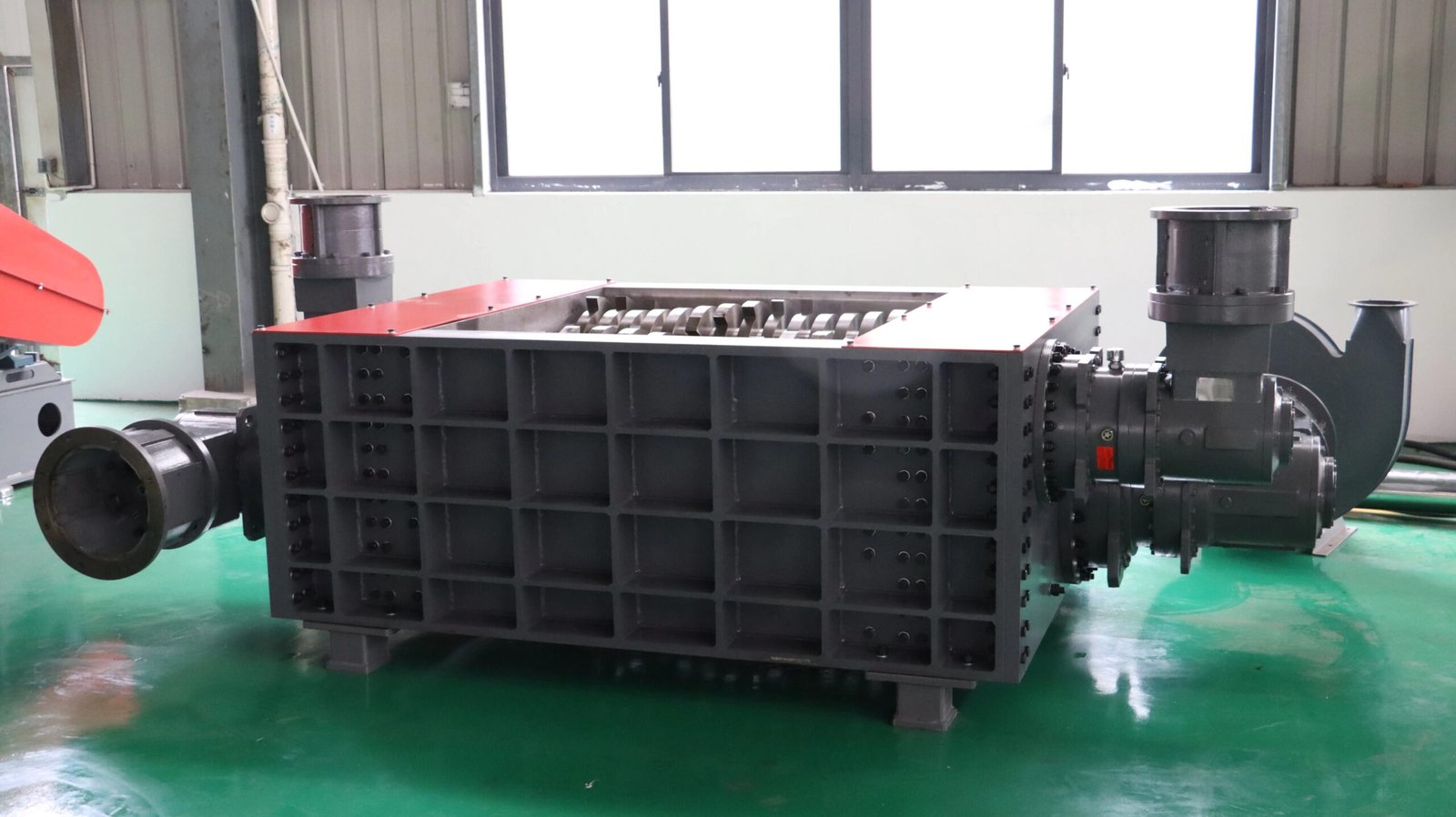
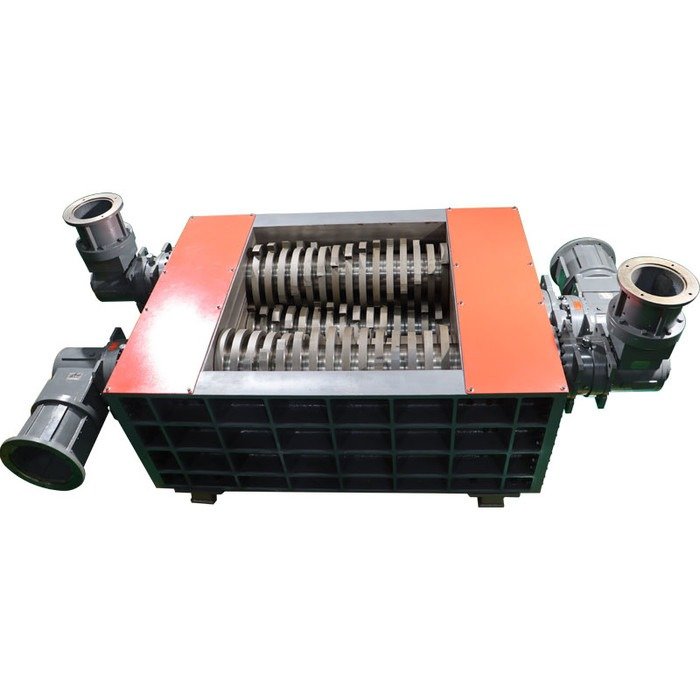
The WF1200 four-shaft industrial shredder is intended for difficult mixed or bulky material that benefits from repeated cutting inside the chamber. Four intermeshing cutter groups can engage, recirculate and reduce pieces that may pass through a simpler primary two-shaft process with less control.
When Four Shafts May Be Appropriate
- Feed shape and dimensions vary substantially
- Repeated cutting is required before downstream sorting
- Mixed rigid waste contains pieces that resist single-pass engagement
- Controlled primary output is more important than the simplest high-volume tear
A four-shaft machine is not automatically better for every project. Uniform pallets, drums or tires may be handled more efficiently by a correctly configured two-shaft shredder.
Material and Safety Review
- Exact waste composition and percentage by material
- Maximum dimensions, piece weight and embedded metal
- Batteries, pressurized containers or hazardous components
- Required discharge range and downstream separation
- Expected throughput and loading method
- Fire, dust, noise and maintenance-access requirements
The current page does not provide a reliable WF1200 specification table. Motor power, shaft dimensions, cutters, chamber and capacity must be confirmed from the actual project rather than inferred from the model name.
Two-Shaft or Four-Shaft Decision
Use a two-shaft machine for strong primary tearing when a broad discharge range is acceptable. Consider four shafts when difficult pieces require repeated engagement or the process needs more controlled recirculation before discharge. Material trials may be necessary for mixed waste.
Compare the WT1200 double-shaft shredder or review the broader industrial shredder category.
Request a WF1200 Shredding Assessment
Use the AMIGE inquiry page to send material photos, composition, dimensions, piece weight, target output, capacity, feeding method and voltage. We will assess whether a four-shaft layout is justified.