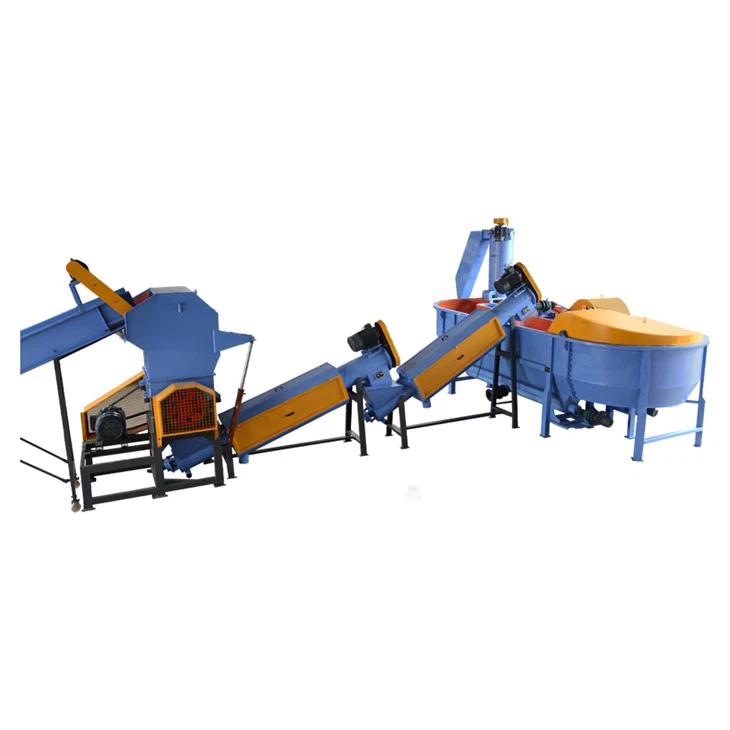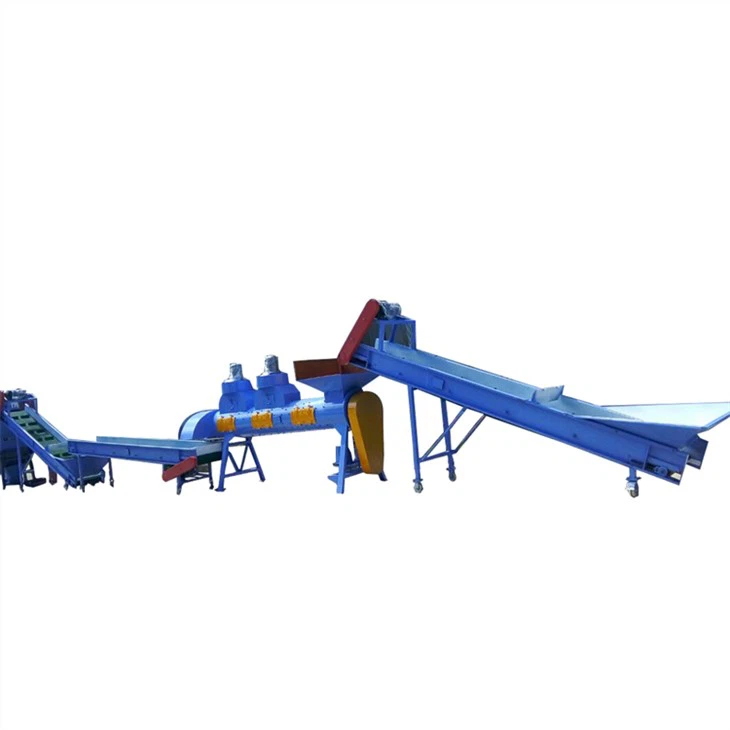
The AMIGE high-capacity PET bottle washing line is designed for projects that require continuous sorting, label removal, crushing, washing, separation and drying at factory scale. Capacity must be calculated from the condition of the incoming bales and the required quality of the finished flakes—not from the extruder or crusher rating alone.
Dirty bottles, heavy labels, PVC, glue, sand, oil and mixed colors can reduce usable output. AMIGE therefore evaluates mass balance, water circulation, heating, drying, labor and workshop flow before confirming the line.
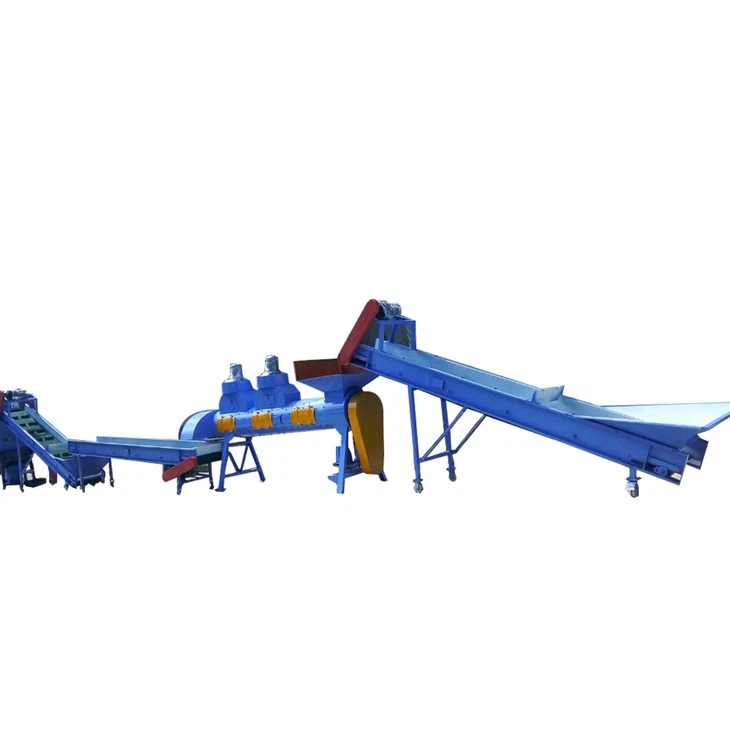
Typical Process Flow
- Bale opening and controlled feeding.
- Manual or automatic sorting of non-PET material and unwanted colors.
- Label removal and preliminary separation.
- Wet crushing into flakes.
- Sink-float separation for caps and polyolefins.
- Hot washing, friction washing and rinsing as required.
- Mechanical dewatering, thermal drying and final air separation.
- Flake inspection, storage and packing.
What Determines Real Line Capacity?
- Bale density and percentage of usable PET.
- Bottle size, label type, glue and contamination.
- Required flake size and final quality specification.
- Hot-wash residence time and water-treatment capacity.
- Drying requirement, available utilities and operating hours.
- Factory layout, buffer storage and material-handling method.
Plan the Complete Factory System
The production line requires space for bottle storage, sorting, equipment access, water treatment, electrical cabinets, flake storage and maintenance. Review the standard PET bottle washing and recycling line and other systems in the plastic recycling line range.
Request a High-Capacity PET Line Proposal
Send AMIGE bottle and bale photos, contamination, target input, operating hours, required flake quality, factory dimensions, country and voltage. We will prepare a process flow, equipment list and layout basis for the project.