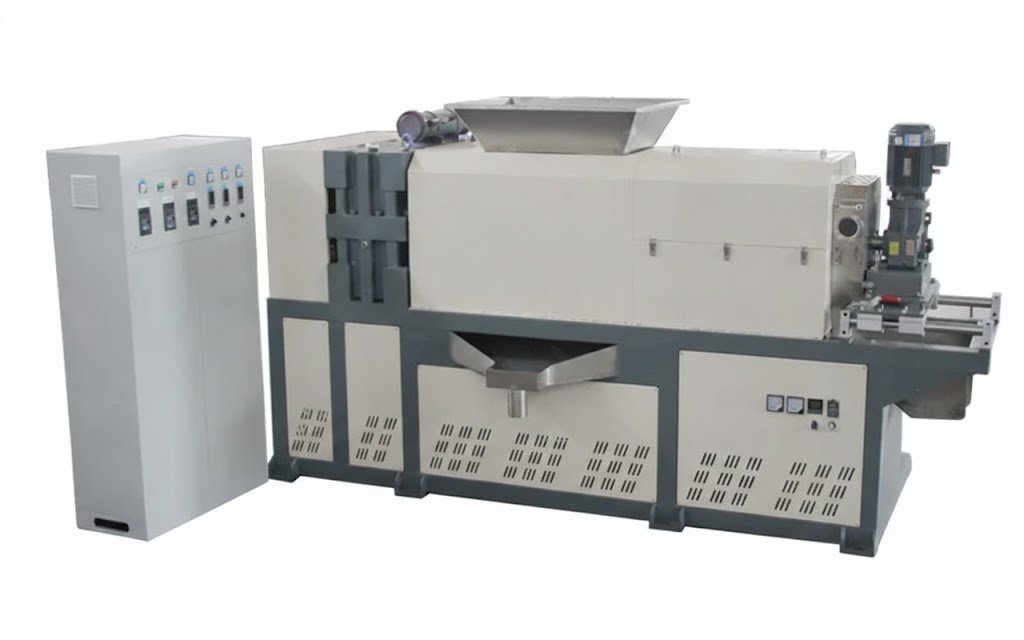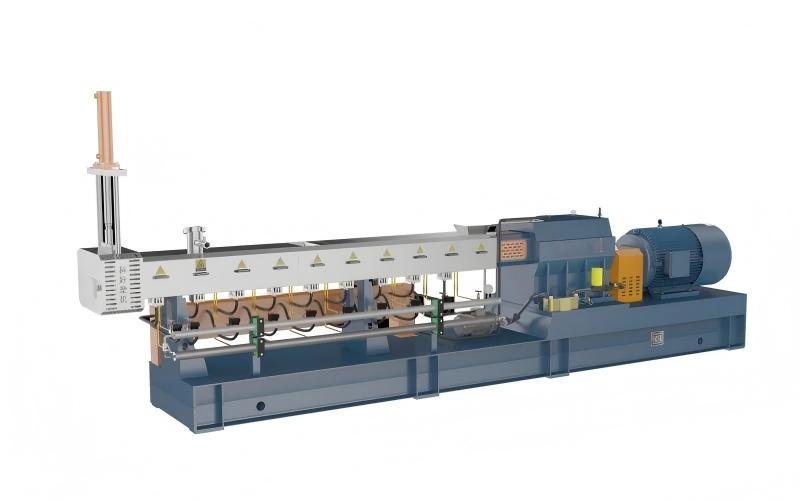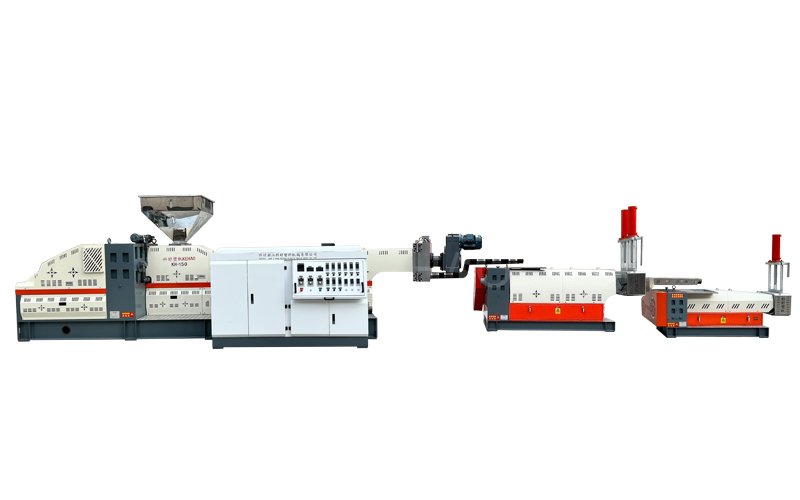
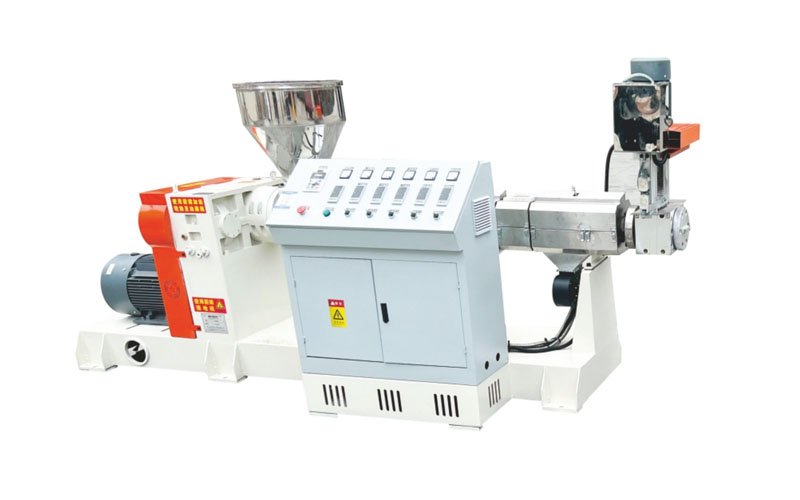
This laboratory single-screw extruder and pelletizer is intended for polymer trials, formulation screening, colour work and small-batch process development. It allows a technical team to evaluate material behaviour with less feedstock than a production line.
Typical Test Work
- Polymer processing-window and temperature trials
- Colour, additive and small formulation checks
- Regrind or recycled-material process evaluation
- Small-batch strand extrusion and pelletizing
- Training, laboratory and quality-control work
A single-screw laboratory machine provides less intensive mixing than an intermeshing twin-screw system. The required dispersion and formulation determine which laboratory platform is appropriate.
Recorded Configuration Options
| Item | Current page reference |
|---|---|
| Screw type | Precision single screw |
| Feeding | Gravity hopper; alternative feeders configurable |
| Heating zones | 3–5 independent PID-controlled zones |
| Drive control | Variable-frequency speed control |
| Controls | Centralized digital console |
The current page does not provide a verified screw diameter, motor, output or machine footprint. These values must be confirmed from the test objective and material.
Test Information Required
- Polymer grade, physical form and available sample quantity
- Additives, colour, filler or recycled content
- Required temperature range and residence time
- Desired screw diameter and L/D, if specified
- Strand, water-ring or other pelletizing method
- Voltage, cooling water and data-recording needs
For more intensive mixing, compare the laboratory twin-screw extruder and pelletizer. Production-scale compounding can be evaluated on the co-rotating twin-screw extruder.
Request a Laboratory Extrusion Configuration
Send the material, formulation, sample quantity, test goals, heating requirements, pelletizing method and electrical standard through the AMIGE inquiry page.