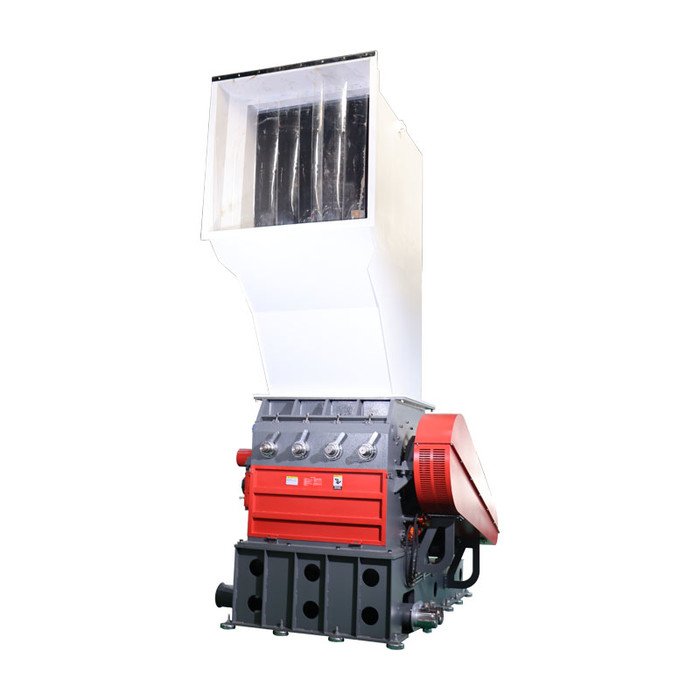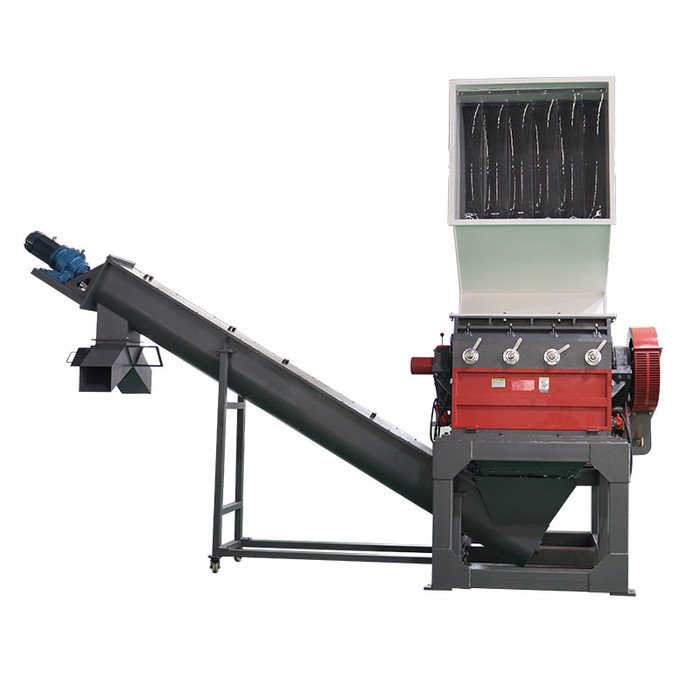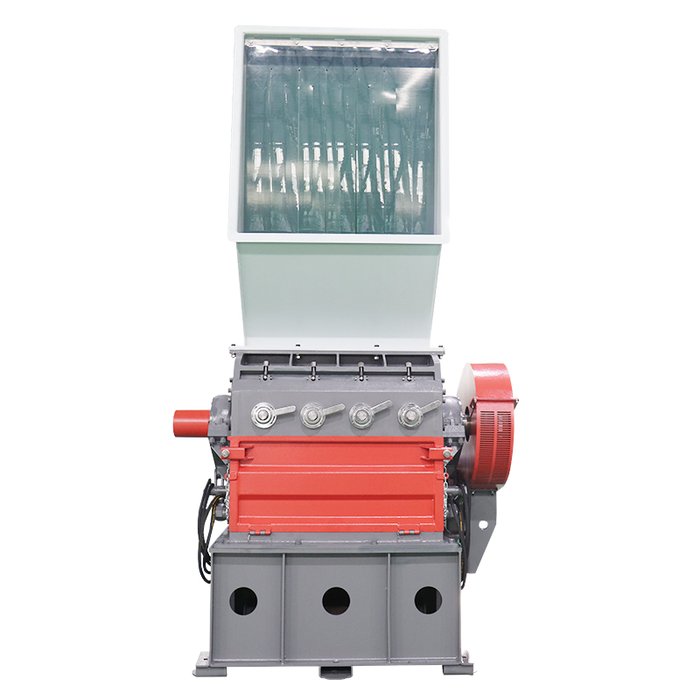
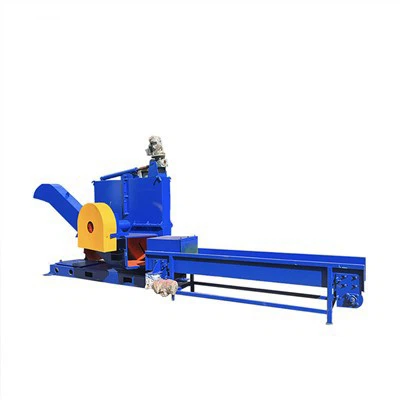
The plastic pipe crusher is designed for long PE, PP, PVC, PPR and ABS pipe or profile scrap from extrusion and fabrication. Conveyor feeding allows suitable pipe lengths to enter the cutting chamber without manually reducing every piece, subject to maximum diameter, wall thickness and machine configuration.
This equipment should be selected separately from a general-purpose granulator. Pipe diameter, wall thickness, length, curvature and reinforcement determine whether direct crusher feeding is practical or an upstream shredder or saw is required.
Reference Models
| Model | Main motor | Recorded maximum diameter | Rotary blades | Fixed blades | Recorded capacity | Overall size |
|---|---|---|---|---|---|---|
| 250 type | 45 kW | 250 mm | 10 | 1 | 2.5–3 t/h | 3 × 1.3 × 1.5 m |
| 400 type | 75 kW | 450 mm | 10 | 1 | 3–6 t/h | 4 × 1.5 × 2.5 m |
| 630 type | 90 kW | 630 mm | 10 | 1 | 5–7 t/h | 4.7 × 1.7 × 2.9 m |
The table is reference data from the current page and requires confirmation. Actual capacity can be substantially affected by pipe diameter distribution, wall thickness, polymer, feed rate, blade arrangement, screen opening and desired flake size.
Selection Information
- Polymer type and whether pipe is solid-wall, corrugated or reinforced
- Maximum outside diameter, wall thickness and length
- Photos of straight, curved or bundled feed
- Required output size and hourly capacity
- Loading method, conveyor height and downstream equipment
- Metal inserts, dirt or other contamination
If pipe geometry is too large or inconsistent for direct crusher feeding, compare the WPS Series single-shaft shredder. Review more options in the industrial plastic crusher category.
Request a Pipe-Crusher Proposal
Use the AMIGE inquiry page to send pipe photos, outside diameter, wall thickness, maximum length, target flake size, capacity and voltage. We will check the feed opening, conveyor, rotor, screen and downstream discharge arrangement.