Heat-sensitive plastics can be frustrating. The machine starts well. The blades cut smoothly. Output looks stable. Then chamber temperature climbs. Material softens. Friction builds. Flakes begin sticking together. Before long, PVC edges smear, PET dust cakes inside the chamber, or soft plastics start partially melting where they should be cutting cleanly. I’ve watched this happen in busy recycling plants too many times. Production slows. Cleaning time increases. Product quality drops. And everyone starts staring at the crusher like it personally caused the problem.
My direct answer is yes. At AMIGE, our water cooling systems are one of the most effective solutions for continuous crushing of heat-sensitive plastics. By stabilizing chamber temperature, reducing friction heat, and protecting blade performance, we prevent melting, improve flake consistency, and keep production moving. It is a practical engineering breakthrough. The machine stays cooler. The output stays cleaner. The operator stays happier. That last one matters more than most brochures admit.
Heat-sensitive plastics have very little patience.
A few extra degrees?
They complain immediately.
Sometimes louder than operators.
That’s why cooling isn’t optional in many recycling lines.
It becomes part of production strategy.
Why Do Heat-Sensitive Plastics Melt During Continuous Crushing?
Because heat builds faster than many people expect.
A crusher generates friction from:
- Rotor movement
- Knife contact
- Material compression
- Chamber resistance
- Long operating cycles
Each source adds temperature.
Minute by minute.
In heat-sensitive plastics like PVC, PET film, TPU, EVA, or soft compounds, melting point margins are tighter.
That means rising temperature quickly affects material condition.
Industry reports from Plastic Thermal Processing Research Institute show chamber heat can rise significantly during continuous crushing without cooling support.
We see the same in production.
And heat rarely improves anything.
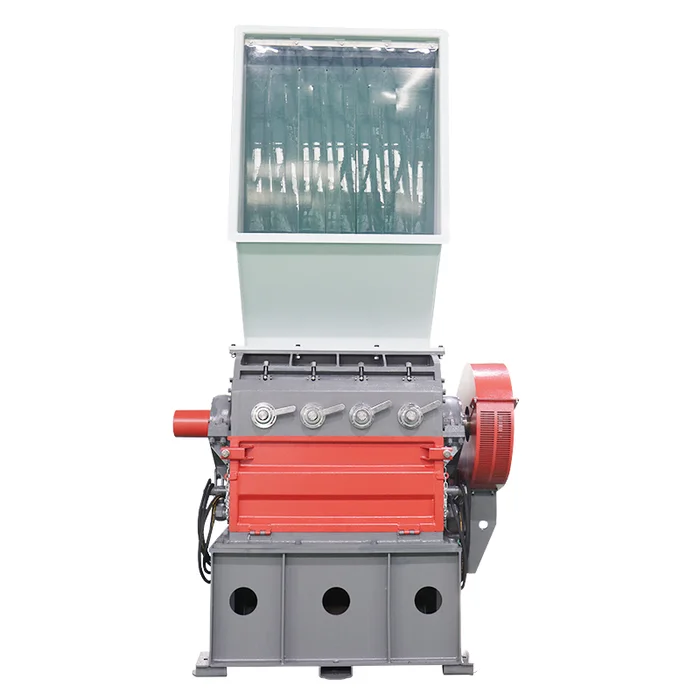
Except maybe coffee. Not crushers. Industrial Plastic Waste Crusher WHC800/450
What Is a Water Cooling System in a Plastic Crusher?
Simple idea.
Strong result.
We circulate cooling water through critical heat zones.
This usually includes:
- Bearing housings
- Knife chamber wall
- Rotor-related thermal points
- Water jackets around target components
The circulating water removes heat continuously.
Temperature stays controlled.
Machine performance stays stable.
No need for repeated stop-and-clean cycles.
At AMIGE, we engineer water cooling based on:
- Material type
- Operating hours
- Rotor size
- Throughput requirement
- Ambient workshop temperature
Cooling design should fit production.
Not the other way around.
Why Is Water Cooling Better Than Waiting for Natural Cooling?
Because production cannot pause every hour.
Natural cooling requires downtime.
Downtime reduces output.
And customers still expect shipment.
Water cooling works while production continues.
That changes everything.
Benefits include:
- Stable chamber temperature
- Less material sticking
- Better blade efficiency
- Lower friction buildup
- Longer continuous operating cycles
Benchmark data from Industrial Plastic Recycling Cooling System Report shows continuous cooling improves line consistency significantly during thermal-sensitive plastic processing.
That lines up with our field experience.
A cool machine is usually a productive machine.
Which Heat-Sensitive Plastics Benefit Most?
This is where cooling delivers strong value.
Common materials include:
PVC soft sheet and profiles
Softens quickly.
Very temperature sensitive.
PET film and thin sheet
Heat affects flake quality.
Dust can stick.
TPU scrap
Flexible. Heat-reactive.
EVA foam waste
Softens under friction.
Medical packaging plastics
Requires clean consistent flakes.
Specialty compounds
Need stable particle quality.
These materials don’t forgive excessive chamber heat.
And honestly, they shouldn’t.
Precision processing matters.
How Does Cooling Improve Blade Performance?
Very directly.
Blades dislike excessive heat too.
When chamber temperature rises:
Knife edges lose efficiency faster.
Material sticks around cutting edges.
Friction increases. Wear accelerates.
Cooling helps maintain:
- Cleaner cutting surface
- Better edge stability
- Lower buildup
- More uniform particle size
That improves maintenance cycles.
And reduces unplanned blade cleaning.
Reference: Industrial Blade Temperature Wear Study.
At AMIGE, we always say blade life is not just metallurgy.
Temperature management matters too.
Steel performs best when it stays calm.
Just like experienced operators.
Does Water Cooling Improve Product Quality?
Absolutely.
This matters more than many realize.
Without cooling:
Flakes may deform. Edges smear. Powder sticks together.
Material becomes inconsistent.
Downstream washing and pelletizing suffer.
With cooling:
Particle size stays more uniform.
Surface remains cleaner.
Flowability improves.
Feeding downstream becomes easier.
That improves total line efficiency.
Not just crusher performance.
A crusher never works alone.
It is part of a production chain.
Every link matters.
What Design Details Matter Most in Water Cooling?
Cooling works best when engineered properly.
The details matter.
At AMIGE we pay close attention to:
Water flow rate
Too low reduces cooling.
Too high wastes energy.
Cooling channel position
Heat zones need direct coverage.
Water temperature stability
Consistent cooling beats fluctuation.
Sealing reliability
Industrial equipment must stay dependable.
Easy maintenance access
Operators need practical service points.
These are operational details.
But operational details are where profitability lives.
Machines succeed through discipline.
Not luck.
Why Do I Believe Cooling Is a Long-Term Investment?
Because production stability always pays back.
A cooling system helps reduce:
- Downtime
- Blade wear
- Cleaning labor
- Product defects
- Thermal damage
And improves:
- Output consistency
- Continuous operation
- Product quality
- Equipment lifespan
That matters this month.
And next year.
And five years later.
Traditional manufacturing taught us this well.
Build it correctly.
Maintain it consistently.
Let the equipment do its job.
That principle still works.
Very well.
Conclusion
Water cooling systems solve one of the biggest challenges in crushing heat-sensitive plastics. At AMIGE, they help prevent melting, protect blade performance, and improve continuous output. Stable temperature creates stable production. In plastic recycling, staying cool is often the smartest engineering decision in the room.