Plastic waste does not politely wait for a solution.
It accumulates.
It overwhelms recycling plants.
It exposes weak links in equipment choices.
In Ecuador, many recyclers rush decisions.
Budgets are tight.
Deadlines are real.
And plastic crushers are often treated as “simple machines.”
That is the problem.
A wrong crusher does not fail loudly.
It bleeds efficiency every single day.
I have built crushers for years.
And I have watched buyers learn this lesson the expensive way.
The reality is straightforward. Ecuador has several local plastic crusher manufacturers capable of light to medium-duty work, especially for PET and rigid plastics. For stable output, higher wear resistance, and long-term industrial use, buyers often rely on a mix of local fabrication and proven international designs. The key is matching material, throughput, and operating discipline.
If that sounds obvious.
Good.
Obvious truths are often ignored.
Let me walk you through it properly.
Why Plastic Crushers Matter More Than Most Buyers Think?
A crusher is not just a size-reduction tool.
It defines flake quality.
Energy consumption.
Knife wear.
Bad crushing ruins washing lines.
It overloads extruders.
It increases fines.
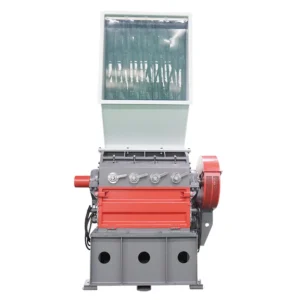
Regional recycling efficiency studies confirm this Heavy duty crusher
Who Are the Top Plastic Crusher Manufacturers in Ecuador?
Let us be clear.
This is not a beauty contest.
It is about suitability.
Most Ecuadorian manufacturers focus on durability.
Simple structures.
Easy maintenance.
That tradition has value.
1. Ecotecnologías del Ecuador
Ecotecnologías builds environmental machinery.
Plastic crushers are part of a broader system.
They target PET bottles.
Containers.
Light rigid plastics.
Good for entry-level recycling operations.
Limited for thick-wall materials.
2. Indumáquinas Cía. Ltda.
This is a traditional machine builder.
I respect that background.
Their crushers are heavy.
Low-speed.
Straightforward knife geometry.
No gimmicks.
Just steel and structure.
3. Maquiplas Andina
Maquiplas understands plastics.
That matters.
They design crushers to work with extrusion lines.
Flake consistency is prioritized.
For small to mid-size processors, this integration is useful.
4. Recimak Ecuador
Recimak focuses on recyclers, not brochures.
Their machines are built for dirty feedstock.
Labels.
Sand.
Mixed materials.
That reality-driven design deserves credit.
5. Tecnomaquinaria Quito
Customization is their strength.
They fabricate based on customer drawings and needs.
Lead times are longer.
But flexibility is high.
For special applications, this approach works.
6. EcoMáquinas del Pacífico
They focus on sustainability projects.
Municipal programs.
NGO-driven recycling.
Crushers are energy-conscious.
Capacities are moderate.
Municipal waste equipment data supports this niche
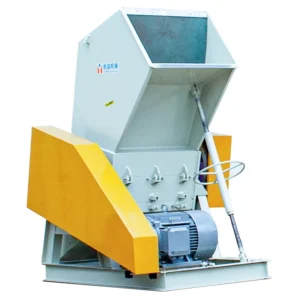
650 Low Noise High-Power Crusher
7. Andean Recycling Solutions
This company assembles crushers using imported components.
Motors from Europe or Asia.
Local steel frames.
Quality depends heavily on component selection.
When done right, performance is stable.
8. PlastiAndes Machinery
They focus on rigid plastics.
Crates.
Buckets.
Injection scrap.
Their crushers are torque-oriented.
Less suitable for films.
9. GreenTech Ecuador
GreenTech markets aggressively.
Their machines look modern.
Touchscreens.
Safety covers.
Compact layouts.
I always remind buyers.
Design should serve function, not ego.
10. Distributors of International Crusher Brands
This category matters more than many admit.
Imported crushers from China and Europe dominate high-throughput lines.
Trade statistics support this trend
They are expensive upfront.
But stable over time.
What Materials Are Most Commonly Crushed in Ecuador?
This question changes everything.
PET bottles dominate.
HDPE containers follow.
PP crates are common.
Each material behaves differently.
Crusher design must reflect that.
Waste composition reports confirm this
Customized Plastic Crusher Machine WHC1000/600
What Mistakes Do Buyers Commonly Make?
They oversimplify.
They assume all crushers are the same.
They compare only motor power.
They ignore knife material.
A crusher is a system.
Not a box with blades.
How Do I Personally Evaluate a Plastic Crusher?
I start with steel.
Rotor thickness.
Chamber rigidity.
Then knives.
Material.
Heat treatment.
Knife gap adjustability.
Finally, bearings and transmission.
These decide lifespan.
Local Manufacturer or International Supplier?
There is no universal answer.
Local manufacturers offer fast service.
Lower logistics risk.
Language alignment.
International suppliers offer proven designs.
Higher consistency.
Better documentation.
Smart buyers blend both.
Where Does Amige Fit In?
I will be transparent.
We focus on industrial plastic crushers.
High output.
Stable flake size.
Long service life.
We complement local suppliers.
We do not replace them.
Different tools.
Different jobs.
How Can You Verify a Manufacturer Before Buying?
Do not trust catalogs.
Visit factories.
Ask for test runs.
Request reference clients.
Real manufacturers are proud to show machines.
Pretenders hide behind PDFs.
What Are the Hidden Costs of a Cheap Crusher?
Downtime.
Knife replacement.
Motor failure.
Lifecycle cost matters more than purchase price.
Maintenance studies prove this
Conclusion
Ecuador has capable plastic crusher manufacturers.
But capability depends on application.
Define your material.
Define your output.
Then choose your supplier.
That discipline has guided my decisions for years.