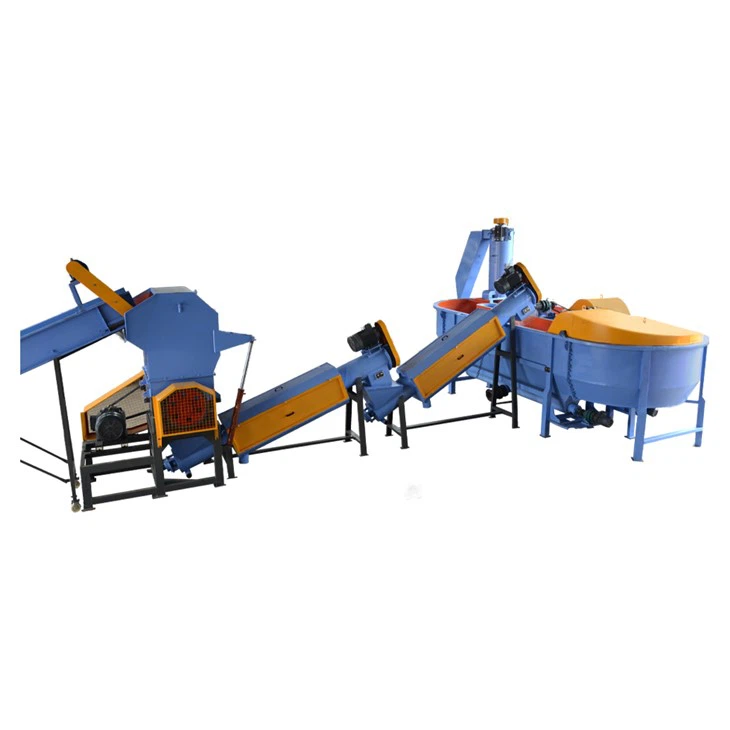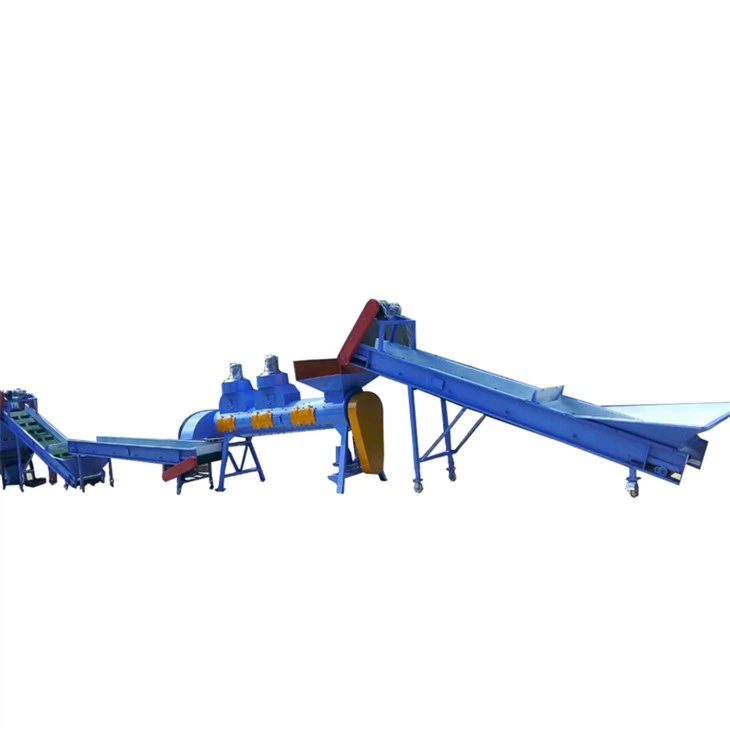
The PET bottle trommel separator is a rotating front-end module for loosening compacted bottle feed and screening out sand, loose caps, label fragments and other small contamination before sorting and crushing. It can reduce the dirt load entering downstream washing equipment.

Installation Position and Feed Boundary
- Install after bale opening or controlled bottle feeding
- Use before manual or optical sorting and wet crushing
- Match drum openings to the contamination and retained bottle size
- Provide collection points for screened fines and rejected material
The trommel does not remove glued labels, PVC bottles or every contaminant by itself. Screen aperture, drum loading, retention time and downstream sorting must be designed together.
Recorded Trommel Models
| Model | Power | Rotation speed | Approx. weight | Approx. dimensions |
|---|---|---|---|---|
| Φ1200 × 4 m | 3 kW | 25 r/min | 0.96 t | 5 × 1.5 × 2.5 m |
| Φ1500 × 4 m | 3 kW | 25 r/min | 1.06 t | 5 × 1.8 × 2.8 m |
| Φ1500 × 6 m | 3 kW + 1.5 kW | 25 r/min | 1.5 t | 6 × 2.4 × 3 m |
These are current-page references and require confirmation. Throughput depends on bottle condition, bale density, contamination, drum fill, aperture and the required separation duty.
Integrate With PET Bottle Washing
Connect the trommel to the 500–2000 kg/h PET bottle washing line when designing the complete bottle-to-flake flow. Review the friction washer and sink-float modules for downstream cleaning and density separation.
The engineering drawing should show infeed conveyor, drum access, screened-waste discharge, retained-bottle outlet, guarding and maintenance clearance.
Request a Trommel Configuration
Send bottle photos, bale density, maximum package size, loose contamination type and percentage, required capacity, downstream equipment, voltage and available space through the AMIGE inquiry page.