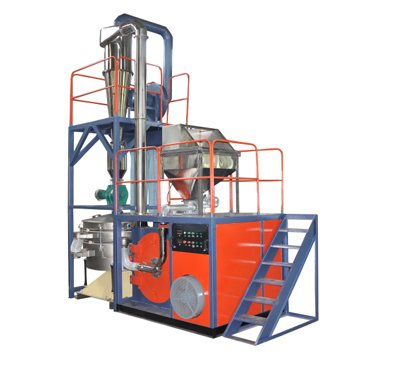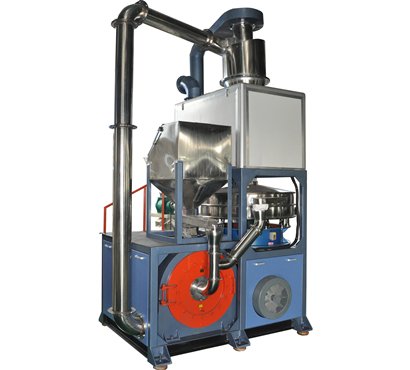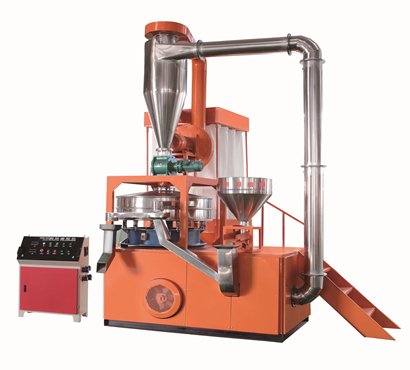
This WPC/SPC plastic pulverizer is intended for controlled fine grinding of prepared flooring, profile and compatible composite scrap. It should be assessed as a downstream milling stage after oversize feed, metal and hard contamination have been removed.
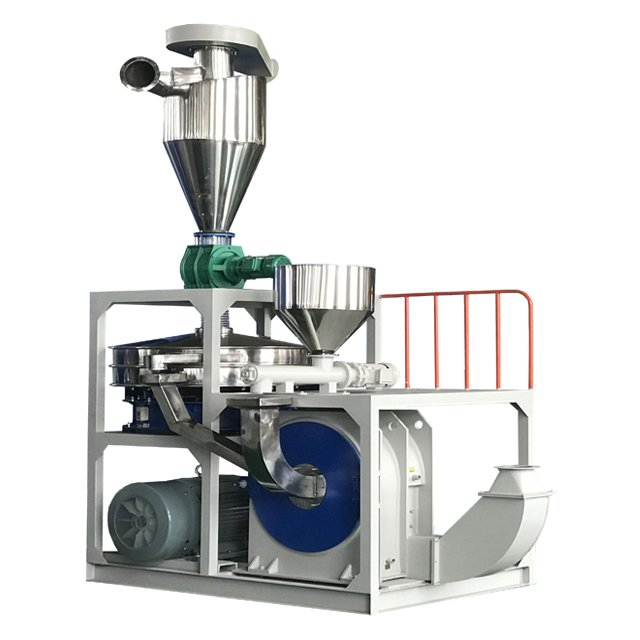
Feed Conditions for Pulverizing
- Clean WPC or SPC offcuts with known polymer and filler composition
- Pre-crushed feed within the confirmed mill inlet size
- Dry, consistent material without metal, stones or loose fasteners
- Projects defining the required powder-size distribution and reuse process
PVC, wood fibre, calcium carbonate and additives change abrasion, heat generation and powder behaviour. Samples from the actual formulation are required because one setting cannot represent every WPC or SPC product.
Procurement Confirmation Table
| Selection item | Information required before quotation |
|---|---|
| Feed | WPC or SPC type, formulation, thickness and pre-crushed size |
| Target product | Required powder-size range and allowable oversize |
| Capacity | Required kg/h and operating hours |
| Separation | Cyclone, dust collection and screening requirement |
| Cooling | Ambient conditions and material temperature sensitivity |
| Electrical | Country, voltage, frequency and control standard |
The current page does not provide a reliable model-specific power, capacity or fineness table. No numerical performance claim will be published until the final mill and test material are confirmed.
Compare Alternative Pulverizing Systems
Review the SMW PVC pulverizer for PVC pipe and profile applications. Compare the MF Series PE pulverizer for compatible PE feed. The MCPT cryogenic grinder may be assessed when the material cannot be milled reliably at ambient temperature.
The correct route depends on resin, filler, feed temperature, target powder and downstream reuse—not only on the product name.
Request a WPC/SPC Grinding Test
Use the AMIGE inquiry page to send material photos, formulation if available, feed size, target powder, hourly capacity, operating hours, dust-control needs, voltage and workshop conditions.