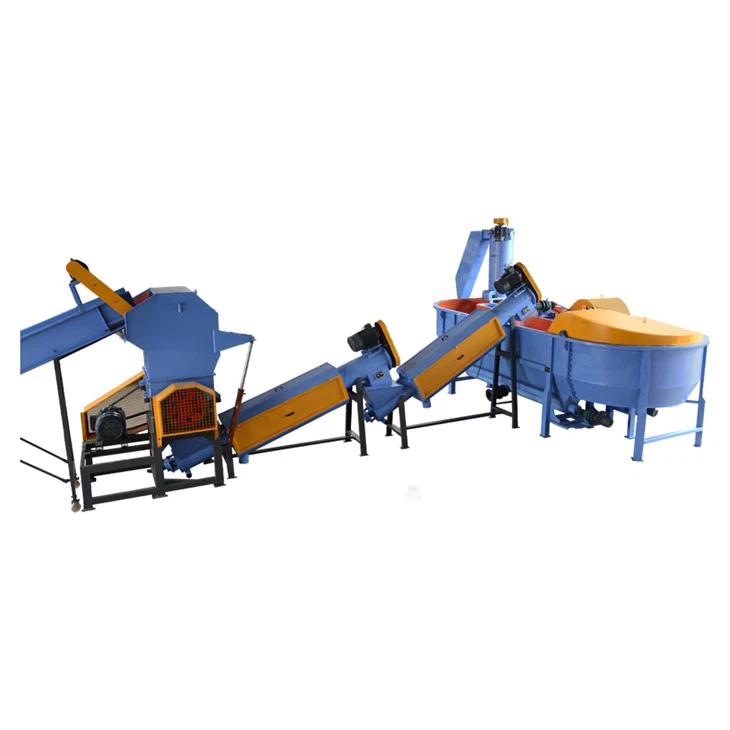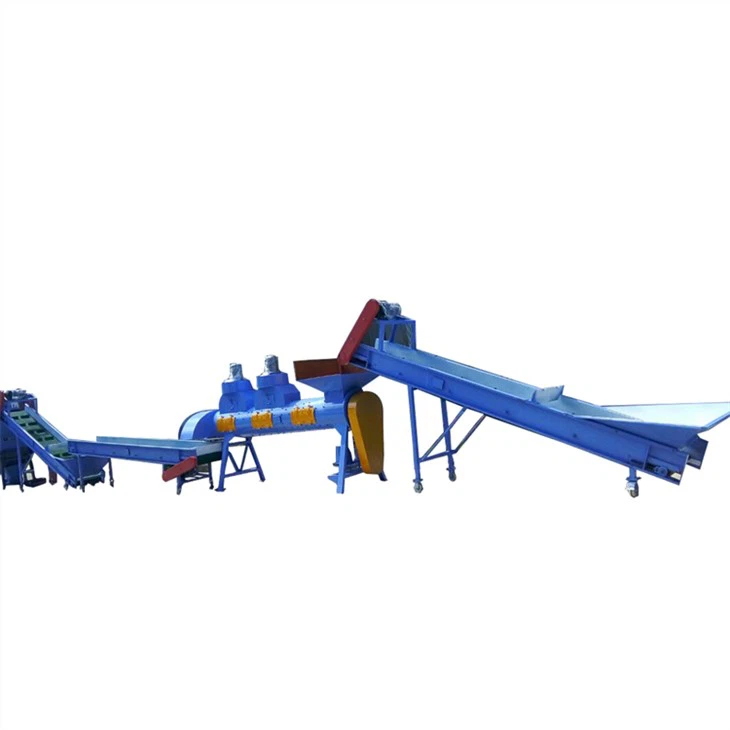
The AMIGE three-barrel plastic friction washer provides intensive mechanical cleaning for shredded PET, HDPE, PP and PE flakes. Three sequential washing sections increase contact time and help remove labels, glue, dirt and loose contamination before rinsing and drying.
The washer is normally integrated into a complete recycling process. Material type, flake size, contamination, water quality and required throughput determine the barrel dimensions, motor power and screen arrangement.
How Friction Washing Works
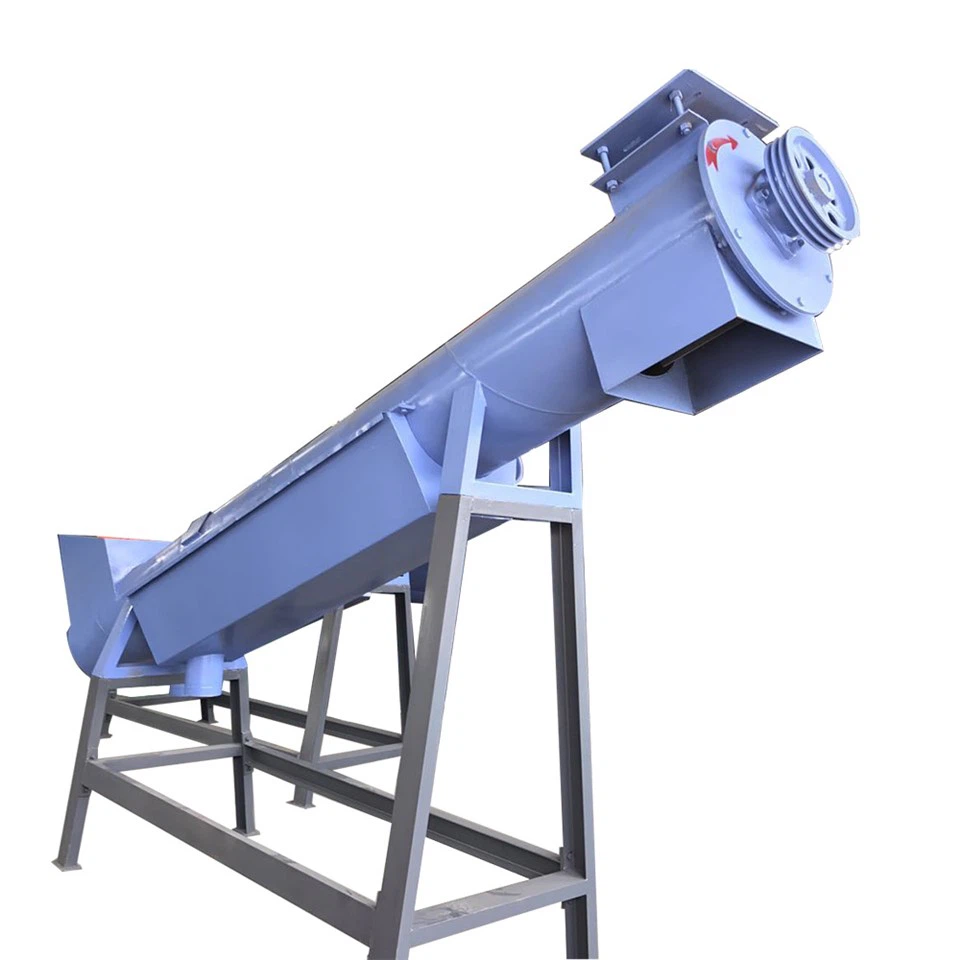
High-speed rotating shafts move flakes through perforated washing barrels. Friction between the material, water and rotor components loosens surface contamination, while dirty water and small particles pass through the screens. Cleaned flakes then move to rinsing, dewatering and drying.
Typical Applications
- PET bottle flakes after crushing and preliminary separation.
- HDPE and PP rigid-plastic flakes.
- PE/PP film flakes when the line and rotor are configured for flexible material.
- Recycling projects requiring a stronger washing stage before final drying.
Reference Configurations
| Barrel size | Motor power | Reference speed | Reference capacity |
|---|---|---|---|
| 325 × 2500 mm | 7.5 kW × 3 | 500 r/min | 1.5 t/h |
| 375 × 3000 mm | 7.5 kW × 3 | 500 r/min | 2 t/h |
| 425 × 3000 mm | 11 kW × 3 | 500 r/min | 2.5 t/h |
| 500 × 3000 mm | 18.5 kW × 3 | 500 r/min | 3 t/h |
Reference values must be confirmed against the actual material and complete line design.
Integrate the Washer into a Complete Line
Review the PET bottle washing line, the PE/PP film crushing and washing line, or the complete plastic recycling line range.
Request a Friction Washer Configuration
Send AMIGE the polymer, flake size, contamination, upstream process, target capacity, country and voltage. We will match the washer and downstream dewatering stages to the project.