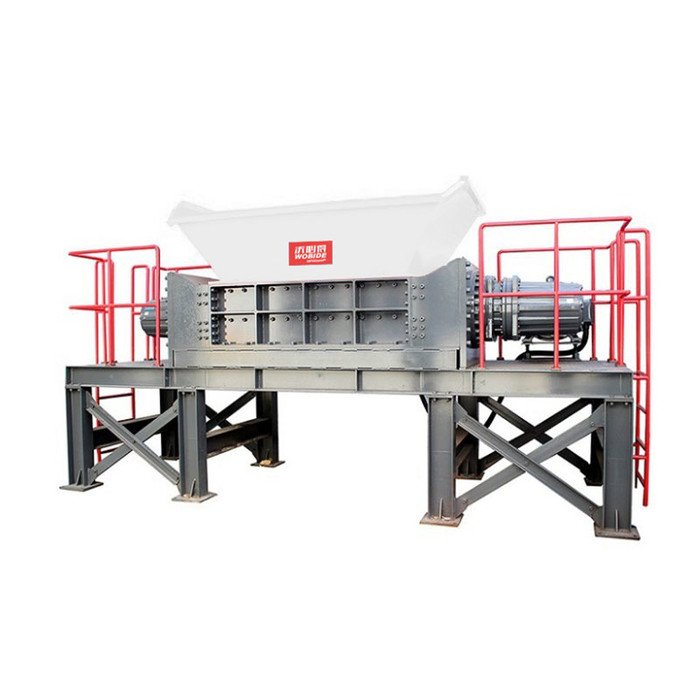
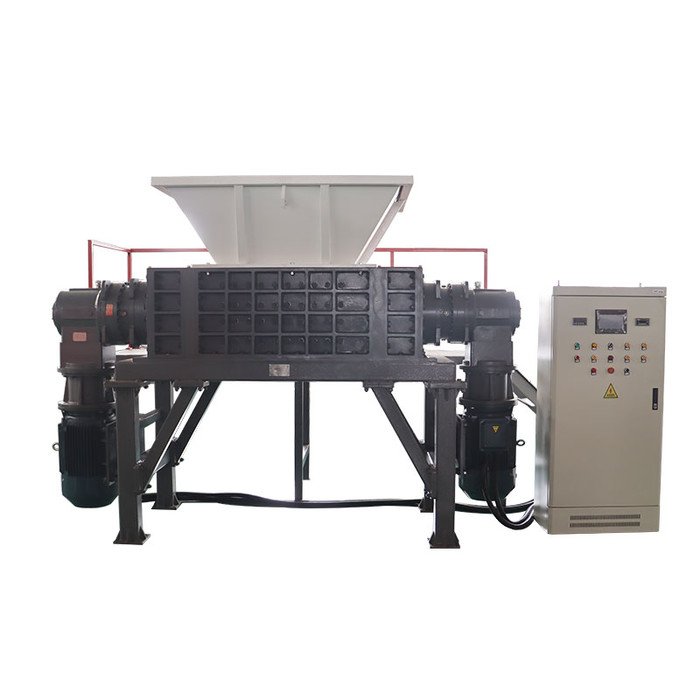
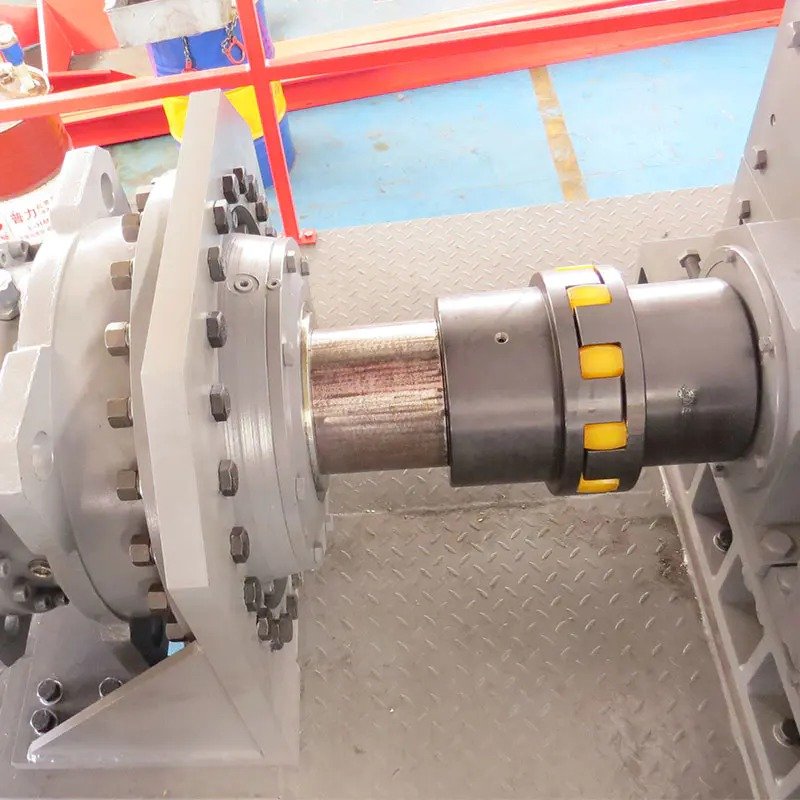
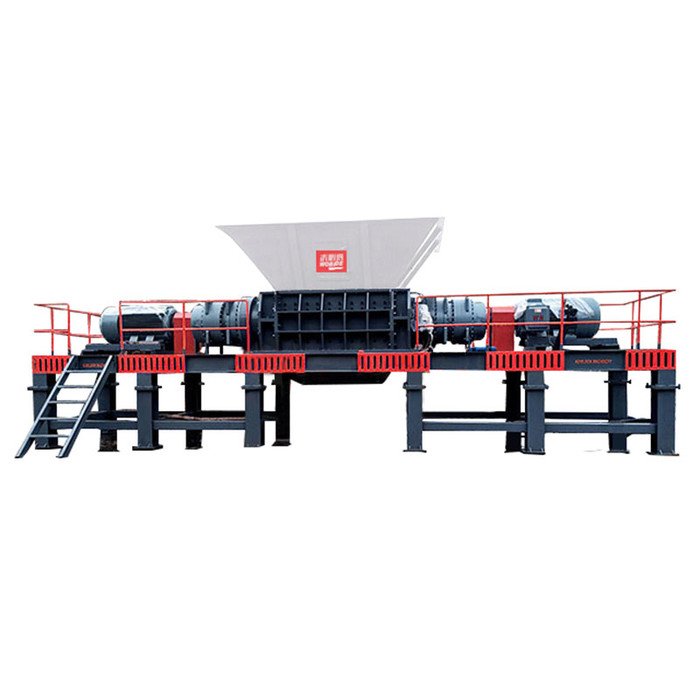
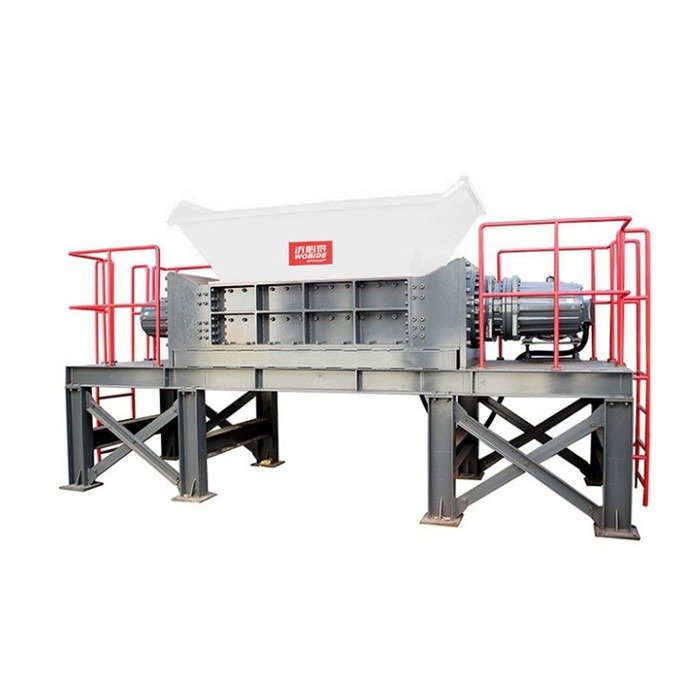
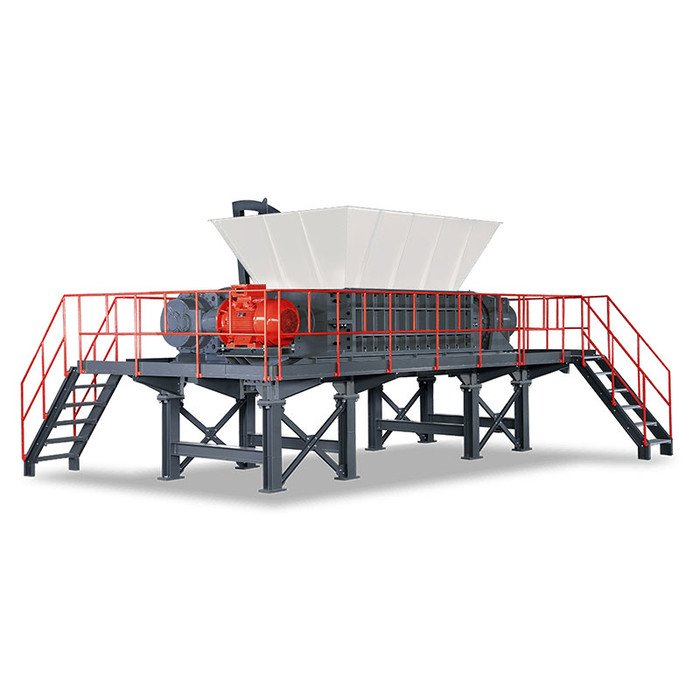
The WT1600 is a large double-shaft shredder for primary size reduction of tires and bulky industrial waste. Tire projects require more than selecting a chamber width: passenger, truck and off-road tires differ in bead construction, steel content, diameter and downstream separation needs.
Tyre Project Questions
- Passenger, truck, agricultural or off-road tire type
- Maximum outside diameter, width and weight
- Whole tire, de-beaded tire or pre-cut feed condition
- Required strip or chip size after primary shredding
- Steel-wire separation and downstream rasper or granulator process
- Required hourly throughput and daily operating hours
The machine may also be evaluated for large pallets, drums and housings, but cutter geometry and controls must be selected for the actual material rather than transferred from a tire configuration.
WT1600 Reference Configuration
| Item | Reference value |
|---|---|
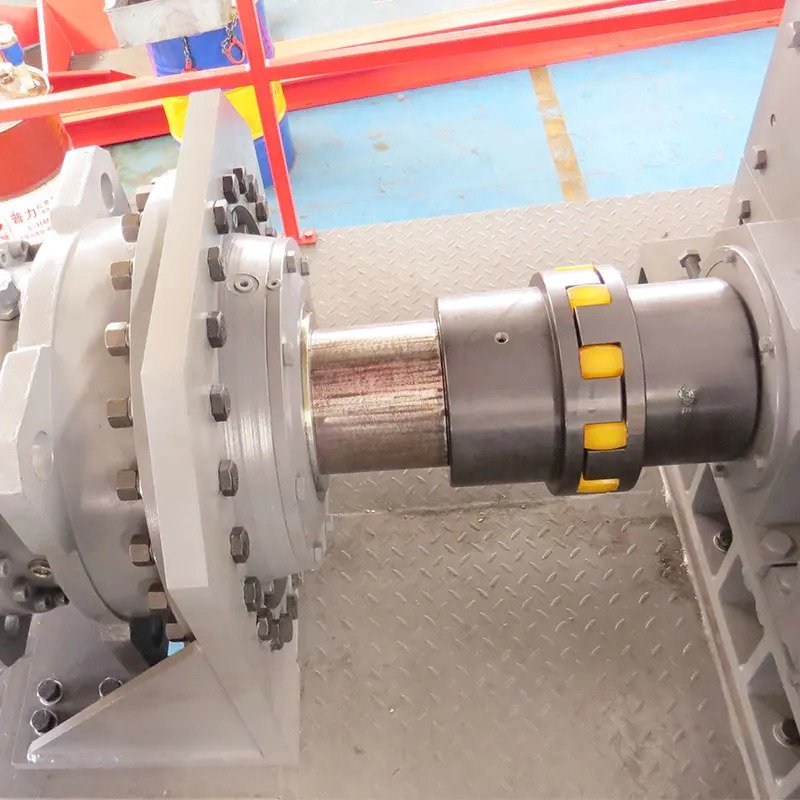
| Main-shaft length | 1600 mm |
| Shaft speed | 10–15 rpm |
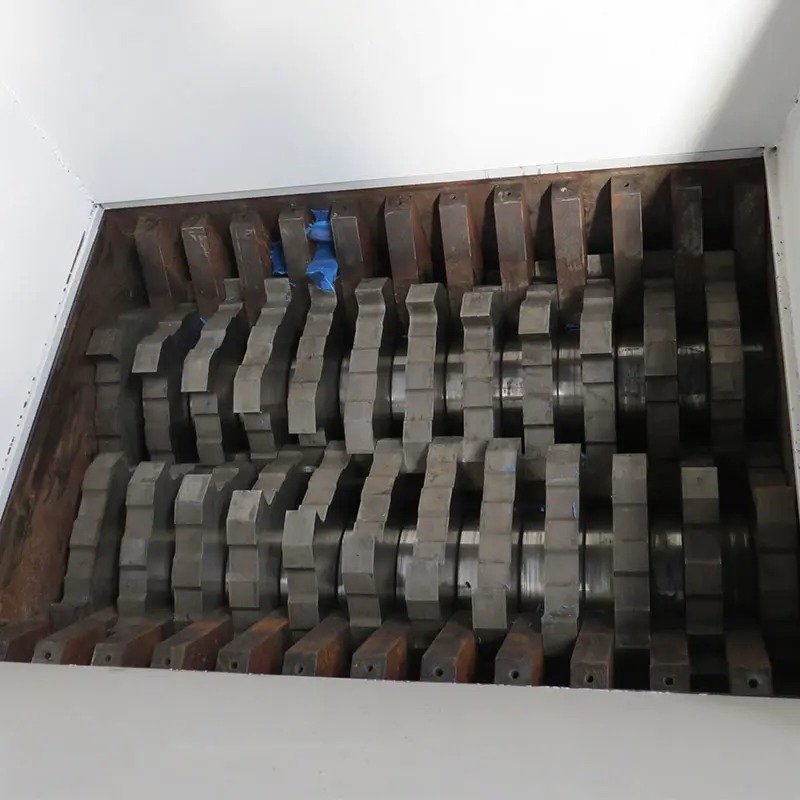
| Blades | 32 pieces |
| Blade diameter | 520 mm |
| Blade thickness | 50 mm |
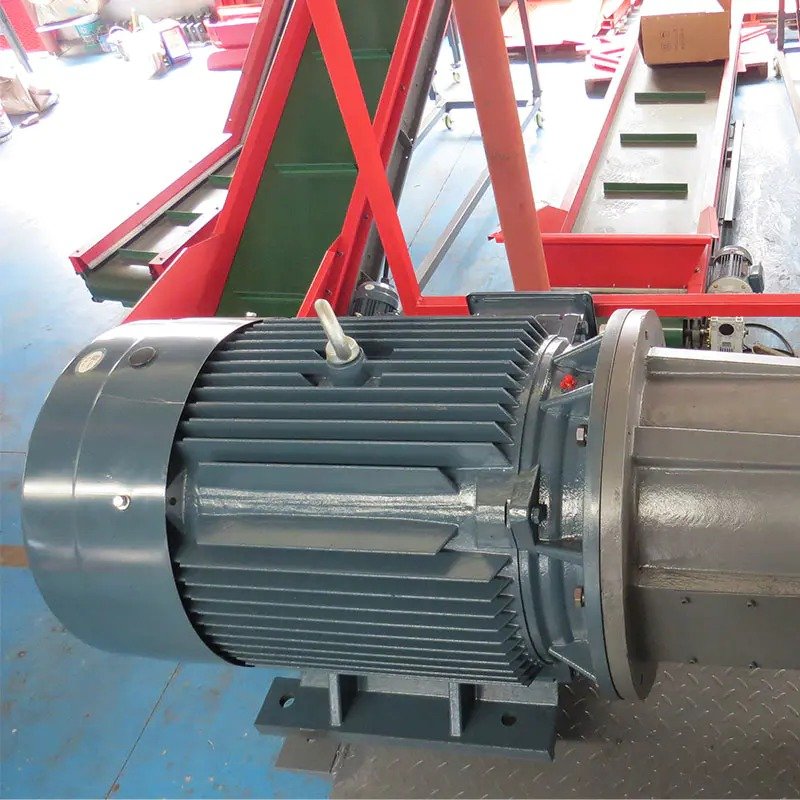
| Main motors | 2 × 45 kW |
| Cutting chamber | 1620 × 950 mm |
| Overall dimensions | 6000 × 2400 × 2650 mm |
| Reference weight | 11000 kg |
These figures are reference records. Tire throughput, strip size, blade wear and reversal frequency depend on tire construction, bead preparation, cutter design and downstream equipment.
Line Integration Requirements
- Hopper and loading method for the largest tire
- Torque protection and automatic reversing controls
- Conveyor and magnetic steel separation
- Secondary shredding, rasper or granulation stage
- Dust, fire and maintenance-access plan
- Voltage, frequency and workshop layout
Compare the WT1400 shredder for smaller bulky feed, or review the industrial shredder category.
Request a WT1600 Tyre-Line Assessment
Send tire photos, type, dimensions, bead condition, output target, capacity and site power through the AMIGE inquiry page. We will review the complete primary shredding and steel-separation route.