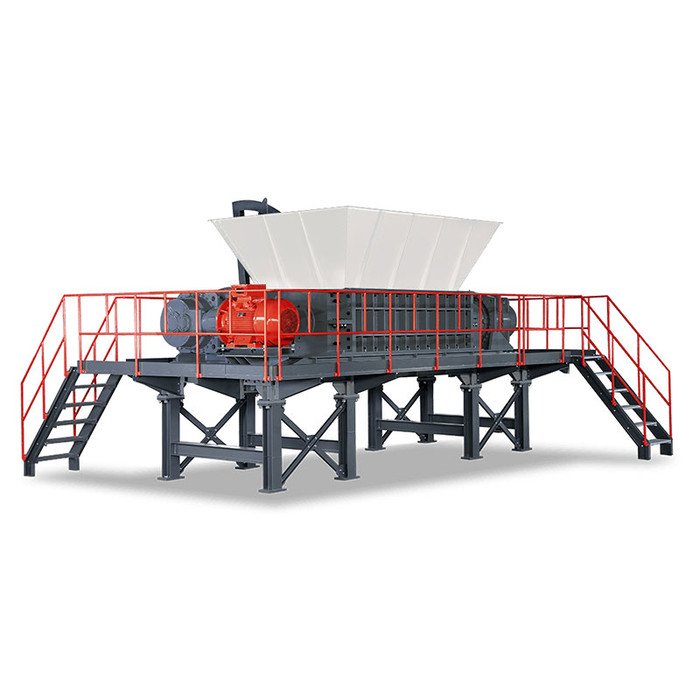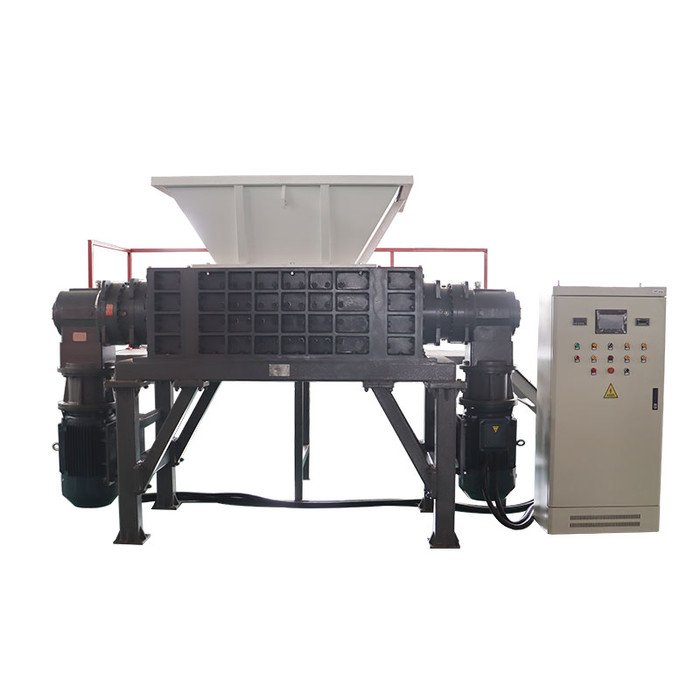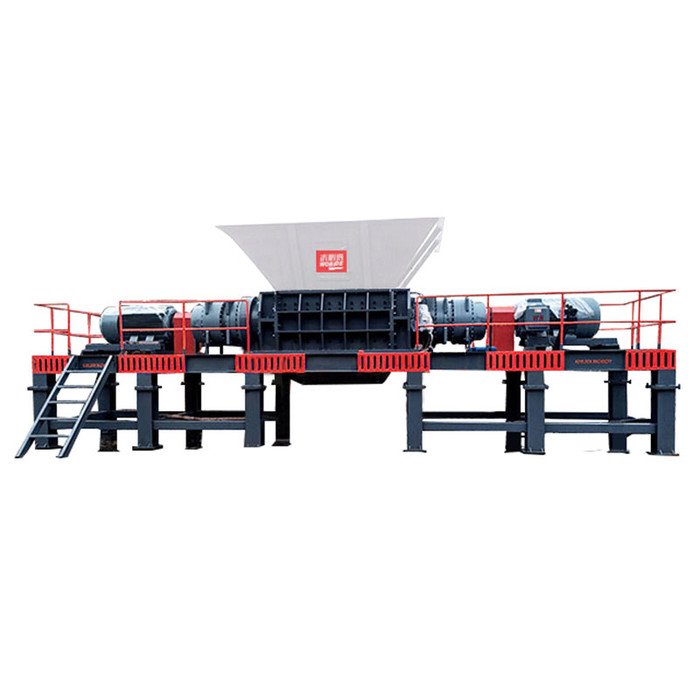

The WF1600 four-shaft industrial shredder is designed for bulky, mixed or difficult waste that benefits from repeated cutting inside the chamber. Four intermeshing cutter groups pull, shear and recirculate oversized pieces until they can pass the selected discharge opening or screen.
When to Consider Four Shafts
A four-shaft machine may be suitable when feed shape is inconsistent, repeated cutting is required, or a controlled discharge size is more important than a simple primary tear. It is not automatically the best choice for every material; single-shaft and double-roll machines may be more efficient for uniform rigid plastics or flexible film.
Material Categories for Assessment
- Plastic buckets, pipes, trays and bulky moulded parts
- Selected drums, cans, appliance shells and light-metal scrap
- Tires and mixed industrial waste after technical review
- Other bulky feed requiring multi-shaft engagement and controlled discharge
Glass, medical waste, batteries, pressurized containers and hazardous materials require a dedicated safety and process assessment. They should not be assumed suitable without composition and risk information.
Configuration Decisions
- Cutter geometry and thickness for the actual material
- Shaft speed, torque protection and drive arrangement
- Feed opening, hopper and loading method
- Screen or discharge opening for the required output
- Contamination control and downstream separation
- Service access, wear-part plan and electrical standard
For uniform rigid plastics, compare the WPS Series single-shaft shredders. For film and woven bags, review the WPT1200/450 double-roll shredder and the broader industrial shredder range.
Request a WF1600 Shredding Assessment
Send material photos, composition, maximum dimensions, piece weight, target output size, capacity, feeding method and voltage through the AMIGE inquiry page. We will assess whether a four-shaft layout is appropriate before recommending cutter and drive options.