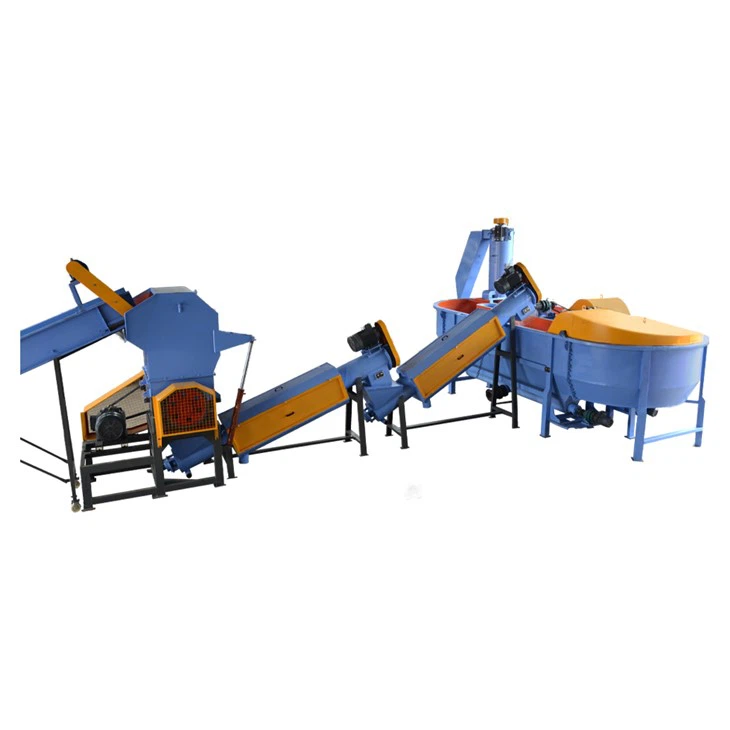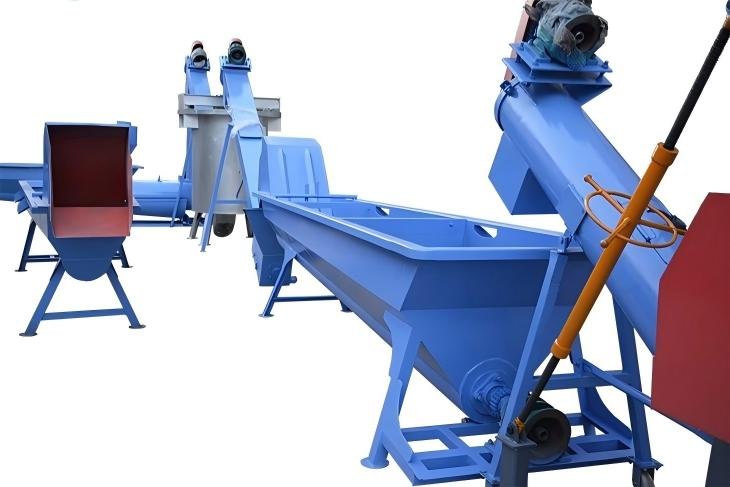


This PET bottle washing line is arranged for sorting, wet crushing, density separation, hot or cold washing, friction cleaning and mechanical drying. The current page records four reference capacities from 500 to 2000 kg/h for buyers planning a complete bottle-to-clean-flake process.
Feed and Product Requirements
- Post-consumer PET bottles after bale opening or loose feeding
- Feed with caps, labels, sand, beverage residue and mixed colours identified
- Projects defining whether cold washing or hot washing is required
- Buyers specifying fibre-grade, sheet-grade or other downstream flake use
PVC bottles, glued labels, metal, oil and excessive fines affect process design and final flake quality. A line should be configured from a representative contamination report rather than from nominal bottle throughput alone.
Current PET Washing Line Reference
| Reference capacity | Recorded water requirement | Recorded labour | Recorded line space | Layout options |
|---|---|---|---|---|
| 500 kg/h | 1.5 t/h | 2–3 people | 28 × 3 × 2.3 m | L / U / straight |
| 1000 kg/h | 1.8 t/h | 4–6 people | 50 × 3 × 2.5 m | L / U / straight |
| 1500 kg/h | 8 t/h | 6–8 people | 55 × 3 × 2.5 m | L / U / straight |
| 2000 kg/h | 10 t/h | 6–8 people | 65 × 3 × 2.5 m | L / U / straight |
These are current-page references, not guaranteed consumption or output. The large step in recorded water demand between 1000 and 1500 kg/h requires confirmation together with recirculation, wastewater treatment, bottle condition and the final equipment list.
Process Modules and Line Comparison
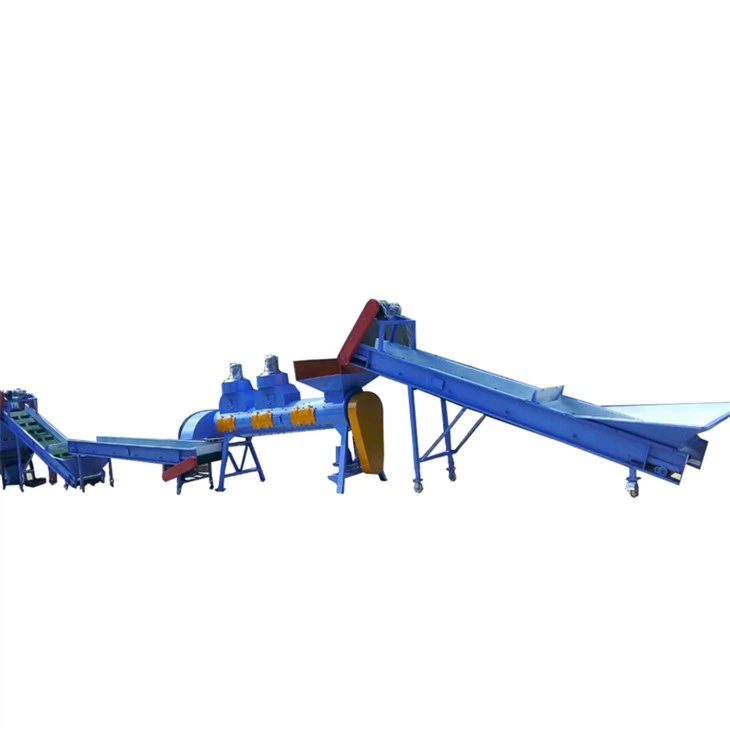
The proposal should identify bale opening, manual or optical sorting, wet crushing, cap and label separation, hot washing, friction washing, rinsing, dewatering, drying, flake storage and water treatment. Review the PET bottle trommel separator for front-end bottle opening and loose-contaminant removal. Compare the friction washer and sink-float modules when improving individual washing stages rather than buying a complete line.
The final arrangement should show material flow, dirty and clean water loops, operator positions, drainage, service clearance and flake collection.
Request a PET Washing Line Proposal
Send bottle photos, bale density, PVC and metal contamination, labels and glue, hourly capacity, operating hours, required flake quality, water conditions, voltage and workshop dimensions through the AMIGE inquiry page.